Have you ever wondered what the Bible really means when it says something should not be done “in vain”?
I want to share something that happened to me recently about “in vain meaning in the Bible.”
Chatting with a friend when I suddenly came across this phrase, and honestly, I had no clue what it meant at first.
I kept wondering, “Am I missing something here?” It was a bit confusing, and I didn’t want to respond the wrong way.
So, I decided to look into in vain meaning in the Bible and understand its biblical context.
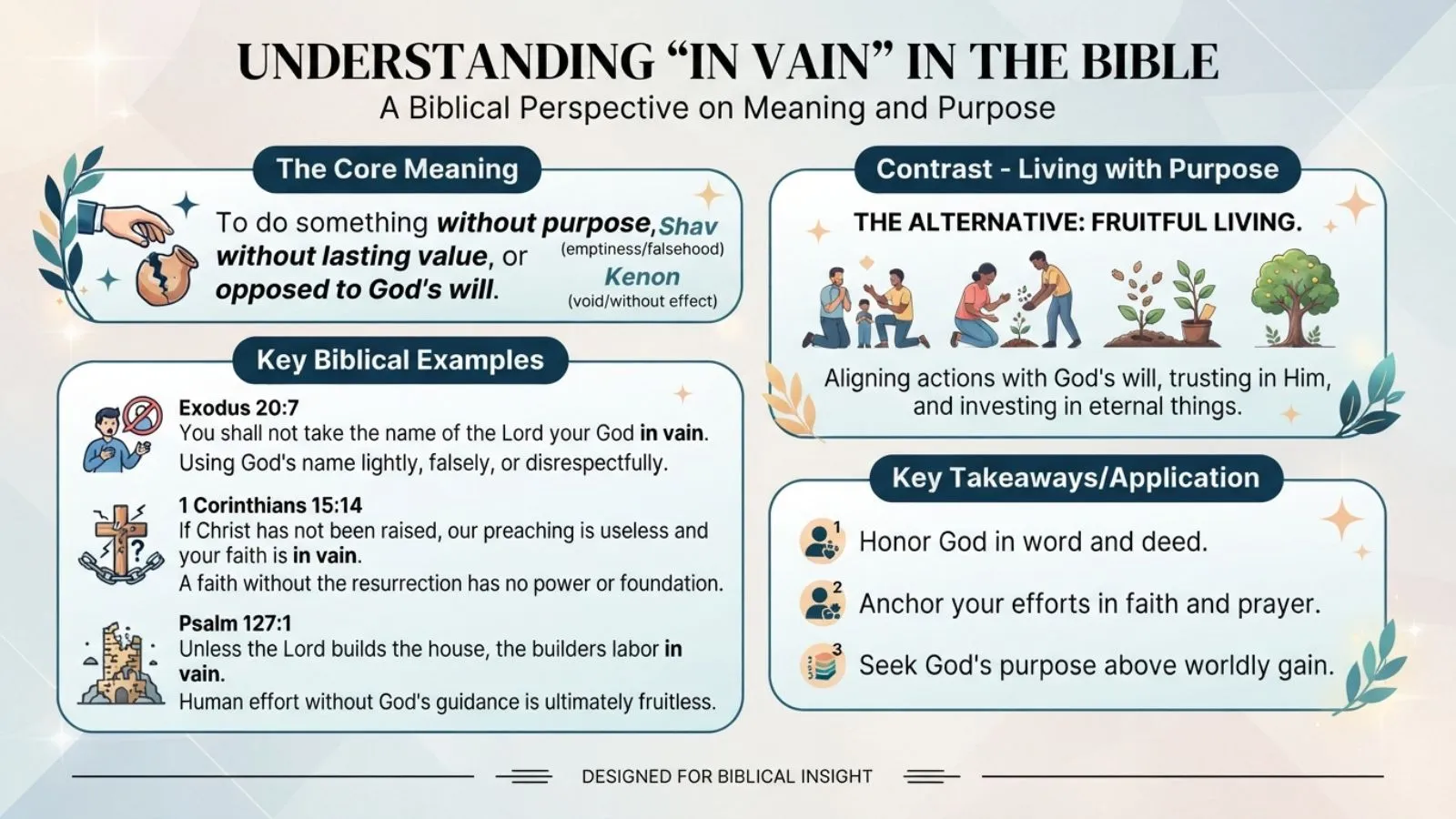
In the Bible, “in vain” can point to something empty, fruitless, or done without a true purpose—and this simple phrase carries a deeper spiritual lesson about honoring God with sincere hearts.
After understanding it, I realized how important it is to know these biblical terms because they can reveal powerful lessons about faith, worship, prayer, and the way we live before God.
I learned that “in vain” is not simply about doing something for no reason; in Scripture, it can describe actions, words, or worship that lack genuine purpose or devotion.
Understanding the biblical meaning helped me see the phrase in a completely different way.
Instead of feeling confused when I came across “in vain,” I could understand its spiritual message and recognize why Scripture warns us against empty words and actions.
It reminded me that God cares not only about what we do, but also about the heart and intention behind what we do.
Biblical Meaning of “In Vain”
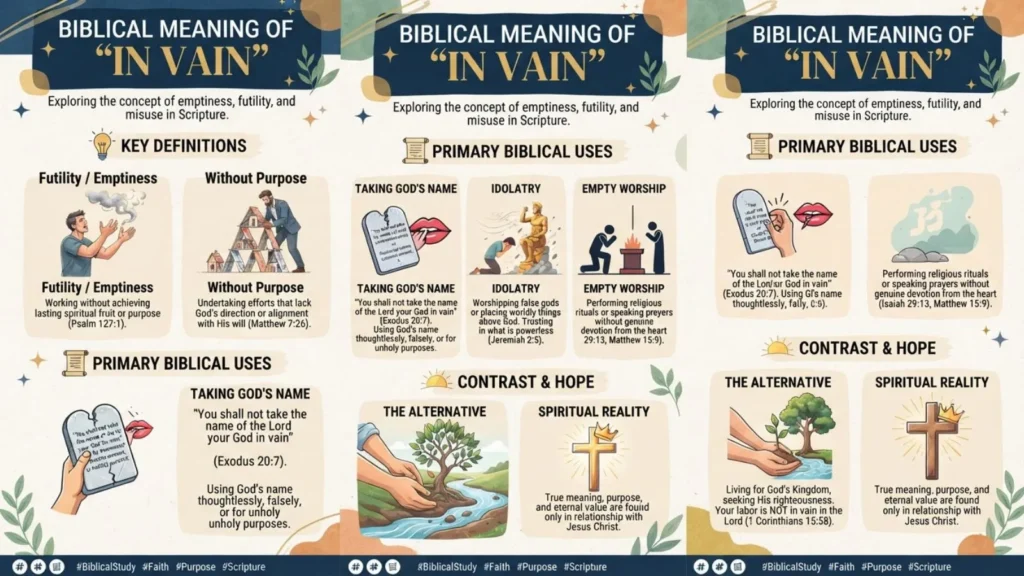
The phrase “in vain” means without purpose, without success, or without lasting value.
In the Bible, it often describes actions that are empty because God is not in them.
1. Effort Without God Is in Vain
One of the clearest Bible verses about this is:
“Unless the Lord builds the house, the builders labor in vain.” Psalm 127:1
This verse teaches an important truth: human effort alone is not enough.
You can work hard, make plans, and chase dreamsbut if God is not leading, your work may feel empty.
This does not mean effort is bad. It means God gives true purpose to our effort.
Without Him, even success can feel hollow.
2. Using God’s Name “In Vain”
Another famous verse says:
“You shall not take the name of the Lord your God in vain.” Exodus 20:7
Many think this only means avoiding bad language.
But it goes deeper.
To use God’s name “in vain” means to treat His name without honor, respect, or sincerity.
It warns us not to use faith as a performance or speak about God carelessly.
God desires a real relationship, not empty words.
3. Worship Can Be “In Vain”
Jesus gave this warning:
“These people honor me with their lips, but their hearts are far from me. They worship me in vain.”
Matthew 15:8–9
This is a strong message.
It reminds believers that worship is not just singing or church attendance.
True worship comes from the heart.
If faith becomes routine without love, it can become empty.
God wants authenticity.
4. Faith in Christ Is Never in Vain
Now comes the good news.
The Bible also says:
“Your labor in the Lord is not in vain.”
1 Corinthians 15:58
This is beautiful.
When you serve God, pray, love others, and remain faithfuleven when results are unseenyour work matters.
God sees it.
Nothing done for Him is wasted.
Your prayers are not in vain.
Are Your tears are not in vain.
Your obedience is not in vain.
Spiritual Significance of “In Vain”

Spiritually, “in vain” points to a deeper question:
Where is your trust placed?
If your hope is only in people, money, or personal strength, life may feel empty.
But when your hope is rooted in God, everything changes.
The phrase invites believers to:
- trust God’s timing,
- surrender control,
- and seek His purpose first.
It is a call to spiritual awakening.
Sometimes God allows seasons that feel unproductive so we learn dependence on Him.
A delayed answer does not mean wasted effort.
A closed door does not mean failed faith.
God often uses waiting to build character, patience, and deeper trust.
What feels “in vain” today may become tomorrow’s testimony.
That is part of biblical symbolismGod transforms what seems empty into something meaningful.
Interpretations of “In Vain” in Dreams or Real Life

Sometimes people feel this phrase during dreams or difficult life moments.
You may dream about:
- endless work,
- unfinished tasks,
- or trying hard without success.
Spiritually, this may reflect exhaustion or fear.
It may be a sign to pause and ask:
“Am I relying on myself or on God?”
In real life, feeling “in vain” often happens during:
- unanswered prayer,
- heartbreak,
- job struggles,
- or long waiting seasons.
But Scripture reminds us that God is still workingeven when we cannot see it.
A peaceful feeling during hardship may mean God is strengthening your faith.
A fearful feeling may be an invitation to pray and surrender your worries.
Either way, the Christian meaning is clear:
God does not waste pain.
Practical Lessons of “In Vain”

Here are simple faith lessons from this biblical phrase:
- Put God first in every plan.
- Pray before acting.
- Trust His timing.
- Stay faithful when results are delayed.
- Remember: what is done for God is never wasted.
Even small acts of obedience carry eternal value.
Conclusion
The meaning of “in vain” in the Bible is both a warning and a promise.
It warns us not to live apart from God.
But it also promises that when we walk with Him, our lives have purpose.
Even when life feels uncertain, remember this:
Your faith is not in vain. Your prayers are not in vain. God is working even now.
Keep trusting Him, and let His presence turn your struggle into hope.
Continue Reading:
- Matthew in the Bible: Significance, and Lessons for Christians
- Purple Meaning in the Bible: Royalty, Honor, Power, and God’s Presence
- Joel Meaning in Bible: Hebrew Origin and Powerful Spiritual Message