Have you ever come across a word in the Bible that made you pause and wonder about its deeper meaning?
Lasciviousness is one such term that carries an important spiritual message about the condition of the heart and the choices we make.
I remember chatting with a friend when I suddenly saw this term pop up, and honestly, I had no clue what it meant at first.
I kept wondering, “Am I missing something here?” It was a bit confusing, and I didn’t want to respond the wrong way.
So, I decided to look into Lasciviousness Bible Meaning and understand its meaning and context.
After learning more, I realized that this word is not just an old biblical term but a powerful reminder about purity, self-control, and living in a way that honors God.
Understanding biblical words like lasciviousness helps us avoid misunderstandings and recognize the spiritual lessons behind Scripture.
By discovering its true meaning, I gained confidence in conversations and a deeper appreciation for God’s guidance.
Now, whenever I see this word in the Bible or in discussions about faith, I understand the message behind it and can reflect on its importance in Christian life.
Biblical Meaning of Lasciviousness
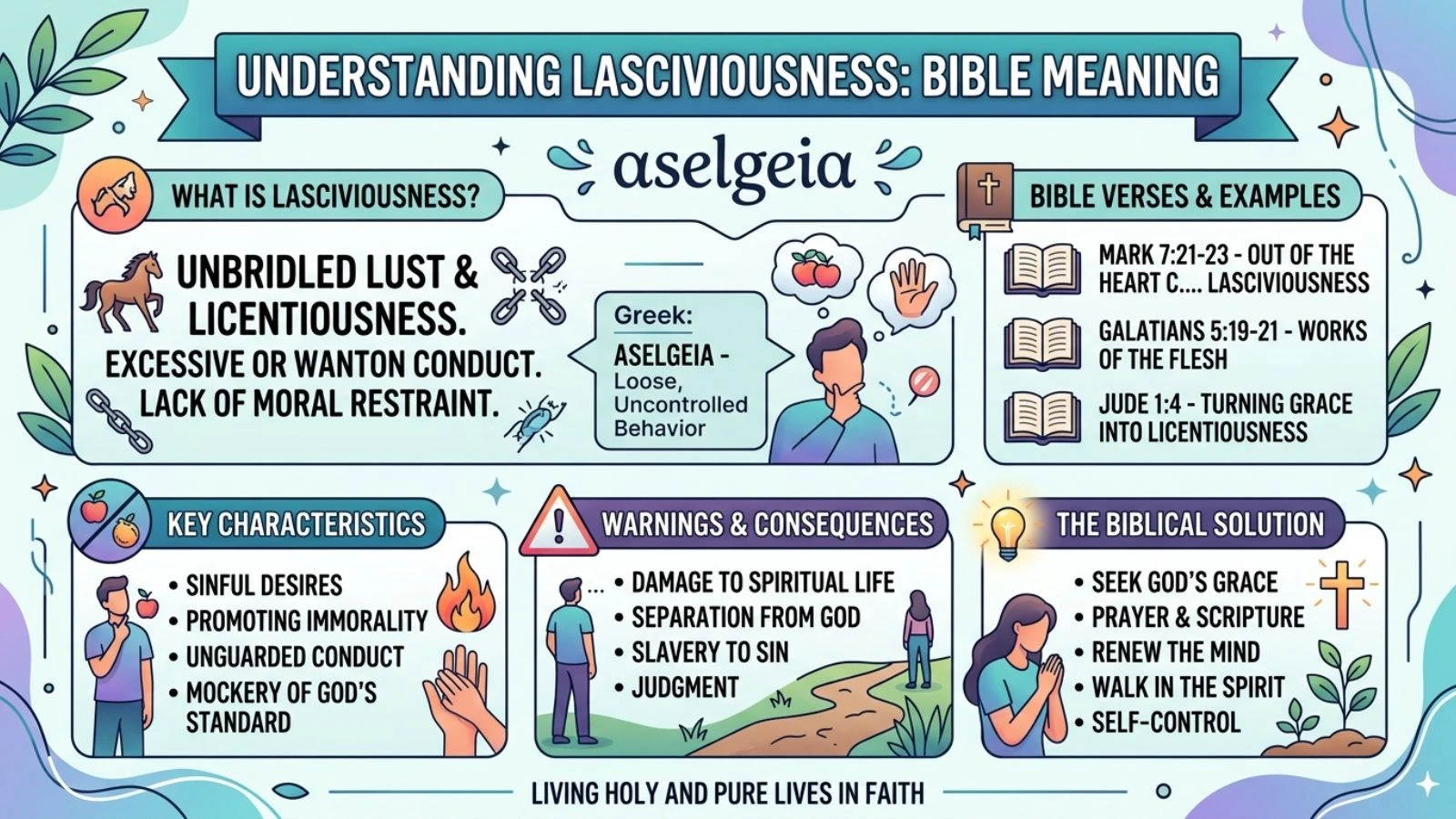
The lasciviousness Bible meaning refers to uncontrolled sinful desires, immoral behavior, and living without respect for God’s standards of holiness.
It describes actions that openly reject purity and encourage sinful pleasures.
In many Bible translations, the Greek word connected with lasciviousness is aselgeia, which means shameless behavior, moral corruption, and a lack of self-control.
The Bible clearly teaches that God calls His people to live differently.
Lasciviousness Separates People from God’s Will
One of the clearest passages appears in Galatians 5:19-21, where Paul lists the “works of the flesh.”
Among them is lasciviousness, showing that sinful desires grow when people follow the flesh instead of the Holy Spirit.
This passage reminds believers that God desires holy living, not because He wants to limit joy, but because He wants to protect His children from spiritual harm.
God Calls Believers to Purity
The Bible repeatedly encourages Christians to pursue purity.
In 1 Peter 1:15-16, believers are told:
“Be holy, because I am holy.”
Holiness means living in a way that honors God in our thoughts, words, and actions. While no one is perfect, Christians are called to seek God’s help every day through prayer, repentance, and obedience.
A Warning Against Sin
Lasciviousness is more than a single sinful act. It often describes a lifestyle where people stop caring whether their actions please God.
Ephesians 4:19 speaks about people who have become spiritually insensitive and have given themselves over to impurity. This verse serves as a loving warning that repeated sin can harden the heart if left unchecked.
Yet the Bible never leaves people without hope.
God’s Grace Is Greater Than Sin
Although Scripture warns against lasciviousness, it also proclaims God’s amazing mercy.
In 1 John 1:9, believers receive this comforting promise:
“If we confess our sins, He is faithful and just to forgive us our sins and to cleanse us from all unrighteousness.”
This verse reminds Christians that repentance opens the door to forgiveness and restoration.
Living by the Holy Spirit
Instead of following sinful desires, believers are encouraged to walk in the Spirit.
Galatians 5:22-23 describes the fruit of the Spirit:
- Love
- Joy
- Peace
- Patience
- Kindness
- Goodness
- Faithfulness
- Gentleness
- Self-control
Notice that self-control stands in direct contrast to lasciviousness. God does not simply tell His people to avoid sin—He gives them His Holy Spirit to help them live differently.
The Christian meaning of this teaching is clear: God invites believers into a life of freedom, purity, and lasting peace instead of temporary pleasure that leads to spiritual emptiness.
Spiritual Significance and Symbolism
The spiritual symbolism of lasciviousness points to the ongoing battle between the flesh and the Spirit.
Every believer experiences temptation. The Bible never says that temptation itself is the problem. Instead, it teaches that God’s people should turn to Him for strength rather than giving in to sinful desires.
Sometimes a person slowly notices changes in their heart.
Prayer becomes less important.
Bible reading becomes rare.
Convictions become weaker.
These can be gentle reminders to return to God before spiritual distance grows.
The opposite is also true.
When someone spends time in prayer, studies Scripture, and seeks God’s presence, their heart begins to change. They become more loving, patient, forgiving, and peaceful.
This is part of spiritual awakening.
Many Christians have experienced seasons where they struggled with temptation but later found freedom through God’s grace. Their lives became beautiful examples of transformation.
The Bible teaches that real freedom is not found in doing whatever we want. Real freedom comes from living according to God’s design.
That is one of the greatest lessons behind the lasciviousness Bible meaning.
Biblical Interpretations in Dreams or Real Life
Some people search for the dream interpretation of lasciviousness after having troubling dreams or feeling convicted about certain behaviors.
The Bible does not give a direct interpretation for every dream. However, dreams can sometimes encourage personal reflection.
If a dream includes immoral behavior, uncontrolled desires, or feelings of shame, it may simply remind someone to examine their relationship with God.
It is not always a prediction.
Instead, it can become an opportunity for prayer and spiritual growth.
In real life, believers may also recognize warning signs such as:
- Growing comfortable with sinful habits.
- Ignoring God’s convictions.
- Feeling distant from prayer.
- Losing interest in Scripture.
On the other hand, if someone feels convicted and desires to return to God, that is often evidence that the Holy Spirit is still drawing them closer.
God’s invitation remains the same:
Come back.
Receive forgiveness.
Walk in new life through Jesus Christ.
Practical Lessons & Faith Insights
The lasciviousness Bible meaning teaches that God lovingly warns His people because He wants what is best for them.
Take time to pray honestly.
Read God’s Word daily.
Ask the Holy Spirit to strengthen your heart.
Choose purity over temporary pleasure.
Trust that God’s grace is always greater than your past, and His love continues to lead every believer toward hope, healing, and lasting peace.
Conclusion
The lasciviousness Bible meaning reminds believers that God calls His people to a life of holiness, self-control, and spiritual freedom.
While Scripture clearly warns against sinful desires, it also offers the wonderful promise of forgiveness through Jesus Christ.
No matter your past, God invites you to walk in His grace, grow in faith, and experience true transformation.
As you seek Him in prayer and His Word, may His love guide your heart toward purity, peace, and the joyful hope found in His presence.