Hey, I want to share something that happened to me recently about Salvation in the Bible Meaning.
I was chatting with a friend when I suddenly saw this term pop up, and honestly, I had no clue what it meant at first.
I kept wondering, “Am I missing something here?” It was a bit confusing, and I didn’t want to respond the wrong way.
So, I decided to look into Salvation in the Bible Meaning and figure out its meaning and biblical context.
As I explored Scripture, I discovered that salvation is much more than just a religious word.
It is the heart of the Christian faith, revealing God’s love, forgiveness, and the promise of eternal life through Jesus Christ.
After understanding it, I realized how important it is to know biblical terms like this—not only to avoid awkward situations in conversations but also to better understand God’s message.
I handled it by learning the proper meaning and responding confidently, and now I feel ready whenever I see Salvation in the Bible Meaning mentioned in conversations, Bible studies, or on social media.
If you’ve ever wondered what salvation really means, why it matters, and what the Bible teaches about receiving it, this guide will help you discover its powerful spiritual significance.
Biblical Meaning of Salvation in the Bible
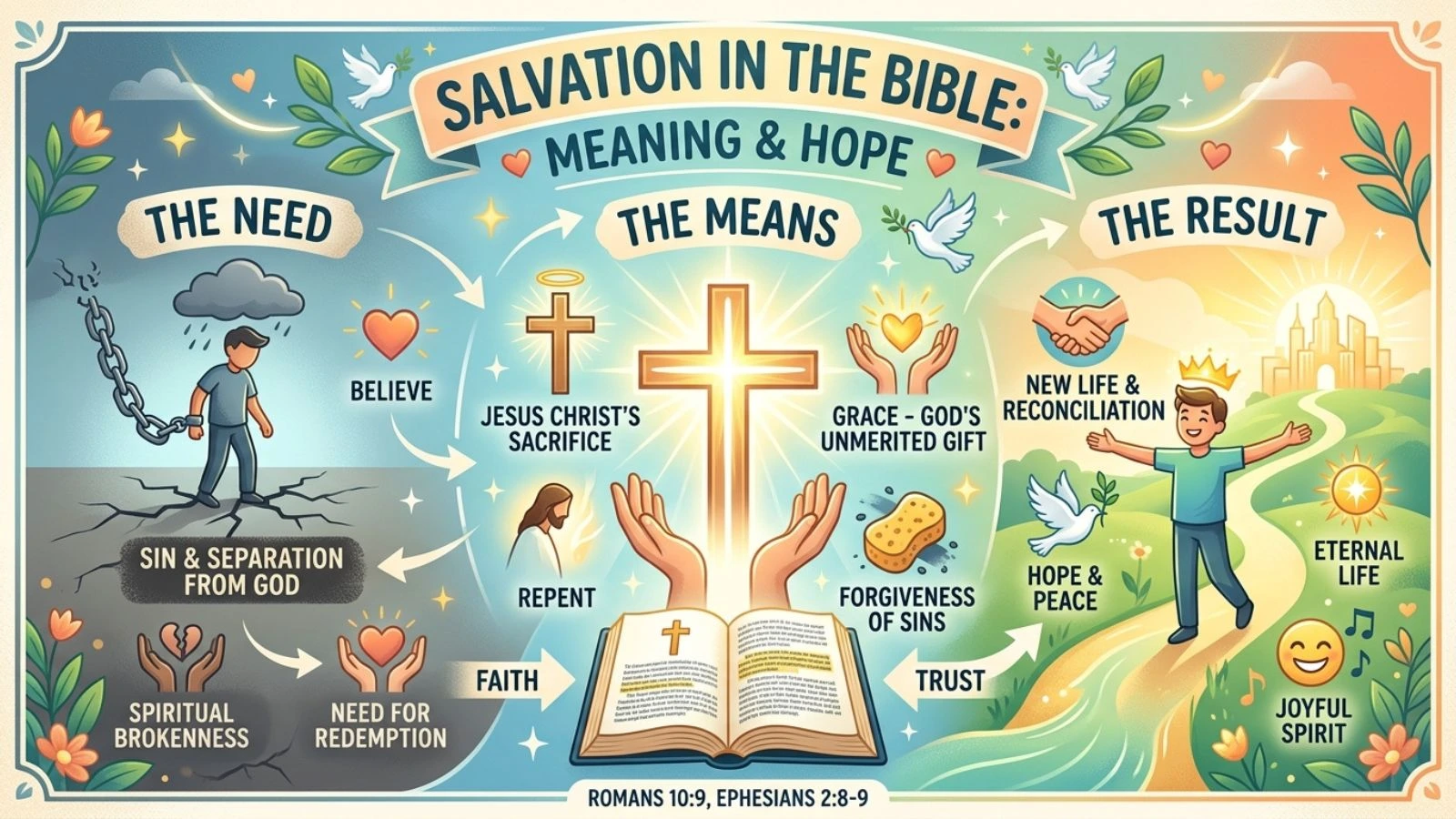
The biblical meaning of salvation is God’s work of rescuing people from sin and giving them eternal life through Jesus Christ. It is completely rooted in God’s love, grace, and mercy.
The word “salvation” means deliverance, rescue, healing, and restoration. In Scripture, it describes how God saves people from the power and penalty of sin and brings them into a loving relationship with Himself.
One of the clearest verses is John 3:16:
“For God so loved the world that He gave His one and only Son, that whoever believes in Him shall not perish but have eternal life.”
This verse reminds believers that salvation begins with God’s love, not human effort.
Salvation Is a Gift of Grace
The Bible teaches that no one can earn salvation through good works alone. Instead, it is a free gift from God.
Ephesians 2:8–9 says:
“For it is by grace you have been saved, through faith—and this is not from yourselves, it is the gift of God—not by works.”
This powerful truth gives believers peace. We are saved because Jesus paid the price for our sins through His death and resurrection.
Salvation Brings Forgiveness
Everyone has sinned.
Romans 3:23 says:
“For all have sinned and fall short of the glory of God.”
But God offers complete forgiveness.
1 John 1:9 promises that if we confess our sins, God is faithful to forgive us and cleanse us from all unrighteousness.
This forgiveness removes guilt and restores our relationship with God.
Salvation Gives Eternal Life
One of the greatest blessings of salvation is the promise of eternal life.
Jesus declared in John 14:6:
“I am the way and the truth and the life. No one comes to the Father except through me.”
This teaches that Jesus alone is the Savior who opens the way to God.
Salvation Changes the Heart
Biblical salvation is not only about the future. It transforms people today.
When someone trusts Christ, God begins changing their heart.
Old habits slowly disappear.
Hope replaces fear.
Peace replaces anxiety.
Love replaces bitterness.
This spiritual transformation is the work of the Holy Spirit living within believers.
A Loving Invitation
The Bible continually invites people to receive God’s gift.
Romans 10:9 says:
“If you declare with your mouth, ‘Jesus is Lord,’ and believe in your heart that God raised him from the dead, you will be saved.”
God never forces salvation. He lovingly invites everyone to trust Him.
A Warning About Rejecting Salvation
The Bible also lovingly warns that rejecting God’s offer means remaining separated from Him.
This warning is not meant to create fear but to encourage people to accept God’s grace while His invitation remains open.
The overall Christian meaning of salvation is one of hope, forgiveness, restoration, and eternal life through Jesus Christ.
Spiritual Significance and Symbolism
The spiritual symbolism of salvation reaches far beyond forgiveness. It represents new life, freedom, renewal, and becoming part of God’s family.
Imagine carrying a heavy backpack filled with guilt, fear, and regret. Salvation is like God gently removing that burden and replacing it with peace and hope.
This beautiful transformation happens because Jesus carries what we cannot.
Salvation also symbolizes a fresh beginning.
The Bible says believers become a new creation in Christ (2 Corinthians 5:17). While life’s challenges remain, the heart begins changing from the inside.
Many Christians experience this transformation through simple daily moments.
A person who once struggled with anger begins showing patience.
Someone filled with worry learns to trust God through prayer.
A heart filled with loneliness discovers comfort in God’s presence.
This journey does not happen overnight. Spiritual growth takes time.
God patiently shapes His children through Scripture, prayer, worship, and everyday experiences.
Salvation also reminds believers that they never walk alone.
The presence of God brings strength during suffering, wisdom during difficult decisions, and hope during uncertain seasons.
Every step of the Christian life becomes a reminder that God’s grace continues working within us.
Biblical Interpretations in Dreams or Real Life
Some believers wonder whether dreams about being rescued, finding light, crossing water, or returning home have a connection to salvation.
While the Bible does not encourage building doctrine only from dreams, God can use dreams or life experiences to encourage spiritual reflection.
A peaceful dream about rescue or light may remind someone of God’s invitation to receive His grace and trust His guidance.
Dreams about leaving darkness and entering light often reflect a desire for forgiveness, healing, or a closer relationship with God.
In everyday life, salvation is seen whenever someone turns to Christ, experiences forgiveness, or begins living with renewed hope.
If a dream creates fear instead of peace, it is wise to pray, read Scripture, and seek God’s wisdom rather than relying only on personal interpretation.
True dream interpretation should always remain grounded in God’s Word, not emotions alone.
God’s desire is always to lead people closer to Himself through faith, truth, and love.
Practical Lessons & Faith Insights
The meaning of salvation reminds believers that God’s grace is always available. Spend time in prayer, read His Word each day, and trust Jesus with every part of your life.
When you stumble, remember that God offers forgiveness and strength to begin again.
Walk in faith, encourage others with God’s love, and rest in the confidence that His promises never fail.
Conclusion
The salvation in the Bible meaning reveals God’s incredible plan to rescue people through Jesus Christ. It is a story of love, grace, forgiveness, transformation, and eternal hope.
Salvation is not something we earn—it is God’s precious gift to everyone who believes.
As you continue seeking Him through prayer and Scripture, may your faith grow stronger, your heart find lasting peace, and your life reflect the joy of walking with the Savior every day.