Hey, I want to share something that happened to me recently about fasting in the Bible meaning.
I was chatting with a friend when I suddenly saw this term pop up, and honestly, I had no clue what it meant at first.
I kept wondering, “Am I missing something here?” It was a bit confusing, and I didn’t want to respond the wrong way.
So, I decided to look into fasting in the Bible meaning and figure out its meaning and context.
After understanding it, I realized how important it is to know these terms to avoid awkward situations in conversations.
I handled it by learning the proper meaning and responding confidently, and now I feel ready whenever I see fasting in the Bible meaning again in chats or social media.
As I explored further, I discovered that fasting in the Bible is far more than simply skipping meals—it is a spiritual act of humility, prayer, repentance, and drawing near to God.
That insight completely changed the way I understood this powerful biblical practice.
Fasting in the Bible
The fasting in the Bible meaning is the intentional act of giving up food—or sometimes other comforts—for a period of time to seek God with a sincere heart.
It is an outward action that reflects an inward desire to depend on God more than anything else.
Fasting appears throughout both the Old and New Testaments. It was often joined with prayer, repentance, worship, and seeking God’s direction.
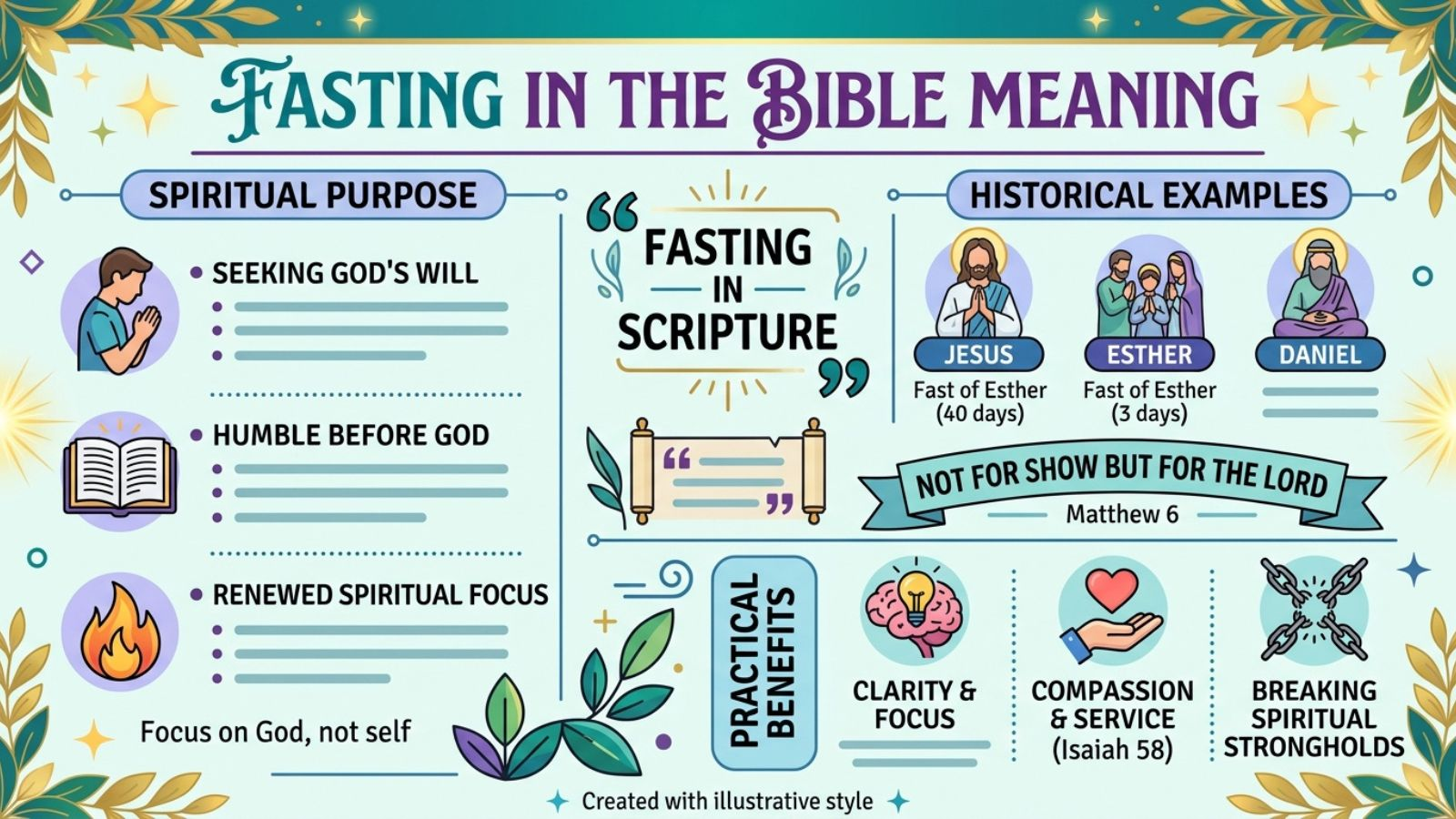
Fasting Shows Humility Before God
One of the strongest biblical meanings of fasting is humility.
When people fasted, they admitted they needed God’s help more than their own strength. Fasting reminded them that God alone is their provider.
Psalm 35:13 says:
“I humbled my soul with fasting.”
This verse shows that fasting is not about proving spiritual strength. It is about lowering ourselves before the Lord and trusting Him completely.
Fasting Helps People Seek God’s Guidance
Many believers fasted before making important decisions.
In Acts 13:2–3, the early church worshiped, prayed, and fasted before sending Paul and Barnabas into ministry. Their fasting showed complete dependence on God’s direction.
This teaches Christians today that fasting can be a time to ask God for wisdom, clarity, and guidance.
Fasting Is Connected to Repentance
In the Old Testament, fasting often accompanied repentance.
When the people of Nineveh heard Jonah’s message, they fasted and turned away from their sins. God saw their sincere hearts and showed mercy (Jonah 3:5–10).
The prophet Joel also encouraged God’s people:
“Return to me with all your heart, with fasting and weeping and mourning.” (Joel 2:12)
Here, fasting represents a heart returning to God, not merely following a religious tradition.
Jesus Taught About Fasting
Jesus Himself fasted for forty days in the wilderness before beginning His public ministry (Matthew 4:1–2).
During this time, He depended on the Father while resisting temptation.
Jesus also taught that fasting should be done quietly and sincerely.
In Matthew 6:16–18, He warned people not to fast just to impress others. Instead, fasting should be a private act of devotion between the believer and God.
This reminds Christians that God values sincere hearts more than public displays.
Positive Meaning of Fasting
The Bible connects fasting with many encouraging spiritual blessings.
Fasting may symbolize:
- Drawing closer to God
- Growing stronger in faith
- Seeking divine guidance
- Spiritual renewal
- Greater focus during prayer
- Dependence on God’s provision
- Preparing for God’s calling
These blessings come not because fasting earns God’s favor, but because it helps believers focus on Him.
A Loving Warning About Fasting
The Bible also gives an important warning.
God does not want fasting to become empty religious behavior.
Isaiah 58 explains that true fasting should lead to love, justice, kindness, and compassion toward others. Simply going without food while continuing sinful behavior does not please God.
Biblical fasting always begins with a heart that genuinely desires God’s will.
Spiritual Significance and Symbolism
The spiritual symbolism of fasting is deeply connected to dependence, surrender, and transformation.
Life often fills our minds with work, worries, responsibilities, and distractions. Fasting creates space to pause and remember that our greatest need is God’s presence.
Imagine someone facing a difficult season. Instead of only relying on personal strength, they spend time fasting, praying, and reading Scripture. They may not receive immediate answers, but they begin experiencing greater peace because they know God is with them.
That is one of the beautiful Christian meanings of fasting.
Fasting also teaches patience.
Sometimes God answers quickly. Other times He grows our faith while we wait. During fasting, believers learn to trust His perfect timing instead of demanding immediate results.
Another important lesson is self-control.
When Christians willingly deny physical comfort for a season, they remember that spiritual needs are greater than temporary desires.
Fasting also reminds believers that true satisfaction comes from God alone.
Jesus declared:
“Man shall not live by bread alone, but by every word that comes from the mouth of God.” (Matthew 4:4)
This verse beautifully captures the heart of biblical fasting.
Ultimately, fasting becomes a journey of spiritual awakening, renewed hope, deeper prayer, and greater awareness of God’s love.
Biblical Interpretations in Dreams or Real Life
Some people experience dreams about fasting or suddenly feel led to fast during certain seasons of life.
From a Christian perspective, these experiences should always be tested through prayer, Scripture, and wise spiritual counsel.
A dream about peaceful fasting may symbolize:
- A desire to grow closer to God
- Spiritual renewal
- A season of prayer
- Preparing for God’s direction
- Greater dependence on Him
If the dream includes struggle or hunger, it may simply reflect life’s challenges while reminding you that God provides strength through difficult seasons.
In real life, many believers choose to fast before important decisions, during personal trials, or while praying for loved ones.
Rather than viewing fasting as a mystical practice, the Bible presents it as a loving invitation to seek God’s heart with sincerity and faith.
Whatever the situation, the goal remains the same: drawing closer to the Lord and trusting His wisdom.
Practical Lessons & Faith Insights
The fasting in the Bible meaning reminds us that God desires our hearts more than outward actions.
Spend time in prayer, read Scripture, and seek God’s guidance with humility. Let fasting strengthen your relationship with Him rather than becoming a religious routine.
Trust that the Lord hears every sincere prayer and continues shaping your faith one step at a time.
Conclusion
The fasting in the Bible meaning is a powerful reminder that God invites His people into a deeper relationship with Him through humility, prayer, and trust.
Throughout Scripture, fasting points believers toward faith, repentance, spiritual growth, and dependence on God’s presence.
Whether you are seeking guidance, comfort, healing, or renewed hope, biblical fasting encourages you to place God at the center of your life.
As you seek Him with a sincere heart, trust that He is faithful to lead, strengthen, and fill you with His peace every step of your journey.