Have you ever wondered why the Bible places so much value on a humble heart?
In Scripture, humility is not weakness—it is the quiet strength of trusting God above yourself.
I want to share something that happened to me recently about Humble Bible Meaning.
I was chatting with a friend when I suddenly saw this term pop up, and honestly, I had no clue what it meant at first.
I kept wondering, “Am I missing something here?” It was a bit confusing, and I didn’t want to respond the wrong way.
So, I decided to look into humble Bible meaning and understand its true meaning and context.
After learning more, I realized that being humble in the Bible is about having a gentle heart, recognizing our need for God, and treating others with love and respect.
It is not about thinking less of yourself, but about putting God first and serving others with a sincere heart.
Understanding the biblical meaning of humble helped me see the word in a deeper way.
It reminded me that true humility can bring us closer to God, strengthen our faith, and shape the way we treat people around us.
Now, whenever I see the word “humble” in conversations, social media, or Scripture, I understand its meaning with much more confidence.
Biblical Meaning of Humble
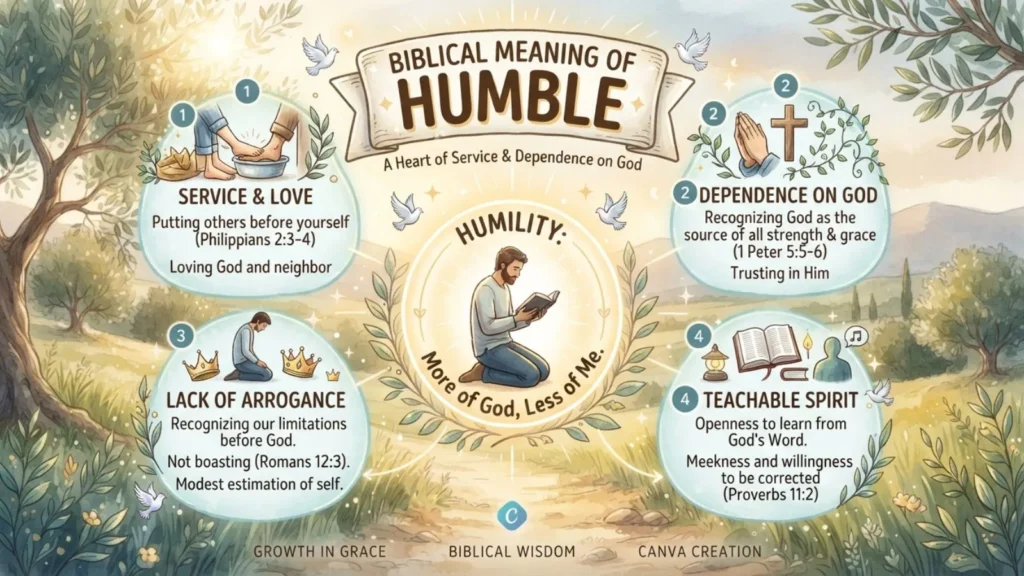
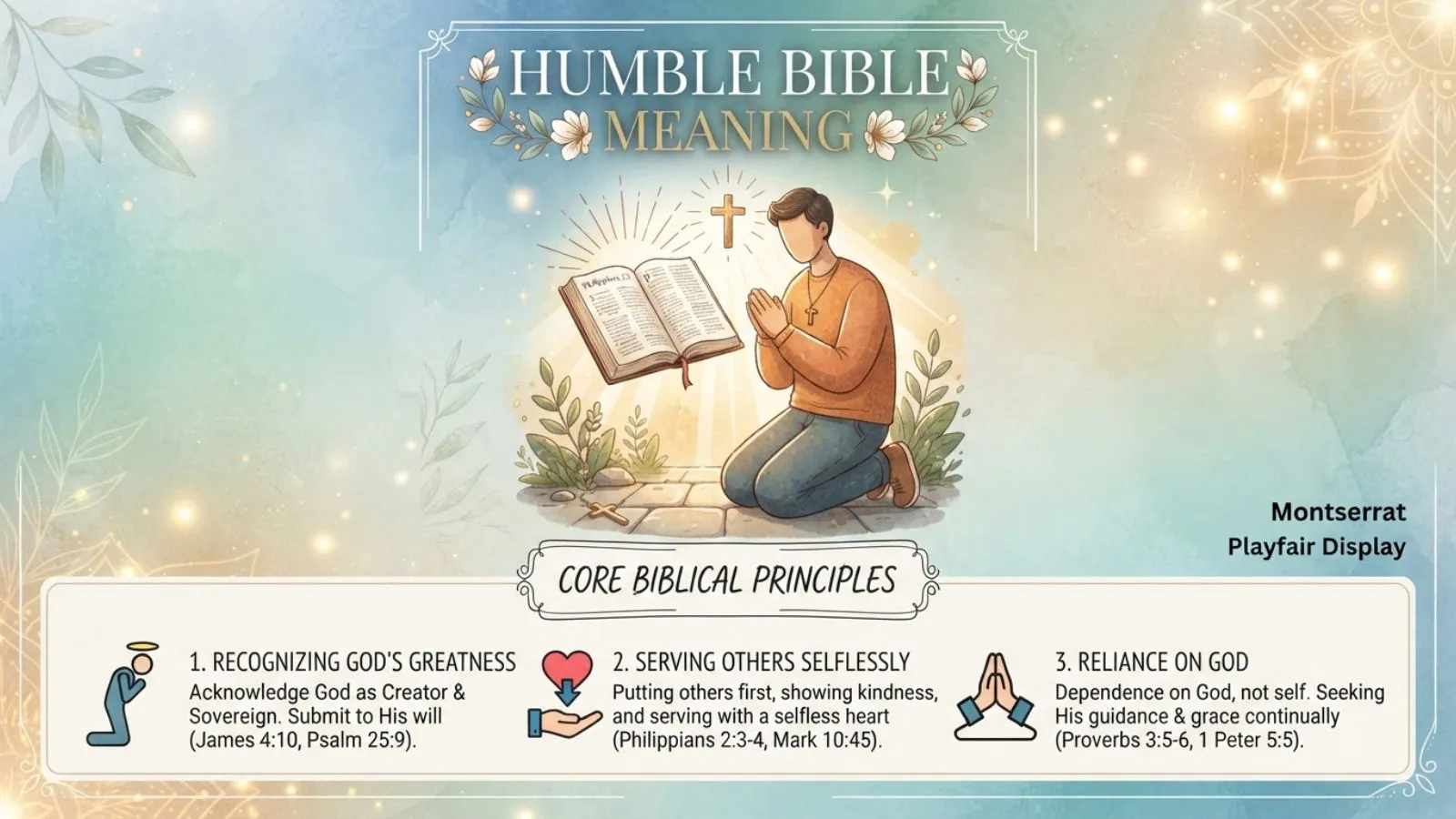
The humble Bible meaning points to a heart that recognizes its need for God and does not seek pride, praise, or superiority over others. Biblical humility is about living with meekness, obedience, gratitude, and dependence on God.
A humble person understands that human strength is limited. Instead of trusting only in personal wisdom or success, they seek God’s guidance and presence.
Humility Means Putting God First
One of the clearest biblical ideas about humility is found in James 4:10:
“Humble yourselves before the Lord, and he will exalt you.”
This verse shows that humility begins with God. When we stop trying to control everything and surrender our plans to Him, we create room for His wisdom.
Being humble does not mean giving up your dreams. It means trusting that God’s plan is greater than our own understanding.
Proverbs 3:5–6 encourages believers to trust in the Lord rather than depending completely on their own understanding. Humility allows us to say, “God, I may not understand this, but I trust You.”
Humility Is the Opposite of Pride
The Bible often places humility and pride side by side.
Proverbs 16:18 warns:
“Pride goes before destruction, a haughty spirit before a fall.”
Pride can make a person believe they do not need advice, correction, prayer, or God. Humility takes another path. It allows us to admit when we are wrong and accept the wisdom of others.
This does not mean that a humble Christian has no confidence. Healthy confidence and humility can exist together. You can know your value while still giving God the glory.
God Values a Humble Heart
Psalm 51:17 says that God does not despise a broken and contrite heart. This gives a beautiful picture of humility.
A humble heart is willing to come before God honestly. It does not pretend to have everything together.
Maybe you have made mistakes. Maybe you are facing a difficult season. Maybe you do not know what comes next.
Humility allows you to bring those feelings to God instead of hiding them.
Isaiah 66:2 also highlights God’s attention toward the person who is humble and contrite in spirit and who trembles at His word. This shows that God looks at the heart, not simply outward success.
Jesus Is the Perfect Example of Humility
Jesus provides the clearest Christian example of humility.
Philippians 2:5–8 describes Christ as choosing humility and becoming obedient, even to the point of death on the cross.
Jesus had divine authority, yet He served others. He washed His disciples’ feet in John 13:1–17, giving His followers a powerful example of servant leadership.
This teaches an important spiritual lesson: true greatness in God’s kingdom is connected with serving, not showing off.
Matthew 23:12 says, “Whoever exalts himself will be humbled, and whoever humbles himself will be exalted.”
The biblical meaning of humble, therefore, is not weakness. It is strength placed under God’s control.
Spiritual Significance and Symbolism of Humility
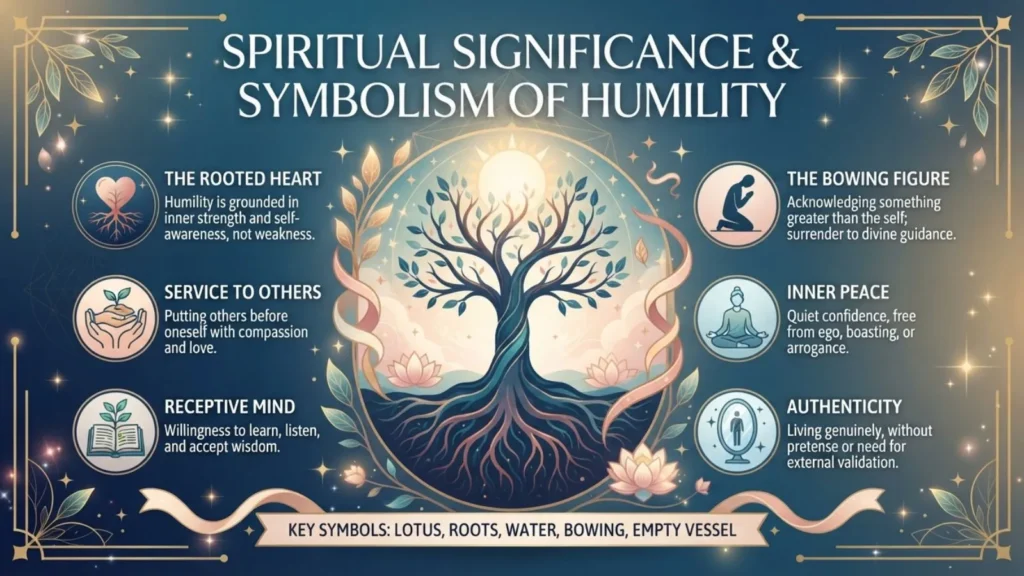
The spiritual symbolism of humility is rich because it points toward growth, surrender, wisdom, and deeper faith.
Humility helps us remember where our strength comes from. When life is going well, it keeps our hearts thankful. When life becomes difficult, it reminds us that we do not have to carry every burden alone.
Humility Brings Spiritual Growth
A humble heart is teachable.
Think about someone learning a new skill. If they believe they already know everything, they cannot grow. But if they are willing to listen and learn, progress becomes possible.
The same is true spiritually.
Humility allows God to correct us, shape us, and lead us. It can become part of a powerful spiritual awakening, where we begin to see our life through God’s wisdom rather than our own limited view.
Humility Strengthens Relationships
Humility also changes the way we treat people.
It teaches us to listen before speaking, forgive instead of holding grudges, and serve without always expecting praise.
Ephesians 4:2 encourages believers to live with humility, gentleness, patience, and love.
Imagine a disagreement with someone you care about. Pride says, “I must win.” Humility asks, “How can I bring peace?”
That small change can transform a relationship.
Humility Creates Space for God’s Guidance
Sometimes God does not give us every answer immediately. Humility helps us remain patient.
You may pray about a decision and still feel unsure. You may ask God for direction and have to wait.
During those moments, humility teaches you to trust His timing.
You do not need to understand everything to remain faithful.
God can use seasons of waiting to develop patience, wisdom, and deeper trust.
Biblical Interpretations of Humility in Dreams or Real Life
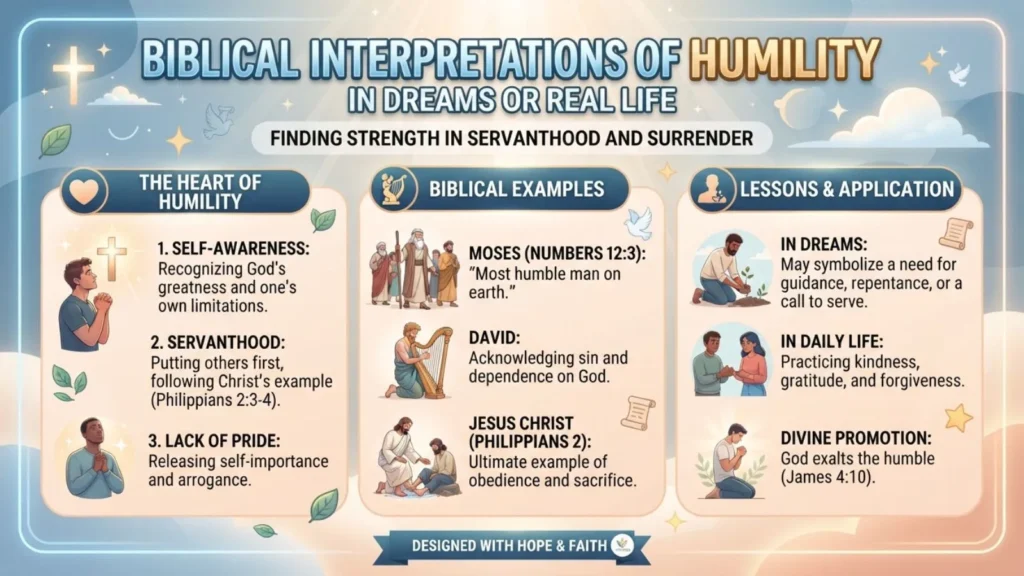
If humility appears as a theme in a dream or repeatedly comes to mind during prayer or daily life, it can encourage personal reflection. However, Christians should be careful not to treat every dream as a direct divine message.
The Bible encourages believers to test things through God’s Word and seek wisdom.
A dream in which you are serving others may remind you of Christ’s example of servant-hearted love. A situation where you receive correction may point toward the importance of being teachable.
If you dream of bowing before God, it may naturally remind you of worship, surrender, and dependence on Him.
If you experience humiliation in real life, however, it does not automatically mean God is punishing you. Difficult experiences can have many causes.
Instead, bring them to prayer and ask, “Lord, what can I learn from this?”
The important question is not always, “What does this dream predict?” It may be, “How can this experience draw my heart closer to God?”
Practical Lessons & Faith of humility
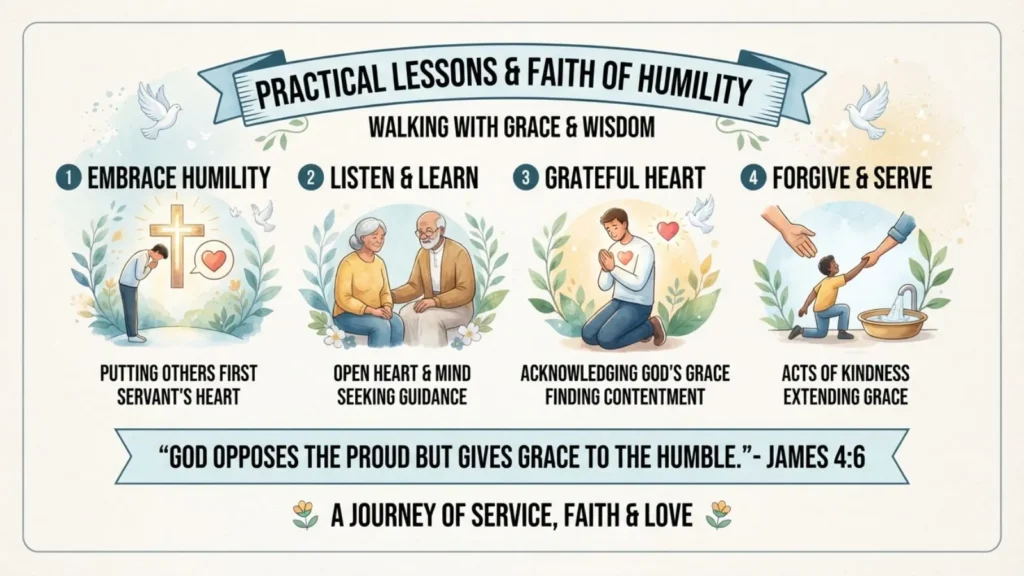
The humble Bible meaning reminds us to stay teachable, thankful, and close to God.
- Pray before making important decisions.
- Give God credit for your blessings.
- Listen when others offer wise correction.
- Serve people without needing praise.
- Admit mistakes and ask for forgiveness.
- Trust God’s timing when answers seem delayed.
Most of all, remember that humility is not thinking less of yourself; it is learning to place God first.
Conclusion
The humble Bible meaning points to a life of surrender, wisdom, service, and trust in God.
Biblical humility helps us resist pride and become more willing to learn, forgive, serve, and follow God’s guidance. Jesus remains the perfect example of a humble heart.
When you choose humility, you make room for spiritual growth and deeper faith. Walk gently with God, trust His wisdom, and let Him shape your heart one step at a time.
Continue Reding:
- 12:12 Meaning in the Bible: Symbolism, Faith, and Divine Guidance
- Lunar Eclipse Bible Meaning: Signs of Change, Judgment, and God’s Glory
- Flogged Biblical Meaning: Suffering, Healing, and Redemption