Hey, I want to share something that happened to me recently about grace in the Bible meaning.
I was chatting with a friend when I suddenly saw this term pop up, and honestly, I had no clue what it meant at first.
I kept wondering, “Am I missing something here?” It was a bit confusing, and I didn’t want to respond the wrong way.
So, I decided to look into grace in the Bible meaning and figure out its meaning and context.
After understanding it, I realized how important it is to know these terms to avoid awkward situations in conversations.
As I explored further, I discovered that grace is one of the most beautiful and powerful themes in the Bible.
It is far more than just kindness or forgiveness—it is God’s undeserved favor, love, and mercy freely given to humanity.
This truth changed the way I viewed faith, hope, and salvation.
I handled it by learning the proper meaning and responding confidently, and now I feel ready whenever I see grace in the Bible meaning in conversations, Bible studies, or social media.
If you’ve ever wondered what God’s grace truly means and why it matters so much, you’re in the right place.
Biblical Meaning of Grace in the Bible
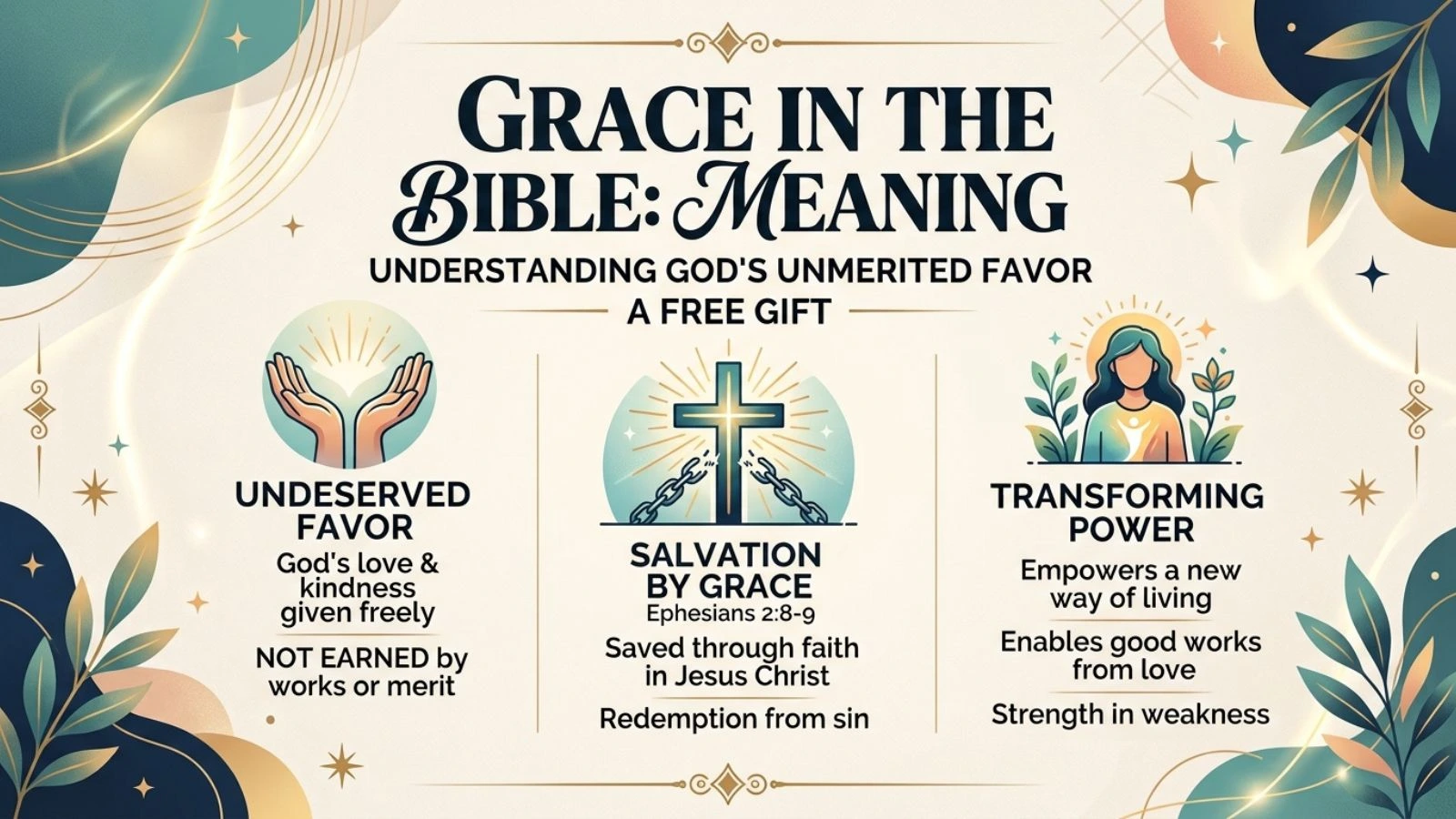
The grace in the Bible meaning goes far beyond simple kindness. In Scripture, grace is God’s free and undeserved favor toward humanity. It is His loving gift that cannot be earned through good works or perfect behavior.
One of the clearest Bible verses about grace is:
“For by grace you have been saved through faith. And this is not your own doing; it is the gift of God.”
— Ephesians 2:8–9 (ESV)
This verse teaches that salvation is God’s gift. People cannot earn heaven by their own efforts. Instead, God offers forgiveness because of Jesus Christ.
Another beautiful reminder appears in:
“But he said to me, ‘My grace is sufficient for you, for my power is made perfect in weakness.'”
— 2 Corinthians 12:9
Here, grace becomes more than forgiveness. It becomes strength. Even when believers feel weak, God’s grace provides the courage to keep moving forward.
Throughout the Bible, grace appears in many ways.
Grace Brings Salvation
From Genesis to Revelation, God’s plan has always been to rescue His people.
When Adam and Eve sinned, God still cared for them and promised a future Savior (Genesis 3:15). This showed His grace even after human failure.
The greatest example came through Jesus Christ.
Jesus willingly gave His life on the cross so that everyone who believes in Him could receive forgiveness and eternal life. This is the heart of Christian belief.
Grace Changes Lives
Grace does not simply forgive the past.
It transforms the future.
The Apostle Paul once persecuted Christians. Yet after meeting Jesus, his life completely changed. Instead of spreading fear, he preached the Gospel across many nations.
Paul later wrote:
“By the grace of God I am what I am.”
— 1 Corinthians 15:10
His story reminds believers that no one is beyond God’s grace.
Grace Gives Daily Strength
Life includes pain, disappointment, and uncertainty.
During these moments, believers often discover God’s grace in quiet ways.
A comforting prayer.
A friend who offers encouragement.
Unexpected peace during difficult times.
These moments remind Christians that God walks beside them every day.
Can Grace Be Rejected?
The Bible also contains gentle warnings.
Although God freely offers grace, people can choose to ignore or reject Him.
Hebrews 12:15 encourages believers to remain close to God so bitterness and unbelief do not take root.
This warning is not meant to create fear.
Instead, it invites people to stay connected with God’s loving presence through faith and prayer.
Ultimately, biblical grace always points back to Jesus Christ, whose sacrifice opened the door to forgiveness, hope, and eternal life.
Spiritual Significance and Symbolism
The spiritual symbolism of grace speaks about God’s unconditional love.
It reminds believers that they never have to earn His affection. God’s love begins before human success and continues even after failure.
Many Christians experience seasons where life feels uncertain.
Prayers seem quiet.
Dreams feel delayed.
Hope becomes difficult to hold.
During these moments, grace becomes a powerful reminder that God has not forgotten His children.
Grace also encourages spiritual growth.
Instead of living with guilt, believers learn to accept God’s forgiveness.
Instead of carrying fear, they begin trusting His promises.
Instead of depending only on their own strength, they rely on God’s power.
In everyday life, grace may symbolize:
- Receiving forgiveness after failure
- Finding peace during stressful seasons
- Growing stronger through faith
- Showing mercy to others
- Trusting God’s perfect timing
- Living with gratitude every day
Grace also leads to spiritual awakening.
Many believers notice that their relationship with God becomes deeper over time.
Prayer feels more personal.
Scripture speaks more clearly.
Faith becomes stronger during both joyful and difficult seasons.
This quiet transformation reflects the beautiful work of God’s grace inside the heart.
Biblical Interpretations in Dreams or Real Life
Some people wonder whether dreams about grace carry a spiritual message.
While the Bible teaches caution about building beliefs only on dreams, God can sometimes use experiences to encourage believers when they are consistent with Scripture.
Dreaming about receiving forgiveness may remind someone of God’s mercy.
Seeing light, open doors, or being rescued in a dream may symbolize hope, renewal, or the invitation to trust Christ more deeply.
Real-life experiences often reflect grace as well.
You may receive unexpected help during financial hardship.
Someone may forgive you when you least expect it.
A difficult situation may lead to personal growth instead of defeat.
These moments can become gentle reminders of God’s loving care.
If a dream or experience brings confusion instead of peace, believers are encouraged to pray, study Scripture, and seek wise Christian guidance.
God’s true messages will always agree with His Word and lead people toward faith, hope, love, and obedience to Jesus Christ.
Practical Lessons & Faith Insights
The grace in the Bible meaning reminds believers that God’s love is a gift, not a reward.
Spend time in prayer, thank God for His mercy, and extend the same grace to others.
When life feels difficult, remember that God’s grace is sufficient. Trust His timing, rely on His strength, and allow His love to shape your heart each day.
Conclusion
The grace in the Bible meaning reveals the heart of God’s relationship with humanity.
Grace is His undeserved favor, His gift of salvation through Jesus Christ, and His strength for every season of life.
Whether you are seeking forgiveness, comfort, or guidance, God’s grace offers lasting hope.
Walk forward in faith, trust His promises, and remember that His grace is always greater than your fears and failures.