Hey, I want to share something that happened to me recently about Humility in the Bible Meaning.
I was chatting with a friend when I suddenly saw this term pop up, and honestly, I had no clue what it meant at first.
I kept wondering, “Am I missing something here?” It was a bit confusing, and I didn’t want to respond the wrong way.
So, I decided to look into humility in the Bible and figure out its meaning and context.
After understanding it, I realized how important it is to know these biblical terms—not just to avoid awkward situations in conversations, but also to grow in faith and understand God’s character more deeply.
I handled it by learning the proper meaning and responding confidently, and now I feel ready whenever I see Humility in the Bible Meaning again in chats, social media, or Christian discussions.
The Bible presents humility as one of the most beautiful qualities a believer can have. It is not about weakness, low self-worth, or letting others walk over you.
Instead, biblical humility means recognizing that everything we have comes from God, choosing to serve others with love, and trusting His wisdom above our own.
From the life of Jesus Christ to the teachings of the apostles, humility is shown as the pathway to God’s grace, spiritual growth, and lasting peace.
In this article, we’ll explore the biblical meaning of humility, what Scripture says about living a humble life, the spiritual lessons behind this virtue, and how practicing humility can transform your relationship with God and the people around you.
Biblical Meaning of Humility in the Bible
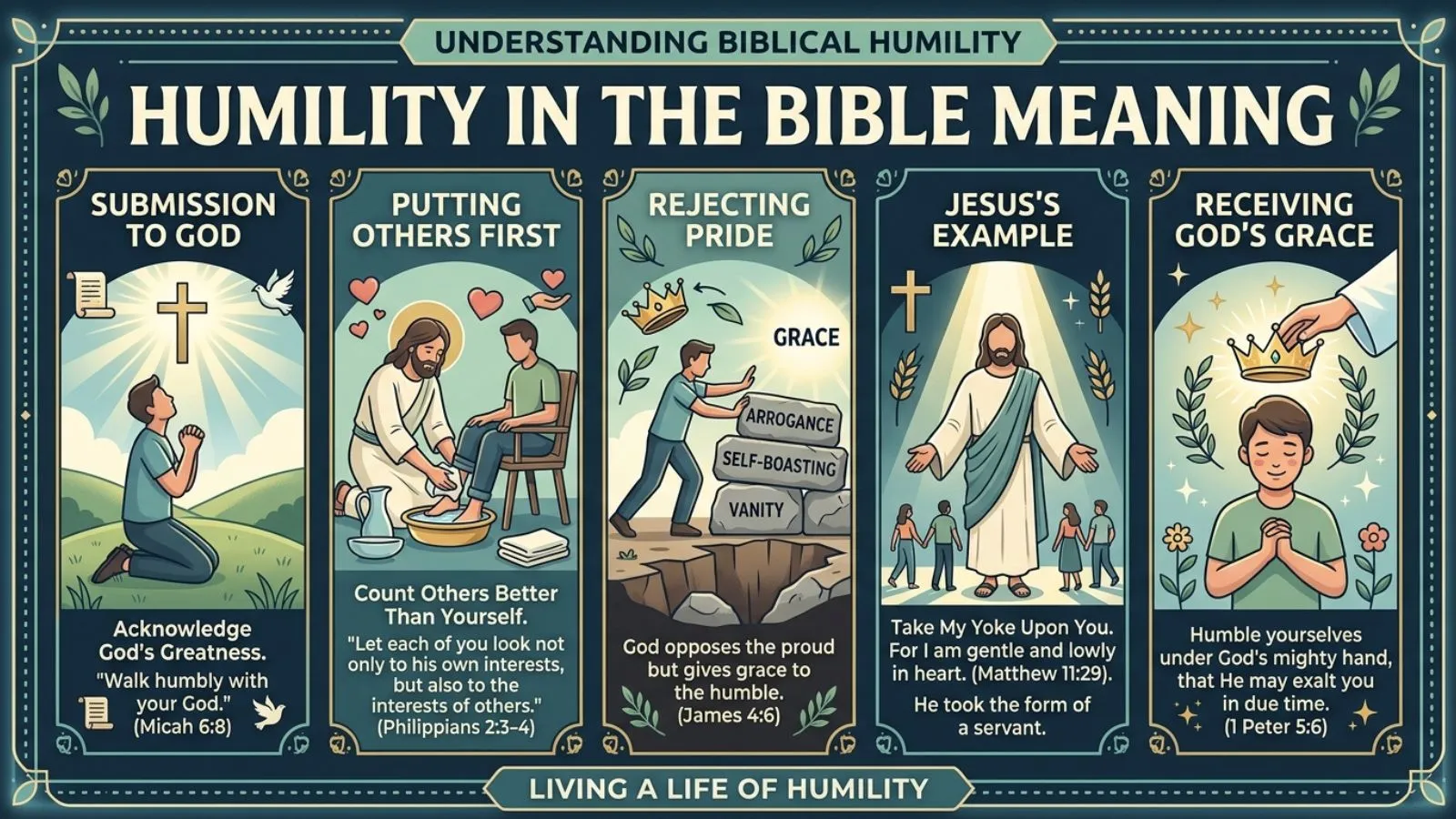
The humility in the Bible meaning begins with recognizing who God is and trusting His wisdom above our own. Biblical humility is not weakness. Instead, it is strength that chooses obedience, kindness, and dependence on God.
Throughout Scripture, humble people are described as those who listen to God, accept correction, and serve others with love. Rather than seeking praise, they seek God’s will.
One of the clearest verses is:
“Humble yourselves before the Lord, and he will lift you up.” (James 4:10)
This verse reminds believers that God honors those who willingly place Him first. When we stop chasing pride and personal glory, God works in ways we cannot imagine.
Another important passage says:
“God opposes the proud but shows favor to the humble.” (1 Peter 5:5)
This powerful truth reveals that humility invites God’s grace. Pride builds walls between people and God, while humility opens the heart to His guidance.
Jesus gave the greatest example of humility.
Although He is the Son of God, He chose to serve others. He washed His disciples’ feet, welcomed the overlooked, forgave sinners, and gave His life for the world.
Philippians 2:5–8 teaches believers to have the same attitude as Christ. Jesus humbled Himself and became obedient to God’s plan, even when it required great sacrifice.
The Bible also connects humility with wisdom.
Proverbs 11:2 says:
“When pride comes, then comes disgrace, but with humility comes wisdom.”
A humble person continues learning because they know they do not have all the answers. They depend on God’s direction instead of their own understanding.
Positive Biblical Meanings of Humility
Humility often represents:
- Trust in God’s plan
- A teachable spirit
- Wisdom and understanding
- Grace and forgiveness
- Peace in difficult seasons
- A servant’s heart
- Growing closer to God
People who walk humbly often experience deeper spiritual growth because they are willing to let God shape their hearts.
A Gentle Warning About Pride
The Bible also warns about pride because it turns people away from God.
Proverbs 16:18 says:
“Pride goes before destruction, a haughty spirit before a fall.”
This warning is not meant to create fear. Instead, it encourages believers to examine their hearts regularly.
When pride begins to grow, humility helps us return to God’s path through prayer, repentance, and trust.
The humility in the Bible meaning ultimately points toward a life that reflects Jesus—filled with love, compassion, patience, and faith.
Spiritual Significance and Symbolism
The spiritual symbolism of humility reaches far beyond being polite or modest. It reflects a heart that willingly says, “God, I trust You more than myself.”
Many believers experience moments when life feels uncertain. Plans change. Prayers seem unanswered. During those seasons, humility teaches us to keep walking by faith instead of fear.
A humble heart does not demand immediate answers. Instead, it waits patiently, believing God is still working.
Humility also transforms relationships.
Rather than arguing to prove we are right, we choose forgiveness.
Rather than seeking recognition, we celebrate others.
Rather than holding onto anger, we ask God to soften our hearts.
These simple choices reflect Christ’s character every day.
In everyday life, humility may symbolize:
- Depending on God’s guidance
- Serving others with joy
- Choosing forgiveness over pride
- Listening before speaking
- Growing through correction
- Finding peace through surrender
Humility also leads to spiritual awakening.
As believers spend time in prayer, reading Scripture, and trusting God’s timing, they often become more compassionate, patient, and grateful.
The Holy Spirit gently shapes humble hearts into people who reflect Jesus more clearly.
That transformation is one of the greatest blessings of Christian faith.
Biblical Interpretations in Dreams or Real Life
Sometimes humility appears in dreams or real-life experiences through symbols instead of direct words.
You may dream about kneeling, washing someone’s feet, helping another person, or lowering yourself to lift someone else up. While dreams should never replace Scripture, these images may encourage self-reflection and prayer.
A peaceful dream involving humble service may remind you that God is inviting you to trust Him, release pride, and walk faithfully.
If the dream involves conflict, embarrassment, or learning from mistakes, it may encourage repentance, spiritual growth, or a renewed dependence on God.
In daily life, humility often appears through ordinary moments.
Perhaps someone forgives you.
Perhaps you choose kindness when you could argue.
Perhaps God asks you to wait patiently instead of forcing your own plans.
These moments can become gentle reminders that God is shaping your heart.
Whenever you experience these situations, pray for wisdom and compare your thoughts with God’s Word. Scripture remains the safest guide for understanding every spiritual message.
Practical Lessons & Faith Insights
The humility in the Bible meaning reminds us that true strength begins with trusting God. Spend time in prayer, welcome His guidance, and allow Him to shape your heart each day. Choose kindness over pride, serve others with love, and remember that God’s timing is always better than our own. A humble heart creates room for His peace, wisdom, and lasting grace.
Conclusion
The humility in the Bible meaning teaches that God’s greatest blessings often grow in hearts that trust Him completely.
Humility is not about becoming less valuable. It is about becoming more like Christ through faith, love, and obedience.
As you walk with God each day, let humility lead you closer to His wisdom, strengthen your relationships, and fill your life with His lasting peace and hope.