Hey, I want to share something that happened to me recently about mercy in the Bible meaning.
I was chatting with a friend when I suddenly saw this term pop up, and honestly, I had no clue what it meant at first.
I kept wondering, “Am I missing something here?” It was a bit confusing, and I didn’t want to respond the wrong way.
So, I decided to look into mercy in the Bible meaning and figure out its meaning and context.
After understanding it, I realized how important it is to know these terms to avoid awkward situations in conversations.
I handled it by learning the proper meaning and responding confidently, and now I feel ready whenever I see mercy in the Bible meaning again in chats or social media.
As I explored further, I discovered that biblical mercy is far more than kindness—it is God’s compassionate love, His willingness to forgive, and His faithful care for people even when they don’t deserve it. Understanding mercy in the Bible opens the door to a deeper relationship with God and a greater appreciation of His amazing grace.
Biblical Meaning of Mercy in the Bible
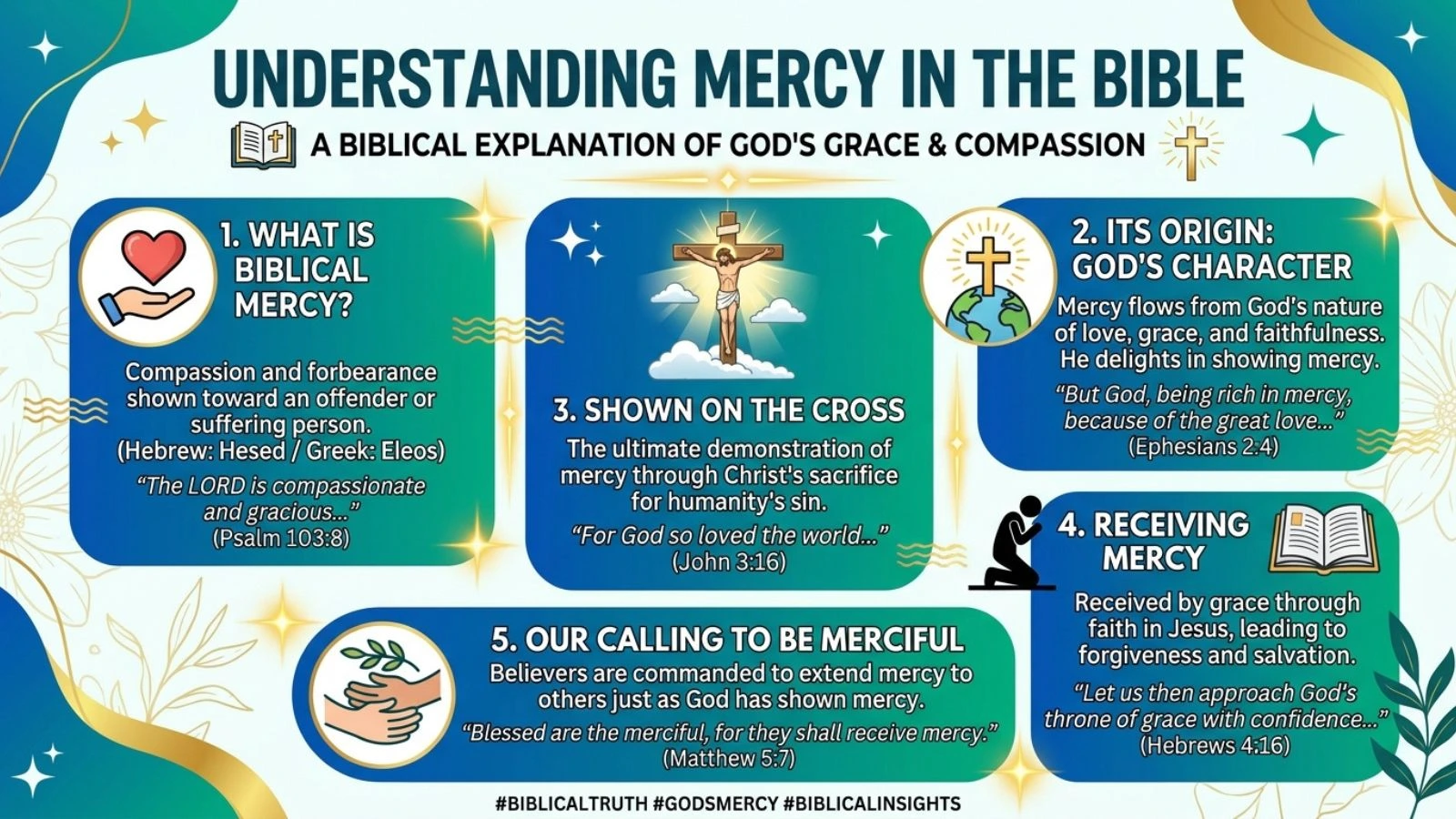
The mercy in the Bible meaning centers on God’s loving compassion toward people who cannot save themselves. Mercy means God chooses kindness instead of punishment, forgiveness instead of condemnation, and love instead of rejection.
Throughout Scripture, mercy reveals God’s heart.
One of the clearest verses is Lamentations 3:22–23:
“Because of the Lord’s great love we are not consumed, for his compassions never fail. They are new every morning.”
This verse reminds believers that every new day begins with fresh mercy. No matter what happened yesterday, God offers hope today.
Another powerful example appears in Psalm 103:8:
“The Lord is compassionate and gracious, slow to anger, abounding in love.”
Here, mercy is connected with God’s patience. He does not rush to judge His children. Instead, He invites them to return to Him with humble hearts.
Mercy Revealed Through Jesus Christ
The greatest picture of mercy is found in Jesus.
When Jesus met sinners, He offered forgiveness instead of shame. He healed the sick, welcomed the outcast, and gave hope to those everyone else rejected.
In Luke 6:36, Jesus taught:
“Be merciful, just as your Father is merciful.”
This verse shows that God’s mercy should shape the lives of His followers. Christians are called to show forgiveness, patience, and compassion because they have received mercy themselves.
Mercy and Forgiveness
Mercy is closely connected to forgiveness.
When we confess our sins, God does not hold our failures against us forever.
1 John 1:9 says:
“If we confess our sins, he is faithful and just and will forgive us our sins and purify us from all unrighteousness.”
This promise brings comfort to anyone carrying guilt. God’s mercy opens the door to restoration.
Mercy Brings Hope
Life often includes disappointment, fear, and failure.
Yet the Bible teaches that mercy gives believers hope.
Hebrews 4:16 encourages us:
“Let us then approach God’s throne of grace with confidence, so that we may receive mercy and find grace to help us in our time of need.”
Instead of hiding from God during difficult seasons, believers are invited to come closer to Him.
A Gentle Warning
The Bible also teaches that mercy should never be taken for granted.
God desires sincere repentance rather than empty words.
Those who continually reject His truth miss the blessing of walking in His mercy. Yet even then, God patiently calls people back to Himself because His desire is restoration, not destruction.
This balance reveals the beauty of biblical symbolism. Mercy is both an invitation and a reminder to live faithfully with grateful hearts.
Spiritual Significance and Symbolism
The spiritual symbolism of mercy reaches far beyond forgiveness.
It reflects God’s faithful character, His endless compassion, and His desire to restore broken lives.
Many believers experience seasons when they feel overwhelmed by mistakes or painful circumstances. During those moments, mercy becomes a reminder that God has not abandoned them.
Instead, His presence remains close.
Mercy also teaches humility.
When we remember how much God has forgiven us, we become more patient with others. Families heal. Friendships grow stronger. Hearts become softer.
This spiritual transformation happens little by little.
Someone who once held anger may learn to forgive.
A person living with fear may discover peace through prayer.
Someone carrying shame may finally accept God’s love.
These are beautiful signs of spiritual awakening.
Mercy also strengthens Christian belief.
It reminds believers that salvation is not based on human perfection but on God’s loving kindness through Jesus Christ.
In daily life, mercy may symbolize:
- Choosing forgiveness instead of revenge
- Showing compassion to people who are struggling
- Trusting God’s love after failure
- Growing in patience and kindness
- Finding hope during difficult seasons
Every act of mercy reflects the heart of God.
Biblical Interpretations in Dreams or Real Life
Sometimes people dream about forgiveness, helping others, receiving unexpected kindness, or hearing words about mercy.
While the Bible does not give one fixed meaning for every dream, these experiences may encourage believers to seek God in prayer.
A peaceful dream filled with mercy may symbolize:
- God’s forgiveness
- Spiritual healing
- A season of restoration
- Renewed hope
- A reminder of God’s presence
If the dream feels heavy or convicting, it may gently encourage someone to forgive another person, confess hidden sin, or return to God with an open heart.
In everyday life, many people experience God’s mercy through answered prayers, unexpected blessings, restored relationships, or strength during hardship.
Rather than depending only on dreams, Christians are encouraged to compare every experience with Scripture and seek God’s wisdom through prayer.
God’s divine message will always agree with His Word and point people toward Jesus Christ.
Practical Lessons & Faith Insights
God’s mercy invites you to begin again.
Spend time in prayer, thank Him for His forgiveness, and ask Him to help you show mercy to others.
Trust His guidance even when life feels uncertain. As you grow in faith, remember that every new morning is another reminder of God’s unfailing compassion.
His mercy continues to bring hope, healing, and peace to every heart that seeks Him.
Conclusion
The mercy in the Bible meaning reveals the heart of a loving God who delights in forgiving, restoring, and guiding His people.
From the Old Testament to the life of Jesus Christ, mercy remains a beautiful picture of God’s compassion, grace, and endless love.
No matter where you are on your faith journey, you can confidently turn to Him.
His mercy is new every morning, offering fresh hope, lasting peace, and the assurance that His loving presence is always with you.