Have you ever come across the term Roman in the Bible and wondered why it appears so often in Scripture?
What role did the Romans play in God’s plan, and what spiritual lessons can believers learn from them today?
I remember a time when I was chatting with a friend, and the topic of Romans in the Bible came up.
At first, I had no clue what it really meant. I kept wondering, “Am I missing something important here?” The term seemed simple, but the more I thought about it, the more curious I became.
I didn’t want to misunderstand its meaning or miss the deeper message behind it.
So, I decided to look into the Roman meaning in the Bible and explore its historical and spiritual significance.
As I studied Scripture, I discovered that Romans were more than just people from an ancient empire. They played a major role in many biblical events, including the life, ministry, crucifixion, and resurrection of Jesus Christ.
Understanding this term helped me see the Bible from a new perspective. It also gave me greater insight into God’s sovereignty and how He works through people, nations, and circumstances to fulfill His purposes.
Now, whenever I encounter references to Romans in Scripture, I understand their importance and the valuable lessons they offer for Christian faith today.
Biblical Meaning of Roman in the Bible
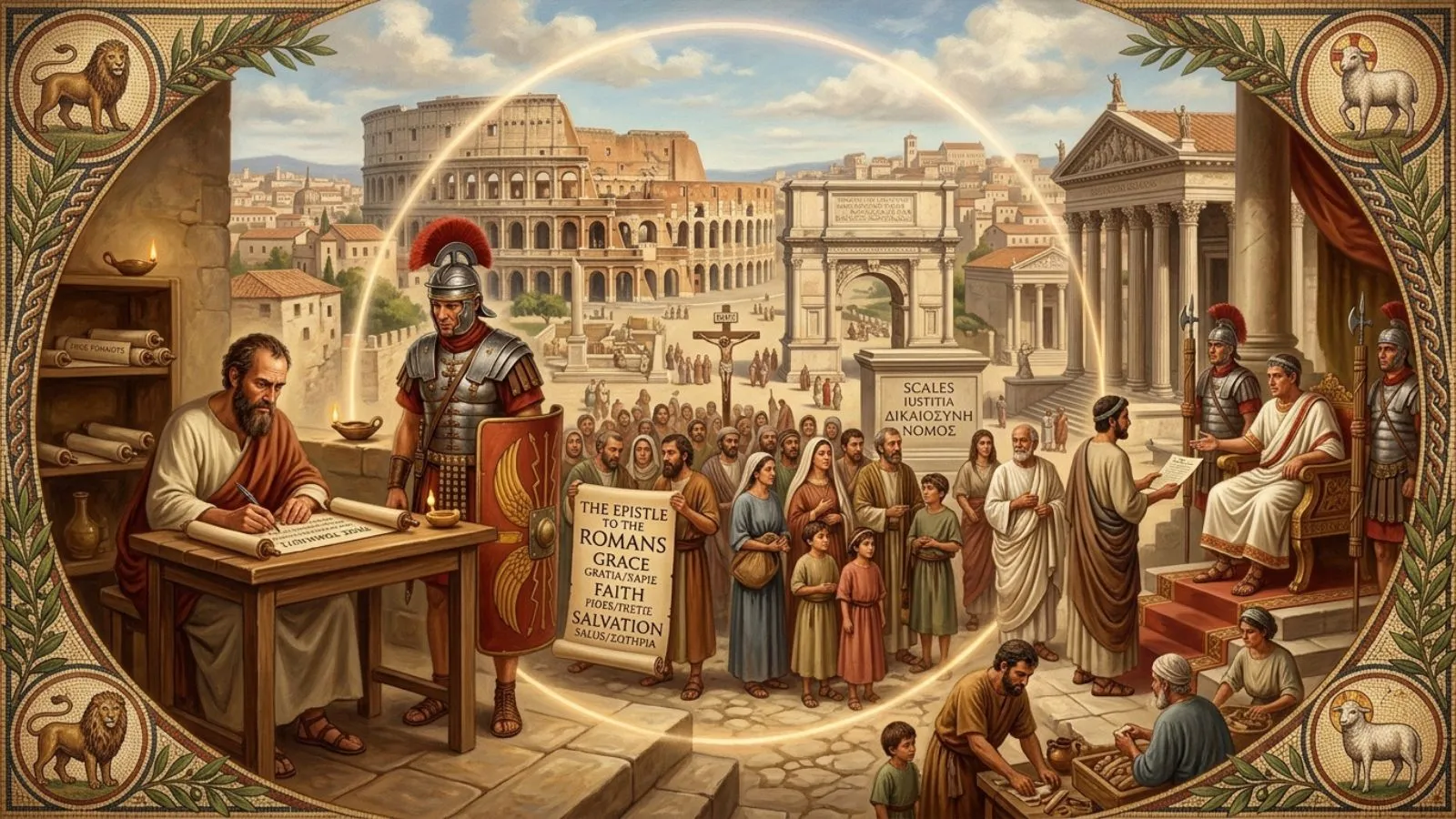
In the Bible, the term Roman usually refers to the Roman Empire or Roman authority. Rome plays a major role in the New Testament, especially during the life of Jesus Christ and the early church.
At that time, Rome ruled Israel politically. Roman governors like Pontius Pilate had the authority to judge criminals, including Jesus. Roman soldiers were present during key moments such as the crucifixion (Matthew 27:27–37).
The Bible does not only show Rome as a political power but also as part of God’s greater plan.
Key Biblical Themes Connected to Rome
1. Human Authority Under God’s Control
Romans 13:1 reminds believers that all authority is allowed by God:
“Let everyone be subject to the governing authorities, for there is no authority except that which God has established.”
This shows that even Roman rulers were ultimately under God’s control.
2. Suffering and Faith
Early Christians often suffered under Roman rule. Yet this persecution helped spread the Gospel faster across nations.
3. The Spread of the Gospel
The Roman road system helped missionaries like Paul travel widely, spreading Christianity across the empire.
Positive Meaning
- God’s plan working through world powers
- Expansion of the Gospel
- Structure, order, and communication
Warning Meaning
- Pride and oppression of worldly power
- Persecution of believers
- Trusting human authority more than God
Spiritual Significance and Symbolism
Spiritually, “Roman” in the Bible can represent worldly systems and human power. It reminds believers that no matter how strong earthly kingdoms seem, God’s kingdom is greater.
Rome also symbolizes the challenges Christians face in a world that does not always follow God’s truth. Yet, through these challenges, faith grows stronger.
For example, early Christians prayed and remained faithful even when they were misunderstood or persecuted. Their strength came not from Rome, but from God’s presence and promises.
In a personal sense, “Roman” can symbolize anything in life that feels powerful or overwhelming—stress, systems, or pressures. The Bible teaches that even these are not beyond God’s control.
This brings comfort: no matter what “Rome” looks like in your life, God is still in charge.
Biblical Interpretations in Dreams or Real Life
If someone sees Roman soldiers, Roman buildings, or Roman times in dreams, it is often interpreted symbolically in a Christian context.
It may represent:
- A season of pressure or authority challenges
- A reminder of spiritual warfare or trials
- A call to stay faithful under difficulty
A peaceful dream involving Romans may suggest order, protection, or divine structure. A fearful dream may reflect stress, conflict, or feeling controlled by external forces.
In real life, this symbol often appears during times when someone feels pressure from rules, systems, or authority figures. The message is usually to remain strong in faith and trust God’s plan.
Practical Lessons & Faith Insights
The Roman meaning in the Bible teaches that God is above all earthly power. Even when life feels controlled by strong systems or pressure, God’s purpose is still working. Stay faithful, trust His timing, and remember that His kingdom will never fail.
Conclusion
In the Bible, “Roman” represents a powerful empire, but also a reminder that God is always in control of history and human authority. It teaches believers to stay faithful under pressure and trust God’s greater plan.
No matter what “Rome” represents in your life, God’s truth remains stronger and everlasting.