Have you ever felt like life suddenly became quiet, empty, or confusing—like you were walking through a “wilderness” season?
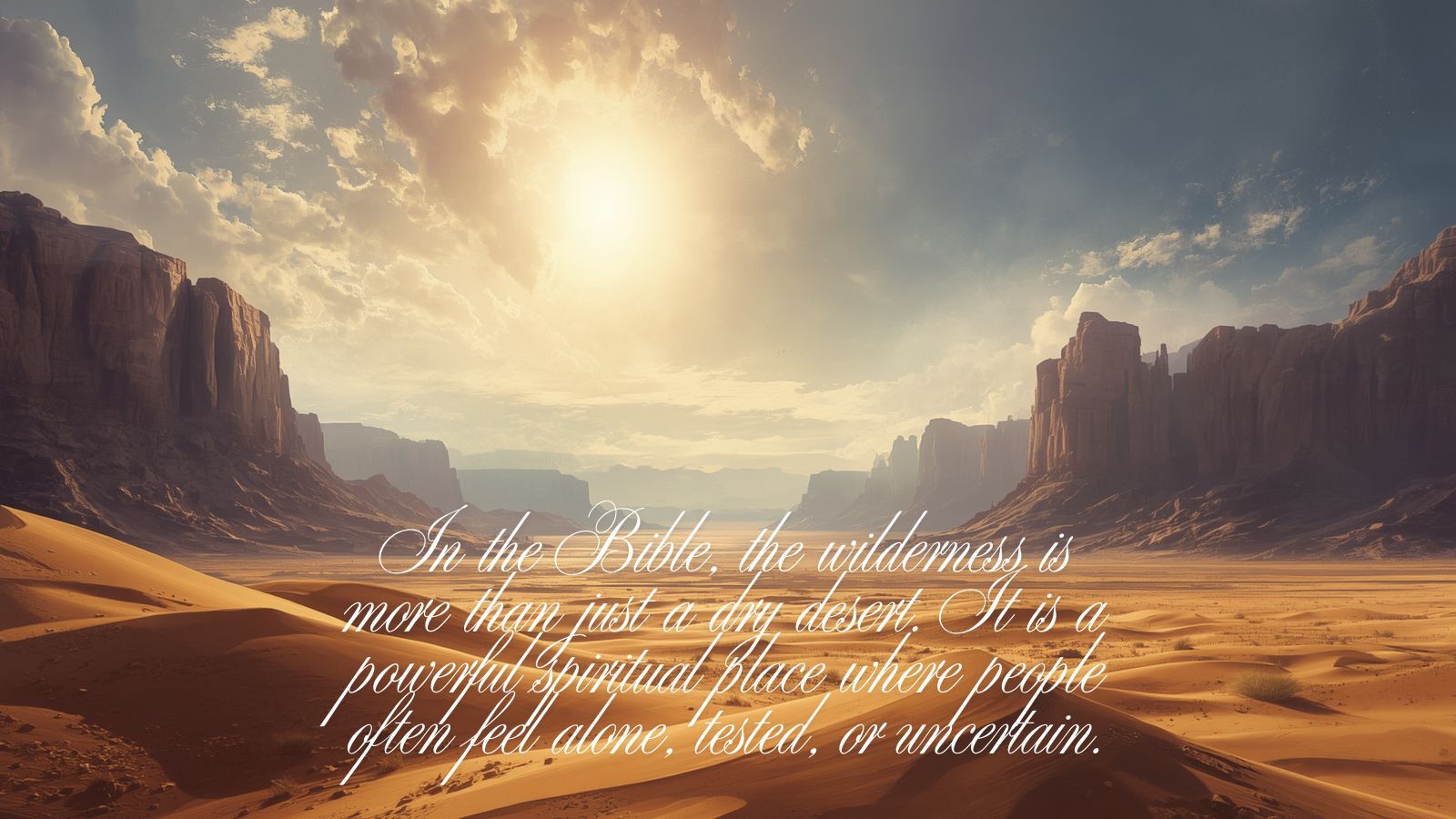
In the Bible, the wilderness is more than just a dry desert. It is a powerful spiritual place where people often feel alone, tested, or uncertain.
Yet, it is also where God’s presence becomes deeply real.
From Moses to Elijah, from Israel to Jesus Himself, the wilderness shows up again and again in Scripture. It is not always a punishment. Times, it is a place of preparation, transformation, and divine encounter.
So when we ask, “What does wilderness mean in the Bible?” we are really asking: What is God doing in my hard and lonely seasons?
Let’s explore the biblical meaning and discover how God can speak, guide, and shape us even in our wilderness moments.
Biblical Meaning of Wilderness in the Bible
In the Bible, the wilderness often refers to a dry, empty, and uninhabited place. But spiritually, it carries much deeper meaning.
One of the most famous wilderness stories is found in Exodus. After God freed the Israelites from Egypt, He led them into the wilderness for 40 years. This was not random. It was a time of testing, teaching, and preparation before entering the Promised Land.
God used the wilderness to:
- Teach them dependence on Him
- Provide daily manna (Exodus 16:4)
- Shape their faith and obedience
Another powerful example is Jesus in the wilderness (Matthew 4:1–11). Before starting His ministry, Jesus was led by the Spirit into the wilderness to be tested by Satan. Even there, He remained faithful to God’s Word.
This shows something important: the wilderness is not always a sign of God’s absence—it can be a place of spiritual strengthening.
Positive Meaning
- A season of growth and preparation
- A place of deep prayer and dependence on God
- A time where God removes distractions
Warning Meaning
- A place of testing and temptation
- A time of feeling spiritually dry or distant
- A reminder not to turn away from God in hardship
Spiritual Significance and Symbolism
Spiritually, the wilderness represents seasons in life where everything feels stripped away.
It is where God often:
- Breaks pride and self-reliance
- Teaches trust and patience
- Strengthens faith through trials
In the wilderness, you may not have comfort—but you gain clarity. You may feel weak—but you learn to rely on God’s strength.
For example, someone going through loss, waiting, or uncertainty may feel like they are in a wilderness season.
But during this time, God may be building something deeper in their heart—faith that cannot be shaken.
The wilderness is not meant to destroy you. It is meant to prepare you.
Biblical Interpretations in Dreams or Real Life
If the wilderness appears in dreams or personal experiences, it is often a symbol of a spiritual season.
A peaceful wilderness may represent:
- God’s presence in solitude
- A season of reflection and healing
A harsh or scary wilderness may represent:
- Emotional struggle or confusion
- A call to return to prayer and trust in God
In real life, wilderness seasons can feel like delays, silence from God, or unexpected challenges. But Scripture reminds us that even in the desert, God is still leading and protecting His people.
Practical Lessons & Faith Insights
The wilderness teaches us to trust God even when life feels empty or uncertain. It is a reminder that God is working in silence, shaping your faith, and preparing you for something greater. Stay faithful, pray daily, and believe that every wilderness season has a purpose.
Conclusion
In the Bible, the wilderness is not just a dry place—it is a spiritual journey of growth, testing, and transformation. It may feel lonely, but it is often where God speaks the clearest and works the deepest.
If you are in a wilderness season, remember: God has not left you. He is guiding you toward something greater.
Trust Him—because even in the wilderness, His presence is your way forward.