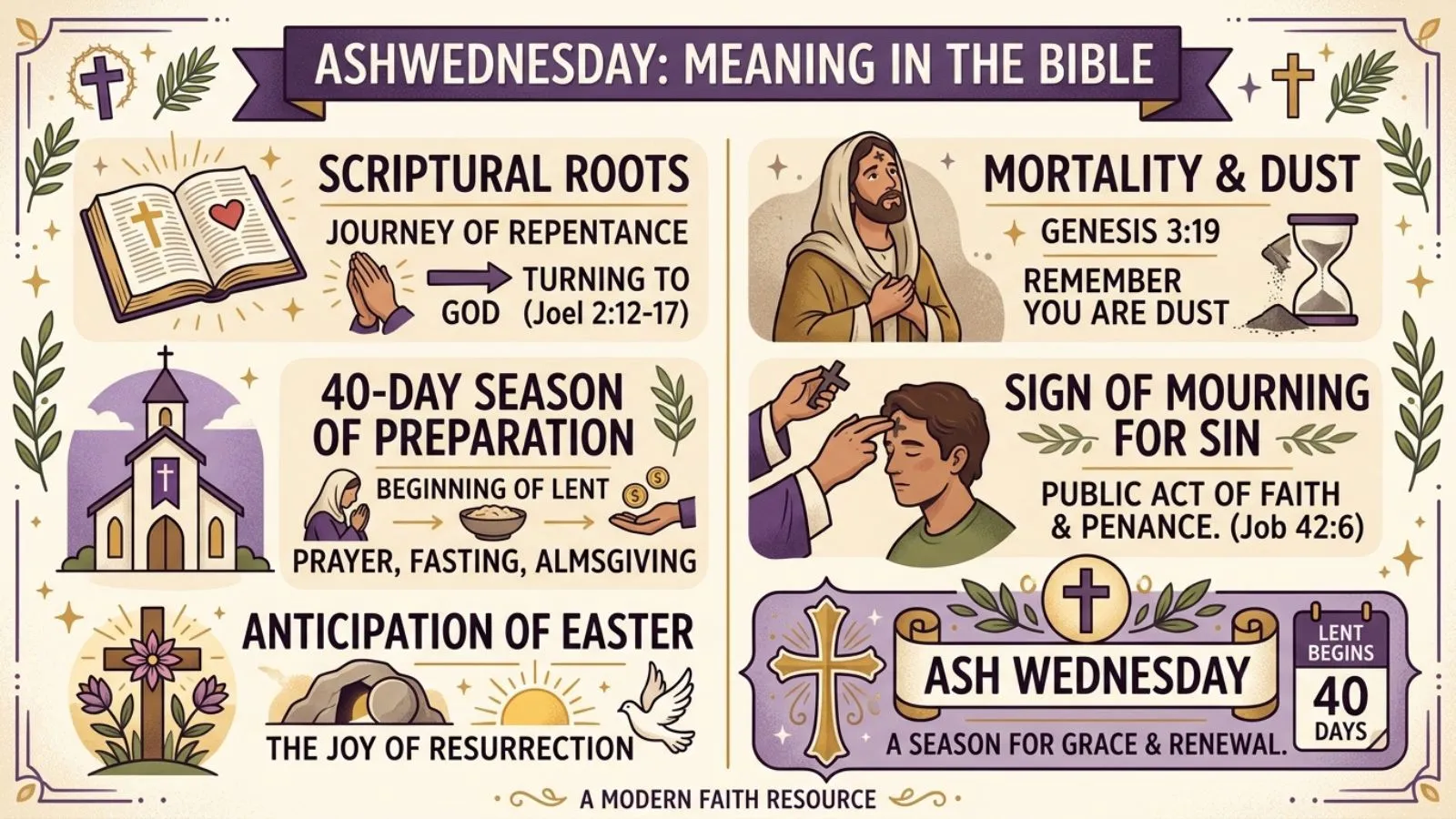
“What do ashes on the forehead have to do with faith, repentance, and God’s mercy? The answer reveals one of the Bible’s most meaningful spiritual traditions.”
Hey, I want to share something that happened to me recently about Ash Wednesday Meaning in the Bible.
I was chatting with a friend when I suddenly saw this term pop up, and honestly, I had no clue what it meant at first.
I kept wondering, “Am I missing something here?” It was a bit confusing, and I didn’t want to respond the wrong way.
So, I decided to look into Ash Wednesday Meaning in the Bible and figure out its meaning and context.
After understanding it, I realized how important it is to know these terms to avoid awkward situations in conversations.
I handled it by learning the proper meaning and responding confidently, and now I feel ready whenever I see Ash Wednesday Meaning in the Bible again in chats or social media.
As I explored further, I discovered that Ash Wednesday is much more than a church tradition. It marks the beginning of a season of repentance, prayer, and spiritual renewal.
The ashes remind believers of human mortality and the need to turn back to God with humble hearts.
Understanding the Ash Wednesday Meaning in the Bible can deepen your faith, help you appreciate its biblical symbolism, and encourage you to reflect on God’s grace, forgiveness, and the hope found in Christ.
Biblical Meaning of Ash Wednesday
Ash Wednesday marks the beginning of Lent, a forty-day season of prayer, fasting, repentance, and spiritual preparation before Easter. While the Bible does not command Christians to observe Ash Wednesday, its message is deeply rooted in biblical teaching.
Ashes Represent Humility Before God
Throughout the Old Testament, people placed ashes on themselves as a sign of sorrow, repentance, and humility.
One clear example appears in Job 42:6, where Job says:
“Therefore I despise myself and repent in dust and ashes.”
Job recognized God’s greatness and responded with a humble heart. The ashes showed his desire to seek God’s mercy instead of trusting his own strength.
In the same way, Ash Wednesday reminds believers to approach God with honest hearts.
Ashes Symbolize Repentance
The Bible often connects ashes with repentance.
In Daniel 9:3, Daniel prayed while fasting and wearing sackcloth and ashes as he confessed the sins of his people.
Likewise, the people of Nineveh responded to Jonah’s warning by fasting, wearing sackcloth, and humbling themselves before God (Jonah 3:5–10). Because they truly repented, God showed them mercy.
Ash Wednesday carries this same message.
It invites believers to confess their sins, receive God’s forgiveness, and begin again.
Remembering That Life Is Temporary
One of the most familiar Ash Wednesday sayings comes from Genesis 3:19:
“For dust you are and to dust you will return.”
When ashes are placed on the forehead, many churches repeat these words.
This reminder is not meant to create fear. Instead, it encourages people to remember that earthly life is temporary while eternal life with God is forever.
Rather than focusing only on today, believers are invited to place their hope in Christ.
Preparing the Heart for Easter
Ash Wednesday begins the journey toward the celebration of Jesus’ resurrection.
The weeks of Lent encourage Christians to:
- Pray more faithfully.
- Read God’s Word.
- Practice forgiveness.
- Fast with sincere hearts.
- Draw closer to Jesus.
These spiritual habits help believers grow in their relationship with God and prepare to celebrate the victory of Easter with thankful hearts.
A Warning Against Empty Religious Actions
The Bible also teaches an important balance.
Jesus warned against performing religious acts simply to impress others.
In Matthew 6:16–18, Jesus instructed His followers to fast quietly rather than seeking attention.
This reminds believers that the true purpose of Ash Wednesday is not the ashes themselves. God cares most about a changed heart.
The prophet Joel 2:12–13 shares this beautiful invitation:
“Return to me with all your heart… Rend your heart and not your garments.”
God desires genuine repentance more than outward appearances.
God’s Mercy Is Always Available
Perhaps the greatest message behind Ash Wednesday is hope.
No matter how far someone has wandered, God lovingly welcomes those who return to Him.
1 John 1:9 promises:
“If we confess our sins, he is faithful and just and will forgive us our sins.”
Ash Wednesday reminds every believer that God’s grace is greater than human failure.
Every new beginning starts with His mercy.
Spiritual Significance and Symbolism
The Ash Wednesday meaning in the Bible reaches beyond a single day on the calendar. It represents a heart that longs to walk closely with God.
One important lesson is humility.
Life often becomes busy. People focus on work, family, and daily responsibilities. During these moments, it is easy to forget to spend time with God.
Ash Wednesday gently calls believers back into His presence.
Another powerful symbol is spiritual renewal.
Just as spring brings new life after winter, God renews hearts that seek Him through prayer and repentance.
Many Christians use this season to forgive others, let go of bitterness, and grow in kindness.
Ash Wednesday also teaches dependence on God.
Instead of trusting personal success or strength, believers remember that every blessing comes from the Lord.
This season encourages simple acts of faith:
- Spending quiet time in prayer.
- Reading Scripture each day.
- Helping someone in need.
- Choosing forgiveness instead of anger.
- Trusting God’s timing.
These small choices often lead to lasting spiritual transformation.
Over time, believers may notice greater peace, stronger faith, and a deeper understanding of God’s love.
Ash Wednesday reminds Christians that true change begins inside the heart.
Biblical Interpretations in Dreams or Real Life
Some people dream about ashes, crosses, churches, or Ash Wednesday during important seasons of life.
While the Bible does not give specific dream interpretations for Ash Wednesday, these experiences can encourage thoughtful prayer and reflection.
A peaceful dream involving ashes may symbolize repentance, healing, or a fresh beginning with God.
If someone dreams of praying during Ash Wednesday, it may reflect a growing desire to seek God’s guidance or spend more time with Him.
On the other hand, a dream filled with fear or sadness may encourage the dreamer to bring worries, guilt, or unanswered questions before the Lord.
In everyday life, seeing ashes or being reminded of Ash Wednesday can simply become an invitation to pause and ask:
- Am I growing closer to God?
- Is there something I need to confess?
- Am I trusting God’s grace?
Rather than depending only on dreams or signs, Christians are encouraged to seek wisdom through Scripture, prayer, and the guidance of the Holy Spirit.
Practical Lessons & Faith Insights
The Ash Wednesday meaning in the Bible reminds us that God welcomes every heart that turns back to Him. Spend time in prayer, read His Word, and trust His mercy. Let repentance lead to peace instead of guilt. As you walk with Christ, allow His grace to transform your heart each day. Even small steps of faith can bring lasting spiritual growth and renewed hope.
Conclusion
Ash Wednesday is a beautiful reminder of repentance, humility, and God’s unfailing mercy.
Although the Bible does not command believers to observe this day, its message reflects timeless biblical truths about returning to God with sincere hearts.
Through prayer, faith, and trust in Jesus Christ, every believer can experience forgiveness, spiritual renewal, and lasting hope.
May this season encourage you to draw closer to God and discover the peace that comes from walking faithfully in His presence.