Have you ever wondered why the Bible contains these specific books—and not others? The answer begins with understanding the Canon Bible Meaning.
At first, the word canon may sound confusing, and many people mistakenly think it refers to a weapon. In reality, it has a completely different and deeply important meaning in Christianity.
I remember coming across this term during a Bible discussion and feeling unsure about what it meant.
Questions filled my mind: Who decided which books belong in the Bible? Why are these books trusted? Has the Bible always been the same? The more I explored these questions, the more I discovered the incredible story behind God’s Word.
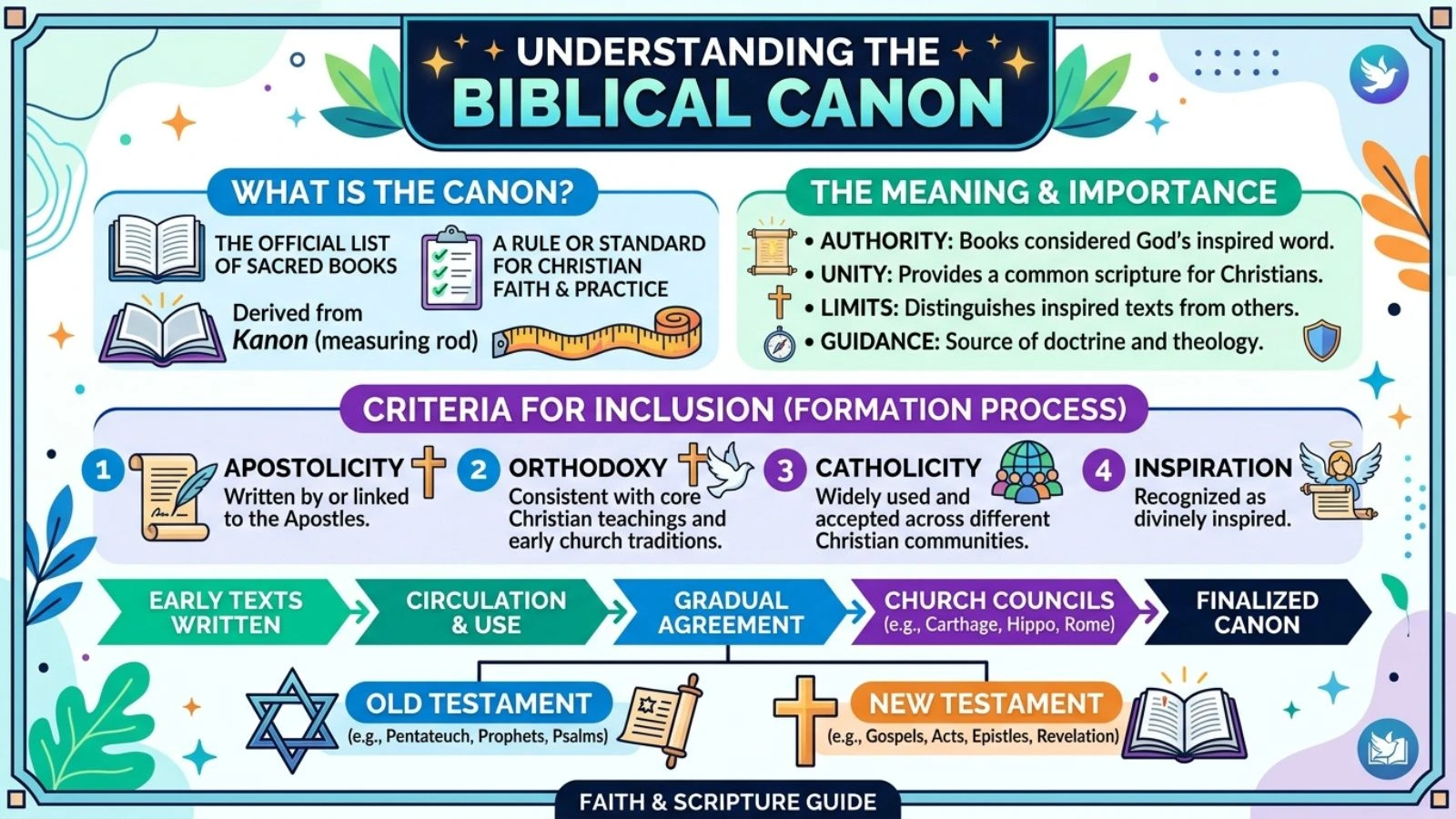
The Canon Bible Meaning refers to the official collection of books that Christians recognize as God’s inspired and authoritative Word.
These books were not chosen randomly. Instead, they were carefully recognized by the early church because they faithfully revealed God’s truth and carried His divine authority.
Understanding the biblical canon helps believers appreciate how God preserved His message throughout history for every generation.
Whether you’re new to the Bible or have been reading Scripture for years, learning about the Canon Bible Meaning strengthens your confidence in God’s Word.
It explains why the Bible contains 66 books in most Protestant Bibles and how these writings continue to guide believers in faith, truth, and spiritual growth today.
In this guide, we’ll explore what the Bible canon really means, how it was formed, what Scripture says about God’s inspired Word, and why understanding the biblical canon matters for every Christian today.
Biblical Meaning of Canon
The canon Bible meaning refers to the official collection of books recognized as God-inspired Scripture. The word canon comes from a Greek word meaning “rule,” “measuring rod,” or “standard.” It represents the books accepted as God’s trustworthy Word.
The Bible itself teaches that all Scripture is inspired by God.
“All Scripture is God-breathed and is useful for teaching, rebuking, correcting and training in righteousness.”
— 2 Timothy 3:16
This verse reminds believers that Scripture is not simply human writing. God worked through faithful authors to reveal His truth.
The Old Testament was already recognized by God’s people long before Jesus came. Jesus Himself treated these Scriptures as God’s Word. He often quoted them while teaching and during His ministry.
“Your word is truth.”
— John 17:17
Jesus trusted the Scriptures completely. His example encourages Christians to do the same.
After Jesus’ resurrection, His apostles wrote letters and accounts of His life. Early churches carefully preserved these writings because they carried apostolic authority and agreed with Christ’s teachings.
The process of recognizing the biblical canon was not about people deciding which books would become God’s Word. Instead, believers prayerfully recognized the books that God had already inspired.
Why Were Certain Books Included?
Several important qualities helped early Christians recognize inspired books:
- They were written by apostles or close companions of the apostles.
- Their teachings agreed with the rest of Scripture.
- Churches widely accepted and used them.
- They consistently pointed people toward Jesus Christ.
This careful process protected believers from false teachings and preserved the truth of the Gospel.
A Reminder of God’s Faithfulness
The biblical canon shows God’s care for His people. Throughout history, God preserved His message despite wars, persecution, and changing cultures.
Isaiah reminds us of this promise:
“The grass withers and the flowers fall, but the word of our God endures forever.”
— Isaiah 40:8
God’s Word remains trustworthy because He faithfully protects His truth.
A Call to Follow God’s Standard
The word canon also reminds believers that Scripture is the standard for faith and daily living.
Psalm 119 celebrates God’s guidance:
“Your word is a lamp for my feet, a light on my path.”
— Psalm 119:105
The Bible provides wisdom when life feels uncertain. It helps Christians make decisions rooted in God’s truth rather than changing opinions.
A Loving Warning
The Bible also warns against changing God’s message.
In Revelation we read a serious reminder not to add to or take away from God’s revealed Word (Revelation 22:18–19).
This warning encourages believers to treasure Scripture as God has given it and to remain faithful to His truth.
The canon Bible meaning ultimately points to God’s loving desire to guide His people through His preserved and trustworthy Word.
Spiritual Significance and Symbolism
The canon Bible meaning carries rich spiritual symbolism for every believer.
It represents God’s faithfulness.
Through many centuries, kingdoms rose and fell, cultures changed, and countless challenges came, yet God’s Word remained.
This reminds Christians that God keeps His promises.
The canon also symbolizes truth.
In a world filled with different opinions, Scripture provides a firm foundation. Christians do not need to wonder where to find lasting truth because God has already revealed it.
The canon also points to unity.
Although the Bible contains sixty-six books written by many different authors over hundreds of years, it tells one beautiful story.
From Genesis to Revelation, God’s plan of salvation through Jesus Christ remains clear.
For many believers, reading Scripture becomes part of a daily walk with God.
A person facing fear may find peace in the Psalms.
Someone needing wisdom may read Proverbs.
A believer searching for hope may turn to the Gospels or the letters of Paul.
The canon reminds Christians that God continues to speak through His written Word.
This often leads to spiritual growth, deeper prayer, stronger faith, and greater confidence in God’s promises.
As believers spend time reading Scripture, they experience transformation. Their hearts become more focused on Christ, and their lives reflect His love more clearly.
Biblical Interpretations in Dreams or Real Life
Some people dream about receiving, reading, or protecting a Bible. Others may repeatedly hear the word canon during a season of spiritual searching.
From a Christian perspective, such experiences should always be tested against Scripture rather than treated as automatic messages from God.
If someone dreams about finding a Bible, it may encourage them to seek God’s truth more deeply.
Dreaming about reading Scripture may reflect a desire for wisdom, guidance, or a closer relationship with God.
If a dream includes confusion about missing or damaged Bible pages, it may gently remind the dreamer to return to God’s Word for clarity and direction.
In everyday life, hearing about the biblical canon may simply inspire believers to study the Bible with greater appreciation. It can become a fresh invitation to trust God’s revealed truth instead of relying on personal opinions alone.
Whether through daily Bible reading or moments of reflection, Christians can pray for discernment and allow Scripture to shape their hearts.
Practical Lessons & Faith Insights
The canon Bible meaning reminds believers that God’s Word is a dependable guide for every season of life.
Take time to:
- Pray before reading Scripture.
- Trust God’s truth above changing opinions.
- Study the Bible regularly with an open heart.
- Let God’s Word shape your daily choices.
- Remember that God faithfully preserves His truth for every generation.
As you seek Him, He will continue to provide wisdom, peace, and direction.
Conclusion
The canon Bible meaning reminds us that the Bible is God’s carefully preserved and trustworthy Word.
The biblical canon reflects His faithfulness, wisdom, and desire to guide His people through every generation.
As you read Scripture, remember that God has given His Word to lead you toward truth, hope, and eternal life through Jesus Christ.
Trust His promises, stay rooted in His Word, and allow His truth to strengthen your faith every day.