Hey, I want to share something that happened to me recently about a Chronological Bible Reading Plan.
I was chatting with a friend when I suddenly saw this term pop up, and honestly, I had no clue what it meant at first.
I kept wondering, “Am I missing something here?” It was a little confusing, and I didn’t want to respond the wrong way.
So, I decided to look into the Chronological Bible Reading Plan and understand its meaning and purpose.
As I learned more, I discovered that it is a helpful way to read the Bible according to the historical order of events.
Instead of reading every book only from beginning to end, this plan helps readers follow the story of God’s people as events unfolded over time.
After understanding it, I realized how helpful a chronological Bible reading plan can be.
It can make the connection between people, events, kings, prophets, and important moments in Scripture easier to understand.
It also gives readers a clearer picture of how God’s plan developed throughout the Bible.
Learning the proper meaning helped me respond with confidence.
Now, whenever I see Chronological Bible Reading Plan in a conversation, online post, or social media discussion, I understand what it means and why many Christians use it.
It reminded me that learning more about Scripture can bring clarity, deepen faith, and help us feel more connected to God’s Word.
Biblical Meaning of a Chronological Bible Reading Plan
A chronological Bible reading plan is more than a reading schedule. It is a journey through God’s unfolding story of redemption. Reading the Bible in historical order helps believers understand how every event, promise, prophecy, and person fits into God’s perfect plan.
The Bible reminds us that all Scripture is inspired by God and is useful for teaching, correcting, and guiding believers.
“All Scripture is God-breathed and is useful for teaching, rebuking, correcting and training in righteousness.” (2 Timothy 3:16–17)
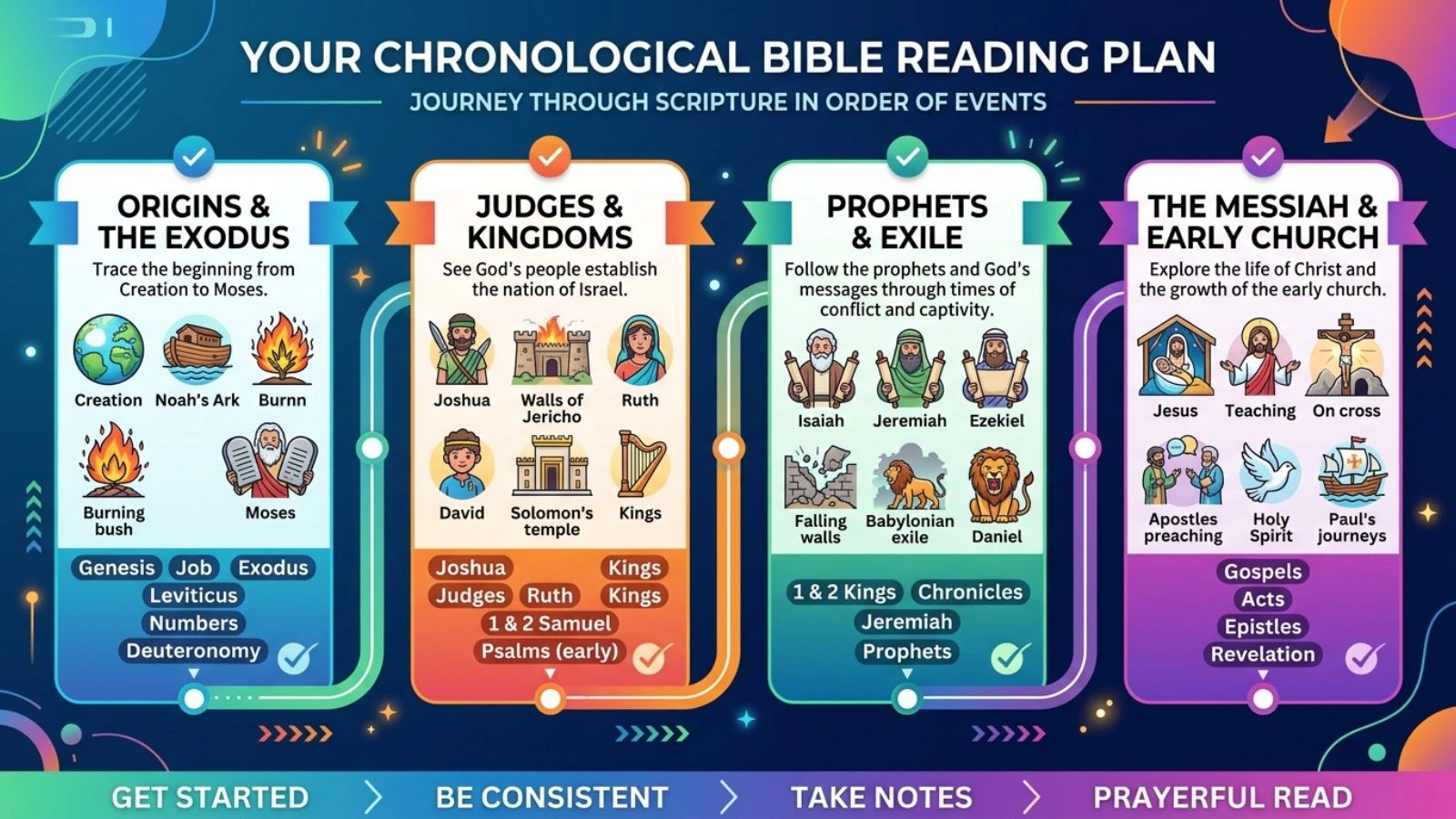
When you read the Bible chronologically, you begin with creation in Genesis. You watch humanity fall into sin, see God’s covenant with Abraham, witness Israel’s history, follow the lives of the prophets, celebrate the birth of Jesus Christ, and experience the growth of the early church.
This journey reveals one beautiful truth:
God has always been working to save His people.
A chronological reading plan also makes many Bible passages easier to understand. For example, reading David’s Psalms alongside the events of his life gives those prayers deeper meaning. Reading the prophets during the reigns of Israel’s kings explains why God sent them with messages of warning and hope.
The Bible repeatedly encourages believers to meditate on God’s Word.
“Keep this Book of the Law always on your lips; meditate on it day and night.” (Joshua 1:8)
This verse reminds us that reading Scripture should become a daily habit. A chronological plan supports this discipline by providing a clear path forward each day.
Another powerful reminder comes from Psalm 119.
“Your word is a lamp for my feet, a light on my path.” (Psalm 119:105)
God’s Word guides every season of life. Reading it in chronological order helps readers recognize His guidance throughout history and in their own lives.
Positive Spiritual Meaning
A chronological Bible reading plan often helps believers:
- Understand God’s bigger story
- Grow in daily faith
- See fulfilled prophecies
- Recognize God’s faithfulness
- Build consistent prayer habits
- Develop deeper trust in Jesus Christ
As readers see how God fulfilled promises over hundreds of years, their confidence in His promises today becomes stronger.
A Gentle Warning
Sometimes people become so focused on finishing a reading plan that they stop reflecting on what they read.
The Bible encourages believers not only to hear God’s Word but also to live it.
“Do not merely listen to the word… Do what it says.” (James 1:22)
A chronological Bible reading plan is most meaningful when it leads to obedience, prayer, and a transformed heart, not simply checking off daily chapters.
Spiritual Significance and Symbolism
A chronological Bible reading plan symbolizes walking step by step with God.
Just as God guided Israel through the wilderness one day at a time, He continues guiding believers through His Word every day.
Many Christians begin their reading journey hoping simply to understand the Bible better. Along the way, they discover something even greater—they begin to know God more personally.
Each day’s reading becomes an invitation to:
- Trust God’s timing
- Grow in patience
- Strengthen faith
- Recognize God’s presence
- Experience spiritual transformation
Imagine reading about Joseph’s suffering before his victory. Later, when facing your own difficult season, his story reminds you that God still has a purpose.
Reading about Ruth teaches quiet faithfulness.
Esther teaches courage.
David teaches repentance.
Reading the Gospels reveals the heart of Jesus.
Each story becomes part of your own spiritual journey.
A chronological Bible reading plan also reminds believers that God’s plan unfolds gradually. Life often feels uncertain, but Scripture shows that God is never surprised. Every event in the Bible happened according to His perfect purpose.
This brings peace during uncertain seasons.
As believers continue reading consistently, many experience a quiet spiritual awakening. Prayer becomes more meaningful. Worship feels deeper. Hope grows stronger because God’s promises become familiar through daily reading.
Biblical Interpretations in Dreams or Real Life
Some Christians dream about reading the Bible, turning pages, or following a clear path through Scripture. While the Bible does not give a direct interpretation for every dream, these experiences can encourage believers to seek God more intentionally.
Dreaming about reading Scripture may symbolize:
- A desire for greater spiritual understanding
- God’s invitation to spend more time in His Word
- Growing wisdom and maturity
- Preparation for a new season of faith
In real life, beginning a chronological Bible reading plan often reflects a heart that wants to know God more deeply.
If your reading feels joyful and peaceful, it may remind you of God’s guidance and growing relationship with Him.
If you struggle to stay consistent, it may simply be an invitation to pray for renewed strength and discipline rather than feeling discouraged.
Whatever your experience, remember that God delights when His children seek Him through Scripture and prayer.
Practical Lessons & Faith Insights
A chronological Bible reading plan teaches that every part of Scripture matters. Even difficult passages reveal God’s wisdom, love, and faithfulness.
Take time each day to pray before reading.
Ask the Holy Spirit to help you understand God’s Word. Read slowly, reflect deeply, and trust that every chapter is shaping your faith, even when you do not immediately see the results.
Conclusion
A chronological Bible reading plan offers more than an organized way to read Scripture.
It helps believers see the beauty of God’s story from creation to Christ and beyond.
As you follow the timeline of the Bible, you will discover His faithfulness, His promises, and His unchanging love.
Keep reading with an open heart, trust God’s timing, and allow His Word to guide your steps.
Every page brings you closer to the God who has been writing the greatest story of redemption from the very beginning.