Have you ever wondered why the Bible places so much value on compassion, especially when someone is hurting or in need?
I want to share something that happened to me recently while learning about compassion in the Bible.
I was chatting with a friend when I suddenly came across the word “compassion,” and honestly, I was not sure what it truly meant in a biblical sense.
I kept wondering, “Am I missing something here?” It made me curious because compassion seemed to mean more than simply feeling sorry for someone.
So, I decided to look into the Compassion in the Bible Meaning and understand its spiritual context.
As I learned more, I discovered that biblical compassion reflects a heart that cares deeply, shows mercy, and responds to the needs of others with love.
Understanding this meaning helped me see why compassion is such an important part of Christian faith.
It is not only about noticing someone’s pain but also about allowing God’s love to shape the way we treat others.
Biblical Meaning of Compassion in the Bible
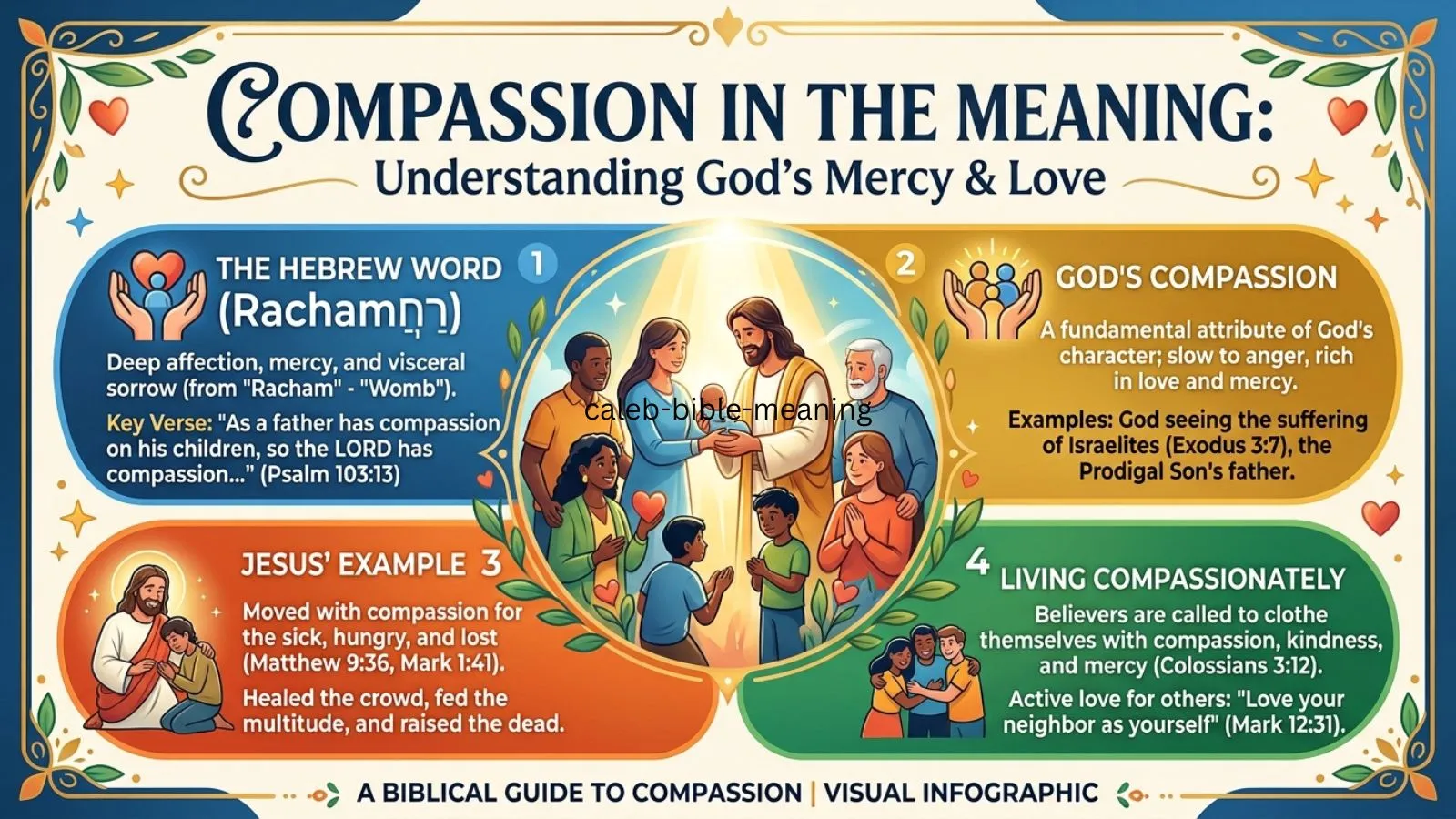
The biblical meaning of compassion is a deep feeling of mercy and love that moves a person to care for someone who is suffering or in need.
In the Bible, compassion is more than an emotion. It often leads to action.
Compassion Reveals God’s Character
One of the clearest examples is found in Psalm 103:8:
“The LORD is compassionate and gracious, slow to anger, abounding in love.”
This verse shows that compassion is part of who God is. He is not cold or distant. He sees His people with mercy and patience.
Psalm 145:9 also says:
“The LORD is good to all; he has compassion on all he has made.”
These verses offer comfort when life feels difficult. They remind us that God sees our struggles and cares about us.
When you feel forgotten or alone, biblical compassion points you back to God’s loving nature.
Jesus Showed Compassion
Jesus gave us the clearest example of compassion.
Matthew 9:36 says that when Jesus saw the crowds, He had compassion on them because they were troubled and helpless, like sheep without a shepherd.
Jesus did not simply notice their problems. His compassion moved Him to teach, heal, encourage, and serve.
In Matthew 14:14, Jesus saw a large crowd and had compassion on them. He then healed those who were sick.
This gives compassion a deeper Christian meaning. True compassion notices pain and responds with love.
Compassion Means Mercy Toward Others
The Bible also connects compassion with how we treat other people.
Colossians 3:12 encourages believers to put on:
“compassion, kindness, humility, gentleness and patience.”
Here, compassion is presented as something Christians should practice.
It is not only something we receive from God. It is something we are called to give.
For example, if someone makes a mistake, compassion may help us respond with patience instead of harsh words. If someone is grieving, compassion may mean sitting beside them and listening. If someone needs help, compassion may move us to act.
Compassion and Forgiveness
Compassion is also closely connected to forgiveness.
When we understand God’s mercy toward us, we become better able to show mercy to others.
Ephesians 4:32 says:
“Be kind and compassionate to one another, forgiving each other, just as in Christ God forgave you.”
This does not mean ignoring wrong actions or pretending that pain does not matter. Instead, it teaches us to let God’s grace shape our response.
Biblical compassion does not remove truth. It brings truth together with love.
Compassion Brings Hope
Another important part of biblical compassion is hope.
Lamentations 3:22–23 reminds us that God’s mercies never come to an end and that His compassion is renewed each morning.
This is a beautiful reminder for anyone facing a difficult season.
Yesterday may have been hard. Today may still feel uncertain. But God’s compassion is not used up.
Every new day can be a reminder of God’s mercy and faithfulness.
Spiritual Significance and Symbolism of Compassion
The spiritual symbolism of compassion points toward love, mercy, healing, humility, and spiritual growth.
When compassion becomes part of our lives, it changes how we see people.
Instead of asking, “What is wrong with this person?” we may begin asking, “What might this person be going through?”
That small change can create a heart of mercy.
Compassion Helps Us Reflect Christ
Christians are called to become more like Jesus. Compassion is one way this transformation becomes visible.
When you encourage someone who feels discouraged, forgive someone who hurt you, or help someone who is struggling, you are showing something of God’s love.
Compassion can become a quiet spiritual message through everyday actions.
You may not preach a sermon. You may simply listen, help, pray, or offer a kind word.
Yet those simple acts can make a difference.
Compassion Builds Spiritual Strength
Compassion also teaches humility.
Everyone needs mercy at some point. Remembering this can help us avoid judging others too quickly.
A person who looks strong may be fighting a private battle. Someone who seems distant may be deeply hurt. Someone who made a poor choice may need guidance and grace.
This does not mean approving every wrong action. It means choosing to see people with wisdom and mercy.
Compassion allows faith to become visible through love.
Compassion in Prayer
Compassion can also shape our prayer life.
When we see someone struggling, we can bring that person before God.
We can pray for healing, wisdom, strength, peace, and guidance.
We can also ask God to give us a compassionate heart.
A simple prayer might be:
“Lord, help me see people as You see them. Give me a heart that is kind, patient, and ready to help. Teach me to show Your love through my words and actions.”
Such prayer can lead to real spiritual transformation.
Biblical Interpretations of Compassion in Dreams or Real Life
If compassion appears in a dream or becomes a strong theme in your real life, it may invite you to reflect on mercy, relationships, forgiveness, or service.
However, the Bible does not teach that every dream is a direct message from God. Dreams can have many causes, so they should be approached with prayer and wisdom.
If you dream about helping someone who is hurting, you might reflect on whether there is someone in your life who needs encouragement.
If you experience compassion during a difficult situation, it may remind you to respond with patience instead of anger.
A peaceful experience may encourage you to continue walking in love. A stressful situation may reveal an area where you need God’s wisdom and grace.
The safest Christian approach is to compare any spiritual impression with Scripture, prayer, and wise counsel rather than assuming every experience is a divine message.
Practical Lessons & Faith Insights
The compassion in the Bible meaning gives us simple lessons for everyday life:
- Notice people who are hurting.
- Listen before judging.
- Choose kindness when possible.
- Pray for those who struggle.
- Forgive as God teaches us to forgive.
- Let your faith lead to loving action.
Ask God to help you become more compassionate, patient, and willing to serve others.
Conclusion
The biblical meaning of compassion is rooted in God’s mercy, love, kindness, and care.
Scripture shows us a God who sees suffering and responds with grace.
Jesus also demonstrated compassion through His words, healing, teaching, and actions.
Compassion reminds us that faith is not only something we believe. It is something we live.
When we show mercy to others, we reflect the heart of Christ and become a source of hope in someone’s difficult moment.
May God fill your heart with compassion and guide you to show His love wherever you go.