Hey, I want to share something that happened to me recently about Countenance Bible Meaning.
I was chatting with a friend when I suddenly saw this term pop up, and honestly, I had no clue what it meant at first.
I kept wondering, “Am I missing something here?” It was a bit confusing, and I didn’t want to respond the wrong way.
So, I decided to look into Countenance Bible Meaning and figure out its meaning and context.
After understanding it, I realized how important it is to know these biblical terms to avoid awkward situations in conversations.
I handled it by learning the proper meaning and responding confidently, and now I feel ready whenever I see Countenance Bible Meaning again in chats, Bible studies, or social media.
As I studied further, I discovered that in the Bible, countenance is much more than a person’s face or appearance.
It often reflects a person’s inner emotions, spiritual condition, and even their relationship with God.
Throughout Scripture, a joyful countenance points to hope and peace, while a fallen countenance can reveal fear, guilt, sadness, or anger.
Understanding the Countenance Bible Meaning helps us better appreciate the deeper spiritual lessons hidden within God’s Word and reminds us that He sees not only our outward appearance but also the condition of our hearts.
Biblical Meaning of Countenance
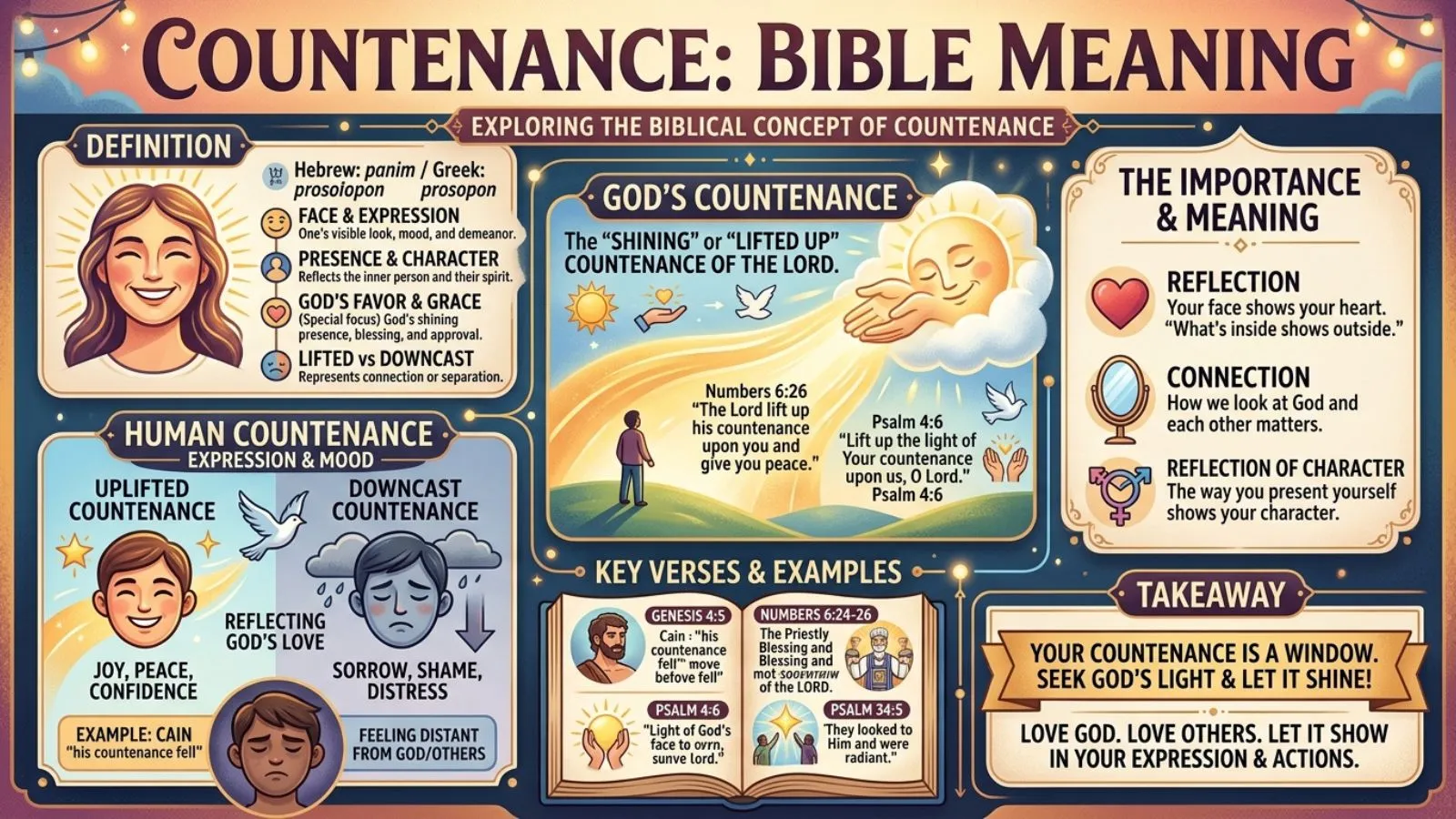
The countenance Bible meaning refers to a person’s face, expression, or outward appearance that reflects the condition of the heart. Throughout Scripture, countenance is closely connected with emotions, character, and one’s relationship with God.
In the Bible, a person’s face often reveals what words cannot.
Countenance Reflects the Heart
One of the clearest biblical truths is that the heart influences the face.
Proverbs 15:13 says:
“A merry heart maketh a cheerful countenance: but by sorrow of the heart the spirit is broken.”
This verse teaches that joy within creates a joyful face, while sadness inside can be seen through one’s expression.
God created people so that inner peace and faith naturally shine outward.
God’s Countenance Brings Blessing
The Bible also speaks about God’s countenance.
One of the most loved blessings in Scripture is found in Numbers 6:24–26:
“The Lord bless thee, and keep thee: The Lord make his face shine upon thee, and be gracious unto thee: The Lord lift up his countenance upon thee, and give thee peace.”
Here, God’s countenance represents:
- His favor
- His love
- His protection
- His peace
- His gracious presence
When God’s face shines upon His people, it symbolizes His blessing and closeness.
This is one of the strongest examples of biblical symbolism connected to countenance.
Countenance Can Change Through Faith
The Bible shows that a person’s countenance often changes after meeting God.
In 1 Samuel 1, Hannah prayed with deep sorrow because she could not have children. After pouring out her heart before the Lord, Scripture says:
“…her countenance was no more sad.” (1 Samuel 1:18)
Her circumstances had not changed yet.
But her faith had.
Her peaceful countenance reflected her trust that God had heard her prayer.
This reminds believers that faith often changes the heart before it changes the situation.
A Fallen Countenance Can Be a Warning
Not every mention of countenance carries a positive meaning.
In Genesis 4, Cain became angry after God accepted Abel’s offering.
God asked him:
“Why art thou wroth? and why is thy countenance fallen?” (Genesis 4:6)
Cain’s fallen countenance reflected jealousy, anger, and sin growing within his heart.
God lovingly warned him to master those feelings before they led him into greater sin.
This teaches an important lesson.
Sometimes our outward expression reveals spiritual struggles that need God’s healing.
Jesus Reveals God’s Perfect Countenance
The greatest picture of God’s love is found in Jesus Christ.
When people met Jesus, they encountered God’s compassion, mercy, forgiveness, and truth.
His presence brought healing to the brokenhearted and hope to those who were afraid.
For Christians today, seeking Christ means seeking the light of God’s countenance.
His presence continues to guide believers through every season of life.
Spiritual Significance and Symbolism
The spiritual symbolism of countenance goes far beyond physical appearance.
It reminds believers that God cares deeply about the condition of the heart.
A peaceful countenance often grows from:
- Faith in God’s promises
- Trust during difficult seasons
- Joy found in Christ
- A life shaped by prayer
- The presence of the Holy Spirit
Life is full of moments that test our hearts.
Someone may feel anxious before a job interview.
A parent may worry about a child.
A student may feel uncertain about the future.
During these moments, prayer can slowly replace fear with peace.
As believers spend time with God, their hearts become calmer.
Over time, that inner peace often becomes visible through a gentle and confident countenance.
The Bible teaches that spiritual growth begins inside.
As God transforms the heart, He also changes attitudes, words, and even facial expressions.
This is part of spiritual awakening.
Instead of living with constant fear, believers learn to walk with confidence because they know God is with them.
The countenance becomes a quiet testimony of God’s work within.
Biblical Interpretations in Dreams or Real Life
Some people dream about faces, bright expressions, or changing appearances and wonder if there is a dream interpretation connected to the Bible.
While Scripture does not give a specific meaning for every dream, biblical principles can offer helpful guidance.
A bright or joyful countenance may remind believers of:
- God’s peace
- Restored hope
- Spiritual encouragement
- His loving presence
A sad or troubled countenance may invite honest self-examination.
It could encourage someone to bring worry, guilt, or fear before God in prayer.
In everyday life, noticing someone’s countenance can also inspire compassion.
Instead of judging outward appearances, Christians are called to love others, pray for them, and encourage those who may be carrying hidden burdens.
Whether experienced in a dream or daily life, the message should always lead believers closer to God rather than fear.
Prayer and Scripture remain the safest guides for understanding any spiritual message.
Practical Lessons & Faith Insights
The countenance Bible meaning reminds us that God transforms people from the inside out.
Spend time with Him each day through prayer, Scripture, and quiet reflection. Ask God to fill your heart with His peace so that your life reflects His love. As you trust His guidance, your countenance can become a gentle witness of His grace, hope, and faithful presence in every season.
Conclusion
The countenance Bible meaning teaches that our faces often reflect the condition of our hearts and our relationship with God.
Scripture shows that God’s countenance represents His favor, peace, and loving presence, while our own countenance reveals what is happening within us.
As we walk with Christ, He changes our hearts, fills us with hope, and helps His light shine through our lives.
May you continue seeking God’s presence each day, trusting that His grace will strengthen your faith and bring lasting peace to your heart.