“Deity” is one of those words that can point us toward an important truth about God and His divine nature.
Recently, I was chatting with a friend when I suddenly saw the term “deity” pop up, and honestly, I had no clue what it meant at first.
I kept wondering, “Am I missing something here?” It was a bit confusing, and I didn’t want to respond the wrong way.
So, I decided to look into deity Bible meaning and understand its meaning and context.
As I learned more, I realized that this word is closely connected with the idea of divinity, God’s nature, and the worship of a divine being.
In the Bible, understanding words like this can help us read Scripture with greater clarity.
The meaning also becomes especially important when Christians consider who Jesus Christ is and what the Bible teaches about His divine nature.
Learning the biblical context helped me see why the word “deity” matters in Christian faith.
If you have ever wondered what deity means in the Bible, you are not alone.
Let’s explore its biblical meaning, spiritual significance, and what Scripture teaches about God’s divine nature.
Biblical Meaning of Deity
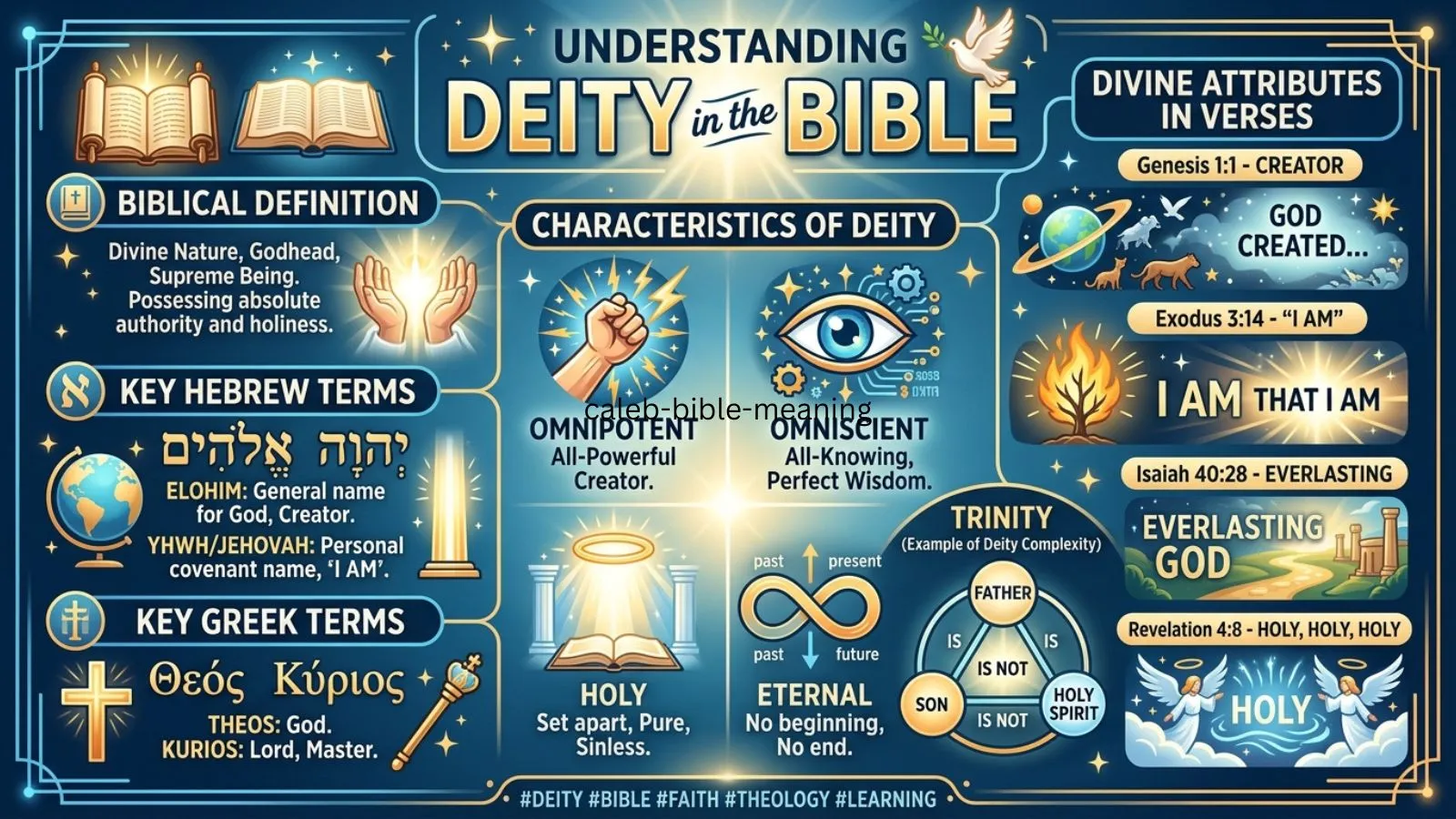
The word deity means divine nature or the state of being God. In a biblical context, it points to the Godhead, divine character, and qualities of God.
The Bible teaches that there is one true God. Deuteronomy 6:4 says:
“The LORD our God, the LORD is one.”
This verse is important to Christian belief. God is not simply one powerful being among many. He is the one true God and Creator.
Deity Points to God’s Divine Nature
One of the clearest Bible verses about God’s divine nature is Romans 1:20. Paul explains that God’s invisible qualities, including His eternal power and divine nature, can be understood through His creation.
Creation can remind us that there is a Creator behind what we see.
The beauty of nature, the order of the world, and the gift of life can all lead the heart toward wonder and worship. They do not replace Scripture, but they can point us toward God’s greatness.
The Deity of Jesus Christ
The deity of Christ is a central Christian belief. The New Testament presents Jesus as more than a teacher or prophet. It reveals His divine identity.
John 1:1 says:
“In the beginning was the Word, and the Word was with God, and the Word was God.”
John 1:14 then explains that the Word became flesh. Christians understand this as pointing to Jesus Christ becoming human while remaining divine.
Colossians 2:9 gives another powerful statement:
“For in Christ all the fullness of the Deity lives in bodily form.”
This verse directly connects Jesus with the fullness of divine nature. It is one of the strongest passages for understanding the Christian teaching about Christ’s deity.
Philippians 2:6 also speaks about Christ existing in the form of God before taking the humble position of a servant.
These verses show why the deity of Jesus matters so much to Christian faith. Jesus is not presented merely as someone who teaches people about God. He is presented as having a unique divine identity.
Deity Shows God’s Authority
Another part of the deity Bible meaning is divine authority.
God has authority over creation, life, judgment, and salvation. Psalm 90:2 describes God as existing before the mountains and the earth were formed.
This reminds believers that God is not limited by human time.
When life feels uncertain, remembering God’s divine authority can bring peace. We may not understand everything happening around us, but God remains God.
Deity and the Human Heart
The Bible also warns people not to replace God with created things.
Romans 1:25 describes people who exchanged the truth of God for a lie and worshiped created things instead of the Creator.
This gives the word deity an important warning. Human beings can easily give ultimate importance to money, success, popularity, possessions, or other things.
Biblical faith calls us back to the true God.
The lesson is simple: admire creation, appreciate people, and enjoy God’s blessings, but keep God at the center.
Spiritual Significance and Symbolism of Deity
The spiritual significance of deity goes beyond a dictionary definition. It invites believers to think about who God really is and how that truth changes their lives.
Deity Reminds Us Who God Is
Life can sometimes make God seem distant. Work, school, family problems, fear, and daily stress can fill our minds.
Thinking about God’s divine nature brings our attention back to Him.
God is not limited like we are. He sees what we cannot see. He understands what we cannot understand. His wisdom is greater than ours.
This can create a deep sense of hope and trust.
Deity Points to Worship
Understanding God’s deity naturally leads to worship.
When Christians recognize God’s holiness, power, wisdom, and love, worship becomes more than singing a song. It becomes an attitude of the heart.
A simple prayer such as, “Lord, You are greater than my problems. Help me trust You,” can become an expression of faith.
Deity and Spiritual Growth
Understanding God’s nature can also encourage spiritual transformation.
The more we learn about God through Scripture, the more we can understand how He calls us to live.
For example, God’s love encourages us to show love. God’s mercy teaches us to forgive. God’s wisdom encourages us to seek wise choices.
The goal is not simply to know a theological word. The goal is to let our knowledge of God shape our faith, character, and daily choices.
A Simple Example
Imagine someone facing an uncertain season. They may not know what will happen next.
Instead of believing that everything depends on their own strength, they remember that God is greater than their circumstances.
That thought does not make every problem disappear. But it can change the way they face it.
Knowing who God is can give courage when we do not know what comes next.
Biblical Interpretations in Dreams or Real Life
Unlike symbols such as a dove, rainbow, or butterfly, deity is primarily a theological concept rather than a specific biblical dream symbol.
If someone dreams about a divine figure, heavenly presence, bright light, or another spiritual image, it should not automatically be treated as a direct message from God.
The Bible encourages believers to test spiritual claims carefully. Scripture remains the main foundation for Christian understanding.
A peaceful dream may lead someone to reflect on God’s presence, faith, or spiritual growth. A frightening dream may simply reflect worries, fears, or thoughts from daily life.
Rather than trying to assign a fixed meaning to every dream, Christians can bring these experiences to God through prayer and Scripture.
If a dream encourages someone to love God, seek truth, turn away from sin, or trust Him, those are biblical themes worth reflecting on. But no dream should replace God’s written Word.
The safest approach is simple: pray, read Scripture, seek wisdom, and avoid making major decisions based only on a dream.
Practical Lessons & Faith Insights
The deity Bible meaning reminds us that God is greater than anything we face. Take time to learn about His character through Scripture.
When you feel uncertain, pray instead of relying only on your own understanding. Remember God’s authority, wisdom, and love.
Let your knowledge of Him produce faith, humility, peace, and hope in your daily life.
Conclusion
The deity Bible meaning points to the divine nature, power, authority, and glory of God.
Scripture also teaches the deity of Jesus Christ, showing His unique divine identity.
Understanding this truth can deepen Christian faith and encourage believers to trust God more fully.
When life feels uncertain, remember who God is. His greatness gives us reason to hope, pray, and walk forward in faith.