Here’s a more engaging and comprehensive introduction with a strong line, naturally incorporating your focus keyword “Meaning of Blessing in the Bible”.
Have you ever come across a Bible term that everyone else seemed to understand except you?
That’s exactly what happened to me recently when I was chatting with a friend and suddenly came across the phrase “Meaning of Blessing in the Bible.”
At first, I had no idea what it actually meant. I found myself wondering, “Am I missing something important here?”
Since I didn’t want to misunderstand the conversation or give the wrong response, I decided to learn more about the Meaning of Blessing in the Bible and its biblical context.
As I explored the topic, I realized that a biblical blessing is much more than just receiving good things—it reflects God’s favor, guidance, protection, and spiritual promises.
Understanding the true Meaning of Blessing in the Bible helped me respond with confidence and gave me a deeper appreciation for how this term is used in conversations, Bible studies, and on social media.
If you’ve ever been curious about what a blessing really means in Scripture, this guide will help you understand its significance, different types of blessings, and why this timeless concept continues to inspire millions of people today.
Biblical Meaning of Blessing in the Bible
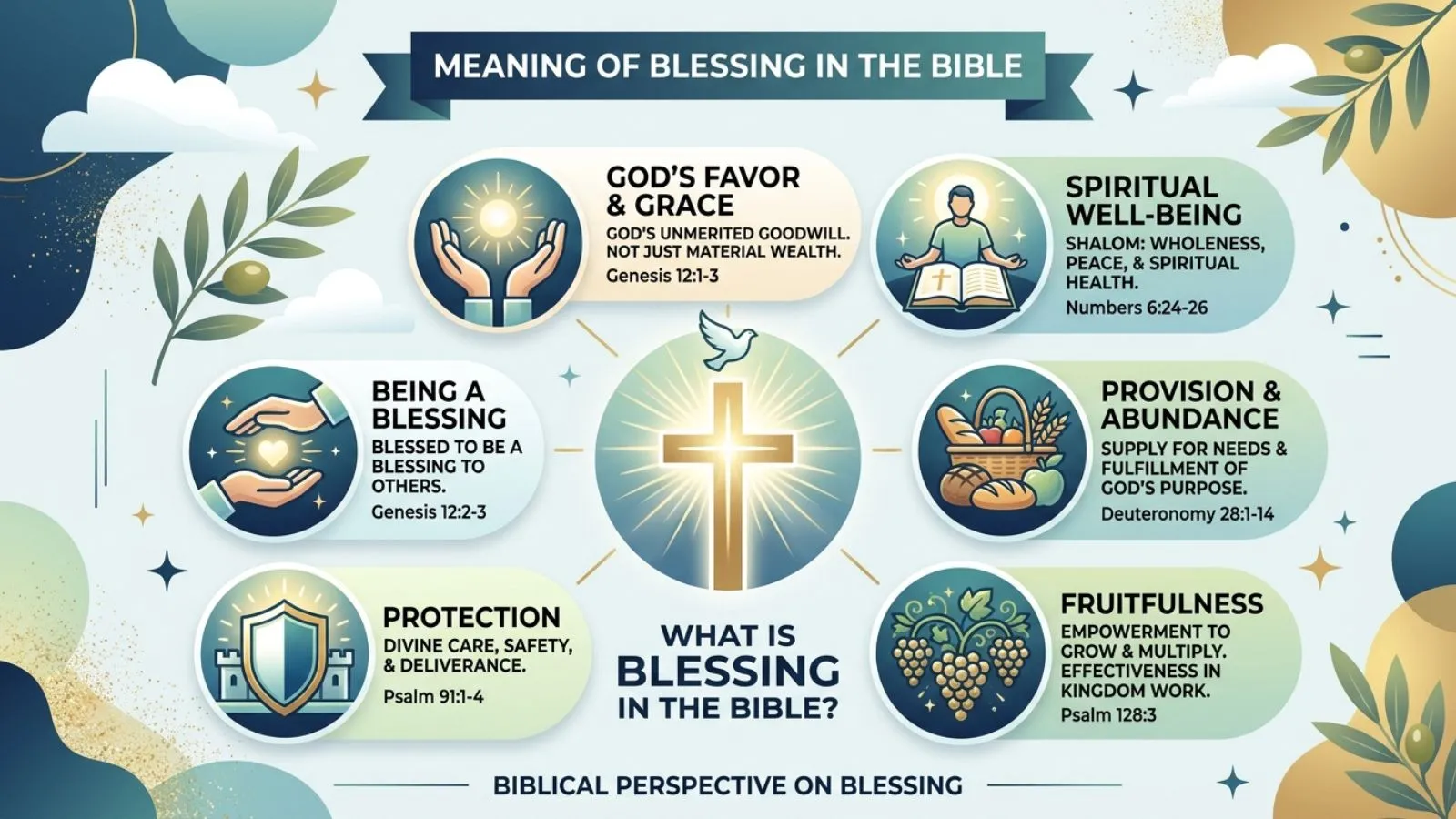
The meaning of blessing in the Bible is closely connected to God’s favor, kindness, and promises. A blessing is not simply receiving good things. It is experiencing God’s presence and His care in every season of life.
One of the earliest examples appears in Genesis 12:2, where God tells Abraham:
“I will bless you… and you will be a blessing.”
This shows that biblical blessings are meant to flow through us. God blesses His people so they can share His love with others.
Another beautiful example is found in Numbers 6:24–26:
“The Lord bless you and keep you; the Lord make his face shine on you and be gracious to you.”
Here, blessing means God’s protection, peace, grace, and loving presence. It reminds believers that God watches over His children.
Jesus also taught a deeper meaning of blessing in the Beatitudes (Matthew 5:3–12).
He called the merciful, the peacemakers, and those who seek righteousness blessed.
This shows that true blessings are not based on wealth or status. Instead, they come from living close to God.
The Bible also teaches that blessings often follow faithful obedience. Deuteronomy 28:1–2 explains that those who listen to God’s voice will experience His blessings. These blessings include peace, provision, protection, and spiritual growth.
However, Scripture also reminds us that blessings do not mean life will always be easy. Faithful believers still face hardship. James 1:2–4 teaches that trials can strengthen our faith and build perseverance. Even difficult seasons can become hidden blessings because God uses them to shape our character.
Sometimes blessings are visible, like answered prayers, healing, or unexpected opportunities. Other times they are quiet gifts such as wisdom, courage, forgiveness, or the comfort of the Holy Spirit.
The greatest blessing in the Bible is salvation through Jesus Christ. Ephesians 1:3 says that believers have received every spiritual blessing in Christ. Through Him, we receive forgiveness, eternal life, hope, and a restored relationship with God.
The Bible encourages believers to look beyond temporary success and recognize the lasting blessings that come from walking with God. His love, mercy, peace, and faithfulness remain even when circumstances change.
Spiritual Significance and Symbolism
The meaning of blessing in the Bible points to much more than physical gifts. It reminds us that God desires a close relationship with His people.
Spiritually, blessings symbolize God’s presence, hope, guidance, and divine love. They remind us that we are never alone, even during life’s hardest moments.
Sometimes blessings come through answered prayers. Other times they arrive through unexpected strength to face difficult situations. A person may not receive exactly what they asked for, yet God provides the wisdom, peace, or patience they truly need.
Blessings also encourage spiritual growth. As believers trust God through challenges, their faith becomes stronger. They learn to depend on Him instead of their own understanding.
Think about someone who loses a job but later discovers a new purpose. Or someone who experiences heartbreak but grows closer to God through prayer. These moments may not feel like blessings at first, yet they often become powerful examples of God’s loving plan.
The Bible teaches that every blessing should lead us to gratitude. Thankfulness helps us recognize God’s hand in both joyful and difficult seasons. It also inspires us to bless others through kindness, generosity, forgiveness, and encouragement.
Biblical Interpretations in Dreams or Real Life
Many Christians wonder whether blessings can appear through dreams or everyday experiences. While the Bible records times when God spoke through dreams, every dream should be tested against Scripture and approached with prayer.
A peaceful dream filled with light, joy, or comfort may remind someone of God’s protection and loving presence. It can encourage hope during uncertain times.
Dreams about receiving gifts, clean water, fruitful trees, or open doors may symbolize God’s provision, new opportunities, or spiritual growth. These images often reflect biblical themes of blessing and renewal.
On the other hand, dreams filled with fear, confusion, or loss are not always warnings from God. Sometimes they simply reflect personal emotions or daily stress. Believers should seek wisdom through prayer rather than making quick conclusions.
In everyday life, blessings often appear in simple ways. A timely word of encouragement, restored relationships, unexpected provision, or a deep sense of peace during hardship can all remind us that God is faithfully at work.
The most important step is to remain rooted in God’s Word and trust His guidance above personal feelings or experiences.
Practical Lessons & Faith Insights
The meaning of blessing in the Bible teaches us to look beyond material success and seek God’s heart first. Spend time in prayer, trust His timing, and thank Him for both big and small blessings. As you grow in faith, remember that God often blesses you so you can become a blessing to others through love, kindness, and faithful service.
Conclusion
The meaning of blessing in the Bible is far richer than receiving good things. True blessings reveal God’s presence, love, guidance, peace, and eternal promises. Whether you experience joy, face challenges, or seek answers through prayer, remember that God remains faithful. Trust His plan, stay close to His Word, and let every blessing draw you nearer to Him. His greatest gift is His everlasting love through Jesus Christ.