What if a revelation is not just hidden knowledge being uncovered, but a message that helps you understand God more deeply?
Hey, I want to share something that happened to me recently about Revelation Bible Meaning.
I was chatting with a friend when I suddenly saw this term pop up, and honestly, I had no clue what it meant at first.
I kept wondering, “Am I missing something here?” It was a little confusing, and I didn’t want to respond the wrong way.
So, I decided to look into the Revelation Bible meaning and understand its true biblical context.
As I learned more, I realized that revelation is much deeper than simply discovering new information.
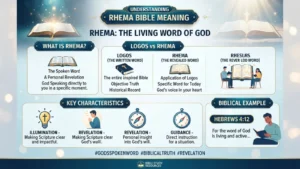
In the Bible, revelation refers to God making His truth, purpose, or message known to people.
It can help believers understand God’s character, His plans, and His guidance more clearly.
After understanding its meaning, I realized how important it is to know biblical terms so we can avoid confusion and take part in faith-based conversations with confidence.
I handled the situation by learning the proper meaning and responding thoughtfully.
Now, whenever I see the word revelation in a Bible study, conversation, or social media post, I feel more prepared to understand its spiritual message.
The Revelation Bible meaning reminds us that God does not leave His people without guidance.
He reveals truth in ways that strengthen faith, bring hope, and encourage believers to seek Him more deeply.
Biblical Meaning of Revelation
The revelation Bible meaning is the act of God uncovering or making something known. A revelation is not simply a new idea. In the biblical sense, it is truth that comes from God.
Human beings cannot fully understand God by their own wisdom. God is holy, eternal, and greater than human knowledge. Still, He chooses to show people who He is.
The Bible says:
“For God has revealed them to us through His Spirit.” — 1 Corinthians 2:10
This verse teaches that God’s Spirit helps believers understand spiritual truth. Some things may seem unclear at first. Through prayer, Scripture, and spiritual growth, God can bring greater understanding.
Revelation Shows Us Who God Is
One of the greatest forms of revelation is God showing people His character.
The Bible reveals that God is loving, faithful, holy, merciful, and just. Through Scripture, we learn that God cares about His people and desires a close relationship with them.
Jesus is also the clearest revelation of God’s love.
John 14:9 says:
“Anyone who has seen me has seen the Father.”
Through Jesus, people see God’s compassion, forgiveness, truth, and grace. Jesus did not only speak about God. He showed God’s love through His life.
This is an important part of the Christian meaning of revelation. God reveals Himself so people can know Him, trust Him, and follow Him.
Revelation Brings Spiritual Understanding
Sometimes a person may read the Bible but struggle to understand how it connects to daily life.
Then, during prayer or quiet reflection, a verse may become meaningful in a new way.
For example, someone may feel worried about the future. They may read Proverbs 3:5:
“Trust in the Lord with all your heart and lean not on your own understanding.”
The verse may remind them that they do not need to know every answer. They can trust God one step at a time.
This does not mean the Bible has changed. Instead, the Holy Spirit may help the person understand how God’s truth applies to their present situation.
This spiritual awakening can bring peace, wisdom, and hope.
Revelation Can Give Guidance
God’s guidance is another important part of biblical symbolism connected with revelation.
In Ephesians 1:17, Paul prayed:
“That the God of our Lord Jesus Christ… may give you the Spirit of wisdom and revelation.”
Paul wanted believers to know God more deeply. He prayed that their spiritual understanding would grow.
Revelation may help a person recognize what matters most. It may encourage them to forgive, remain patient, make a wise choice, or return to God after a difficult season.
However, biblical revelation should not create confusion or lead people away from God’s Word. Any spiritual message should be tested with Scripture.
The Bible says:
“Test the spirits to see whether they are from God.” — 1 John 4:1
This is a gentle warning. Not every strong feeling, dream, or thought is a divine message. Christians are encouraged to seek wisdom, pray, and compare spiritual experiences with biblical truth.
The Book of Revelation and Its Meaning
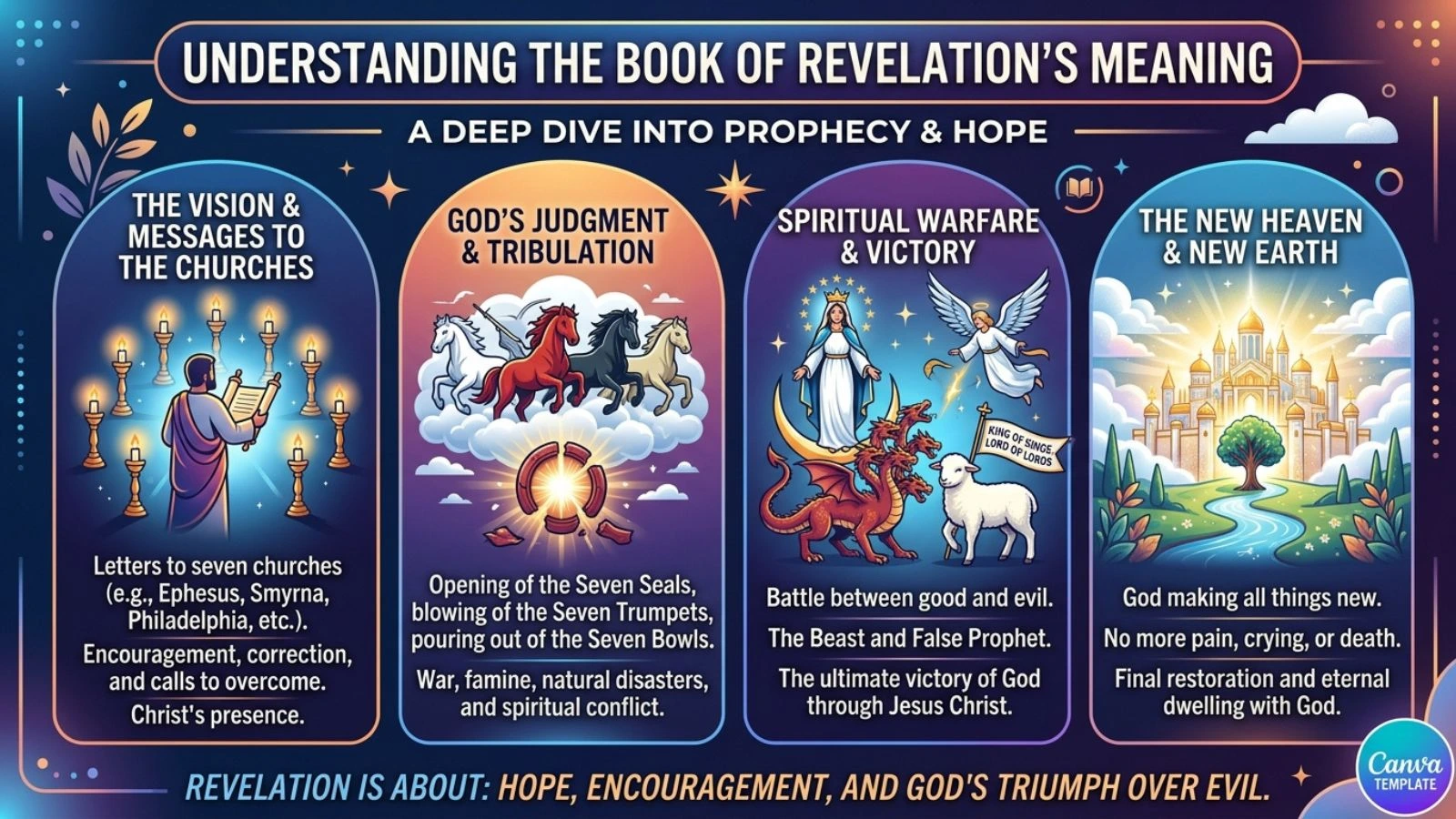
The Book of Revelation is the final book of the Bible. It was written by John and contains visions, symbols, warnings, and promises.
The opening verse says:
“The revelation from Jesus Christ, which God gave him to show his servants what must soon take place.” — Revelation 1:1
The book speaks about spiritual conflict, judgment, faithfulness, and God’s final victory.
Some parts may seem difficult because they use powerful images and symbolic language. Yet the main message is filled with hope.
God remains in control. Evil will not last forever. Jesus will have the final victory.
The Book of Revelation encourages believers to remain faithful during hard times. It reminds them that pain and darkness do not have the final word.
Revelation 21:4 gives a beautiful promise:
“He will wipe every tear from their eyes. There will be no more death or mourning or crying or pain.”
This message brings comfort to Christians who are facing loss, fear, or uncertainty.
Can Revelation Be a Warning?
Revelation can also bring correction.
Sometimes God’s truth shows a person something that needs to change. A person may realize they have been holding anger, ignoring an important responsibility, or depending too much on fear.
This kind of revelation is not meant to destroy hope. It can lead to repentance, healing, and transformation.
God may reveal a problem so that a person can move toward a better path.
The Bible says:
“Your word is a lamp for my feet, a light on my path.” — Psalm 119:105
Light may reveal what was hidden in darkness. In the same way, God’s truth can show believers where they are and guide them forward.
Spiritual Significance and Symbolism of Revelation
The spiritual symbolism of revelation is closely connected with light, truth, wisdom, and spiritual growth.
Imagine walking through a dark room. You may move slowly because you cannot see what is ahead. Then a light turns on. The room becomes clear.
Revelation can feel like that.
God may not show every detail of the future. Instead, He may provide enough guidance for the next step.
This teaches an important lesson about faith: God’s guidance often comes one step at a time.
A person may pray for a complete answer but receive only peace to continue. Another person may ask for a clear plan but feel led to wait. These experiences can help believers learn patience and trust.
Revelation may also lead to transformation.
When people understand God’s love more deeply, they may become more forgiving. When they understand His grace, they may stop carrying unnecessary shame. When they see His faithfulness, they may find courage during difficult times.
This is part of Christian growth.
Revelation is not only about gaining information. It is about allowing God’s truth to shape the heart.
For example, someone may believe that they are alone during a hard season. Then they read Isaiah 41:10:
“Do not fear, for I am with you.”
The words may bring comfort and remind them of the presence of God.
The situation may not change immediately. However, their faith may become stronger.
That is why spiritual revelation often brings hope. It helps believers see their lives through the truth of God rather than only through fear or uncertainty.
Biblical Interpretations in Dreams or Real Life
Some people search for revelation after having a powerful dream, a strong spiritual feeling, or an unexpected moment of understanding.
In Christian dream interpretation, a dream may sometimes reflect personal emotions, memories, worries, or spiritual questions. Not every dream is a message from God.
If a dream feels peaceful and encourages faith, prayer, forgiveness, or hope, a person may reflect on it carefully. They can ask whether its message agrees with Scripture.
A dream that creates fear or confusion should not be treated as an automatic prophecy. God’s guidance should be approached with wisdom and peace.
In real life, revelation may appear through a Bible passage, prayer, a wise conversation, or a moment when God’s truth becomes clearer.
The important question is not only, “What did I see?”
It is also:
“Does this lead me closer to God and agree with His Word?”
Prayer and Scripture provide a safe foundation for understanding spiritual experiences.
Practical Lessons and Faith Insights
When you seek revelation, begin with prayer and the Bible. Ask God for wisdom, but remain patient. You may not receive every answer at once.
Read Scripture with an open heart. Reflect on what you learn. If something feels like a divine message, compare it with biblical truth.
Remember that God’s guidance often brings wisdom, peace, and spiritual growth. Trust Him even when the full path is not yet clear.
Conclusion
The revelation Bible meaning is about God making His truth known. Through Scripture, Jesus, the Holy Spirit, prayer, and spiritual understanding, God helps people know Him more deeply.
Revelation can bring guidance, correction, hope, and transformation. The Book of Revelation also reminds believers that God remains victorious and faithful.
When life feels uncertain, seek God through prayer and His Word. He may not reveal every step, but He can provide the light you need for today.