Have you ever come across the phrase “The Meaning of Grace in the Bible” and wondered what it truly means? I recently found myself in that exact situation.
While chatting with a friend, this term came up unexpectedly, and I realized I wasn’t entirely sure how to interpret it.
At first, I felt confused and even a little hesitant to respond because I didn’t want to misunderstand such an important biblical concept.
Instead of guessing, I decided to take some time to explore the meaning of grace in the Bible and understand its deeper context.
The more I learned, the more I realized that grace is far more than just a religious word—it’s one of the central themes of the Bible and the foundation of the Christian faith.
It represents God’s unearned favor, unconditional love, forgiveness, and the gift of salvation that cannot be earned through human effort.
Understanding this concept not only helped me respond confidently in conversations but also gave me a greater appreciation for its spiritual significance.
If you’ve ever been curious about the meaning of grace in the Bible, you’re not alone.
Many people hear the word in sermons, Bible studies, social media posts, or everyday conversations without fully understanding its depth.
In this guide, we’ll explore what grace means according to Scripture, why it’s so important, how it appears throughout the Old and New Testaments, and how its message can influence everyday life.
By the end, you’ll have a clear and comprehensive understanding of biblical grace and feel confident discussing it whenever the topic comes up.
Biblical Meaning of Grace in the Bible
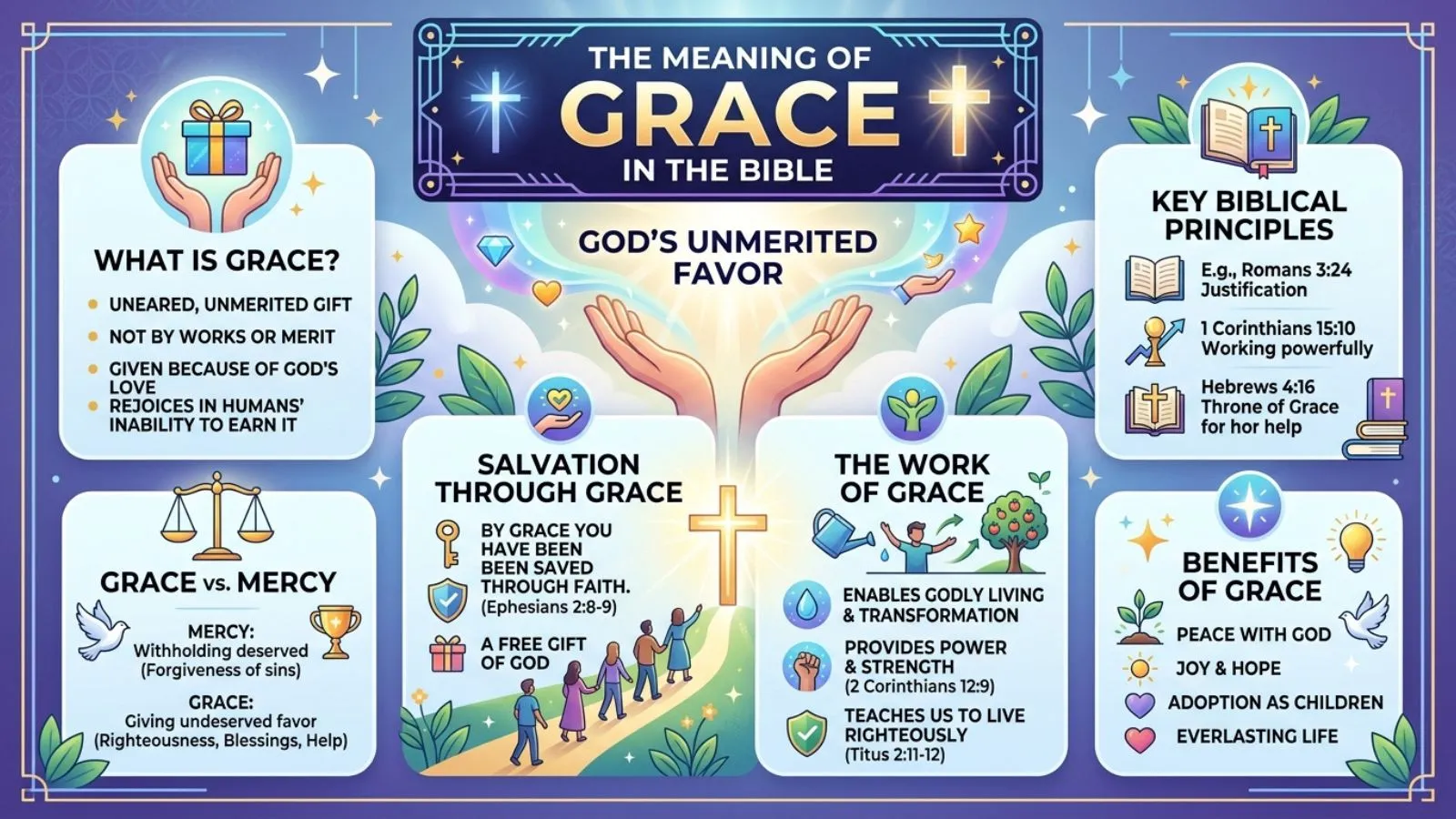
The meaning of grace in the Bible is God’s free and loving gift to people. It is His kindness that we cannot earn through good works or perfect behavior. Grace is given because of God’s great love.
One of the clearest Bible verses about grace is Ephesians 2:8-9:
“For it is by grace you have been saved, through faith—and this is not from yourselves, it is the gift of God—not by works.”
This verse teaches that salvation comes from God’s grace alone. We cannot earn heaven by trying harder. Instead, we receive God’s gift by trusting in Jesus Christ.
Another beautiful verse is 2 Corinthians 12:9, where God says:
“My grace is sufficient for you, for my power is made perfect in weakness.”
This reminds believers that God’s grace gives strength when life feels heavy. Even during pain or uncertainty, His grace is enough.
The Bible also shows grace through many people and stories.
When Noah lived in a world filled with evil, he “found grace in the eyes of the Lord” (Genesis 6:8). God’s grace protected Noah and gave humanity a new beginning.
The story of the Prodigal Son in Luke 15 is another powerful picture of grace. The son made many poor choices and lost everything. Yet when he returned home, his father welcomed him with open arms. This reflects God’s loving heart toward everyone who turns back to Him.
Grace also brings forgiveness. In 1 John 1:9, God promises to forgive those who confess their sins. His grace removes guilt and offers a clean heart.
Still, the Bible also gives a gentle warning. Grace should never become an excuse to continue living in sin. Romans 6:1-2 asks:
“Shall we go on sinning so that grace may increase? By no means!”
True grace changes us from the inside. It leads us to love God more and follow His ways with thankful hearts.
The biblical symbolism of grace points to God’s open hands. It is a picture of mercy instead of judgment, hope instead of despair, and life instead of death. Through Jesus’ death and resurrection, God’s grace became available to everyone who believes.
Every day, Christians can rest in the promise that God’s grace never runs out. No failure is too great for His forgiveness, and no person is beyond His loving reach.
Spiritual Significance and Symbolism
The spiritual symbolism of grace reminds us that God’s love is always reaching toward us. Even when we feel weak, lost, or unworthy, His grace invites us to come close.
Grace teaches humility. It reminds us that every blessing comes from God. We cannot boast about earning His love because it is freely given.
Grace also brings hope. Many believers go through seasons of fear, loss, or disappointment. During those times, God’s grace gives comfort and strength to keep moving forward.
This spiritual message encourages believers to show grace to others as well. When someone hurts us, forgiveness becomes possible because we remember how much God has forgiven us.
Imagine a person struggling with worry. As they pray each morning, they begin trusting God’s promises instead of their fears. Over time, God’s grace fills their heart with peace. This is part of the beautiful transformation that grace brings.
Grace also leads to spiritual awakening. It helps people see God’s presence in everyday life, whether through answered prayer, unexpected kindness, or quiet moments of peace. As faith grows, believers become more aware of God’s loving guidance.
Biblical Interpretations in Dreams or Real Life
Sometimes people experience dreams or real-life moments that remind them of God’s grace. While the Bible teaches that not every dream carries a divine message, some experiences may encourage deeper prayer and reflection.
A peaceful dream about receiving a gift may symbolize God’s grace, forgiveness, or a fresh beginning. It can remind believers that God’s love is freely given and always available.
If a dream includes feelings of fear followed by rescue or comfort, it may reflect God’s promise to stay near during difficult times. His grace often meets us in our weakest moments.
In everyday life, grace can appear through unexpected blessings, restored relationships, answered prayers, or kindness from others. These moments can remind believers of God’s faithful care.
Instead of relying only on dream interpretation, Christians are encouraged to seek wisdom through prayer, Scripture, and the guidance of the Holy Spirit. God’s Word remains the strongest foundation for understanding His will and His loving grace.
Practical Lessons & Faith Insights
God’s grace is a gift to receive with a thankful heart. Spend time in prayer, read God’s Word each day, and trust His promises. When you make mistakes, remember that His mercy is greater than your failures. Let His grace shape your life by showing love, patience, and forgiveness to others. Every day is another chance to walk in God’s amazing grace.
Conclusion
The meaning of grace in the Bible is the story of God’s endless love for His children. Grace offers forgiveness, hope, strength, and new beginnings through Jesus Christ.
It reminds us that God’s love is never earned but freely given. As you continue your faith journey, trust in His grace, seek.
His guidance through prayer, and rest in the peace that only He can provide. God’s grace is always enough, and His love never fails.