I was chatting with a friend when the term “Grace in the Bible Meaning” suddenly came up. At first, I had no clear idea what it meant.
I kept wondering, “Am I missing something important here?” It felt a little confusing, and I did not want to respond the wrong way.
So, I decided to explore the grace in the Bible meaning and understand its deeper spiritual context.
As I learned more, I discovered that biblical grace is much more than kindness or forgiveness. It is God’s undeserved love, mercy, and favor, freely given to people through faith.
Understanding this meaning helped me see why grace is so important in Christian life.
It reminds believers that they do not have to earn God’s love through perfect actions.
God offers hope, forgiveness, strength, and salvation because of His great love.
After learning the proper meaning, I felt more confident discussing grace in conversations, church, or social media.
Now, whenever I see this beautiful biblical term, I understand the powerful message behind it: God’s grace meets us where we are and lovingly leads us toward hope and spiritual growth.
Biblical Meaning of Grace
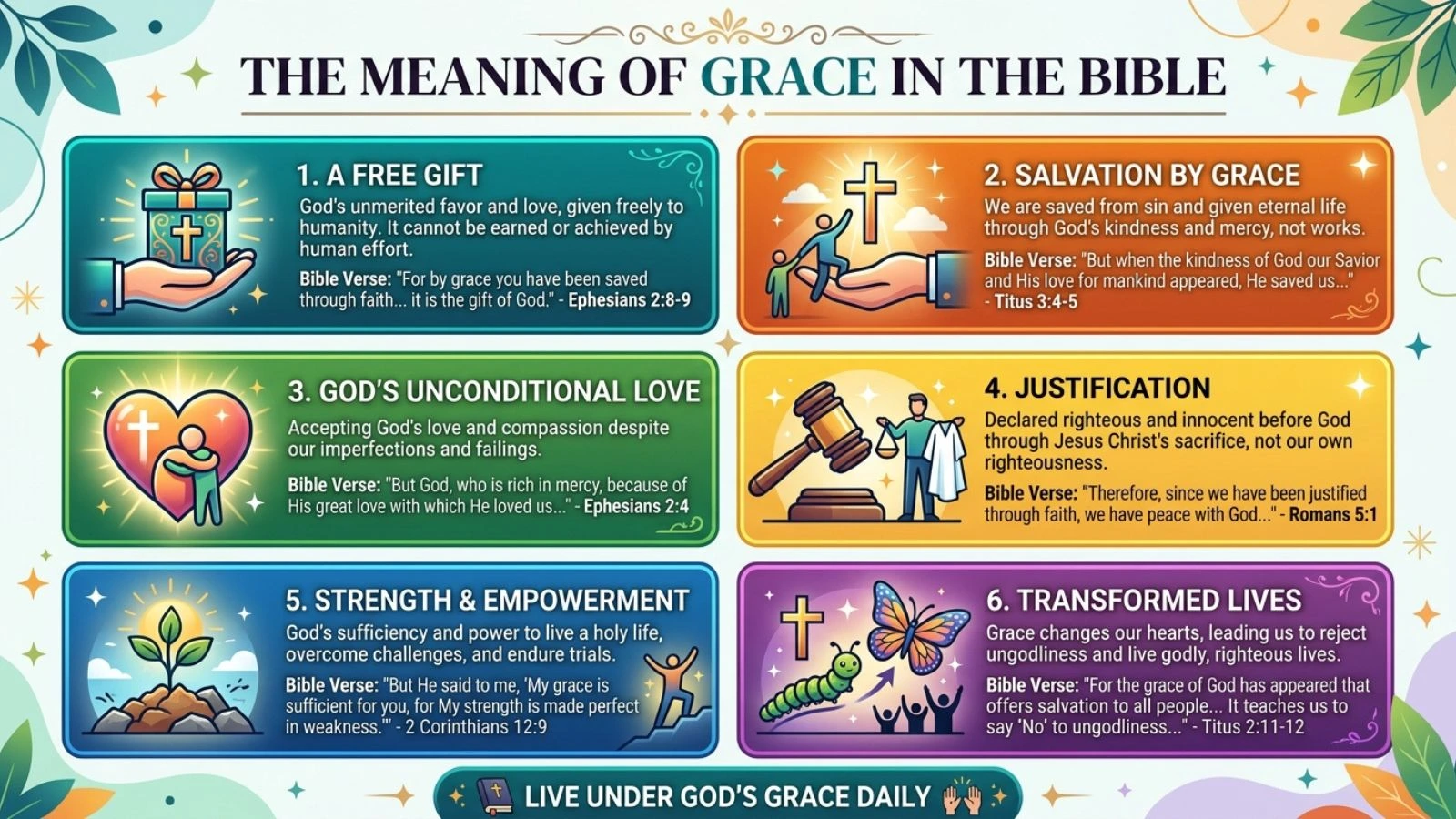
The grace in Bible meaning is closely connected to God’s undeserved love and kindness. Grace is something God freely gives. It cannot be bought, earned, or achieved through perfect behavior.
The Bible shows that every person needs God’s mercy. People make mistakes, face weakness, and sometimes lose their way. Yet God continues to call them back with love.
Grace Is God’s Free Gift
One of the clearest Bible verses about grace is Ephesians 2:8–9:
“For by grace are ye saved through faith; and that not of yourselves: it is the gift of God.”
This verse teaches that salvation is a gift. People are not saved because they are perfect. They are saved through faith in Jesus Christ and through God’s grace.
This truth can bring great comfort. You do not have to carry the pressure of proving that you deserve God’s love. Grace reminds believers that comes first.
Grace is received through faith, not earned through perfection.
Grace Shows Mercy
Grace and mercy are closely connected, but not exactly the same.
Mercy means that God does not treat us only according to our failures. Grace means that God gives love, help, and spiritual blessings that we do not deserve.
Think of someone who makes a mistake but receives forgiveness and another chance. That picture can help us understand grace. God does not ignore sin, but He opens the way for forgiveness and new life through Jesus.
Romans 3:23–24 teaches that all people have sinned but can be freely justified through God’s grace. This shows that grace is available to everyone who turns to God in faith.
Grace Comes Through Jesus Christ
Jesus is at the center of the Christian meaning of grace.
John 1:14 says that Jesus came full of grace and truth. Grace is loving, but it is also connected to truth. God’s grace does not hide what is wrong. It gently calls people toward healing and change.
John 1:16 also says that believers receive grace from the fullness of Christ. This means that Jesus is the source of spiritual hope and renewal.
Through Jesus, grace offers:
- Forgiveness after sin
- Hope during difficult seasons
- Peace when the heart feels troubled
- Strength during weakness
- New life through faith
Grace is not only about the past. It also helps believers live each day with courage.
Grace Gives Strength in Weakness
Many people think they must be strong before coming to God. The Bible gives a different message. God can meet people in their weakness.
In 2 Corinthians 12:9, God says:
“My grace is sufficient for thee: for my strength is made perfect in weakness.”
These words remind believers that God’s grace can be enough even when life feels uncertain. A person may not have every answer. They may still feel tired or afraid. Yet God can provide strength for the next step.
This is an important part of biblical symbolism. Grace is often seen as God’s helping presence. It supports believers when their own strength feels small.
Grace Leads to Change
Grace is not permission to continue doing wrong without care. True grace can transform the heart.
Titus 2:11–12 teaches that God’s grace helps people turn away from harmful choices and live with wisdom. Grace teaches, guides, and shapes Christian character.
A person who understands grace may become more patient. They may forgive others more easily. They may pray with greater trust and show more kindness.
The spiritual message is clear: God’s grace accepts us with love and helps us grow into better people.
Can Grace Be Ignored?
The Bible also gives a gentle warning. Grace is a precious gift, but people can choose to reject God’s guidance.
Hebrews 12:15 encourages believers not to fall short of God’s grace. This does not mean that God’s love suddenly disappears. It reminds Christians to stay close to God and avoid allowing bitterness, pride, or harmful choices to control the heart.
Grace should lead to gratitude. When believers understand how deeply God loves them, they are encouraged to live with faith and care for others.
Spiritual Significance and Symbolism of Grace
The spiritual symbolism of grace is peaceful and hopeful. It speaks about love, forgiveness, trust, and the presence of God.
Many believers experience seasons when they feel weak. Prayer may feel quiet. Life may seem uncertain. Answers may appear delayed. During those moments, grace becomes deeply meaningful.
Grace reminds us that God does not leave His people. He remains near and gives strength one day at a time.
This can lead to spiritual transformation. A believer may begin trusting God more deeply. They may release fear and find peace through prayer.
In everyday life, grace may symbolize:
- Resting in God’s love
- Receiving peace during stress
- Trusting God’s timing
- Forgiving yourself after a mistake
- Showing kindness to others
- Growing stronger in faith
Grace can also bring spiritual awakening. Sometimes God changes a heart slowly. A person may begin praying more often. Reading the Bible may feel more meaningful. Hope may become stronger.
For example, someone may lose an important opportunity and feel disappointed. Later, they may discover a new path that brings growth and purpose. They may look back and see that God was guiding them even when they did not understand the situation.
Grace does not always remove every problem. Sometimes it gives peace while a person walks through the problem.
This is one of the deepest Christian beliefs about grace: God’s help may arrive as strength, wisdom, patience, or hope.
Grace also teaches believers how to treat others. When we remember that God has shown us mercy, we may become more willing to forgive.
Colossians 3:13 encourages believers to forgive others as the Lord has forgiven them. Grace received from God can become grace shared with people.
Grace in Dreams or Real Life
Dream interpretation should be approached with care. The Bible contains meaningful dreams, but not every dream is a direct message from God.
If you dream about grace, forgiveness, light, peace, or being helped during a difficult moment, the dream may reflect a desire for healing, hope, or spiritual comfort.
A peaceful dream may remind you of God’s love and the need to trust Him. You may wake up feeling calm, hopeful, or encouraged to pray.
A difficult or fearful dream may reflect guilt, stress, or an emotional struggle. Instead of quickly deciding that it is a divine message, bring it to God in prayer.
Ask:
- Does this encourage faith and peace?
- Does it agree with Scripture?
- Does it lead me toward love and wisdom?
- Is there something in my life that needs healing?
In real life, grace may appear through a kind person, an unexpected opportunity, forgiveness, or strength during a hard season.
These experiences can remind believers that God is near. Still, every spiritual interpretation should be tested through Scripture, prayer, and wise guidance.
Practical Lessons and Faith Insights
Grace teaches us to receive God’s love, trust His guidance, and show kindness to others.
When you feel weak, pray honestly ,mistake, seek forgiveness and begin again. When someone needs kindness, remember the grace God has shown you.
You do not need to understand every part of life today. Take one faithful step at a time and trust that God can guide your journey.
Conclusion
The grace in Bible meaning is God’s loving gift of forgiveness, hope, strength, and new life. It reminds believers that God’s love is not earned through perfection.
Grace meets people in weakness and helps them grow through faith. It brings comfort during pain and guidance during uncertain seasons.
Whatever you are facing, keep seeking God through prayer and Scripture. His grace can give you hope, renew your heart, and guide you toward a brighter path.