Have you ever wondered why the Bible speaks so strongly about adultery and what deeper spiritual lesson it carries?
Hey, I want to share something that happened to me recently while learning about Adultery in the Bible Meaning.
I was chatting with a friend when I suddenly came across this term, and honestly, I had no clear idea what it meant at first.
I kept wondering, “Am I missing something here?” It felt confusing, and I didn’t want to misunderstand or respond in the wrong way.
So, I decided to explore the meaning of adultery in the Bible and understand its true context.
As I learned more, I realized that biblical terms often carry deeper spiritual messages about faith, relationships, loyalty, and our connection with God.
Understanding this word helped me see why it is important to know the meaning behind biblical teachings instead of making quick assumptions.
Now, whenever I come across adultery in the Bible in a conversation, study, or social media discussion, I feel more prepared to understand it and respond with confidence.
Biblical Meaning of Adultery
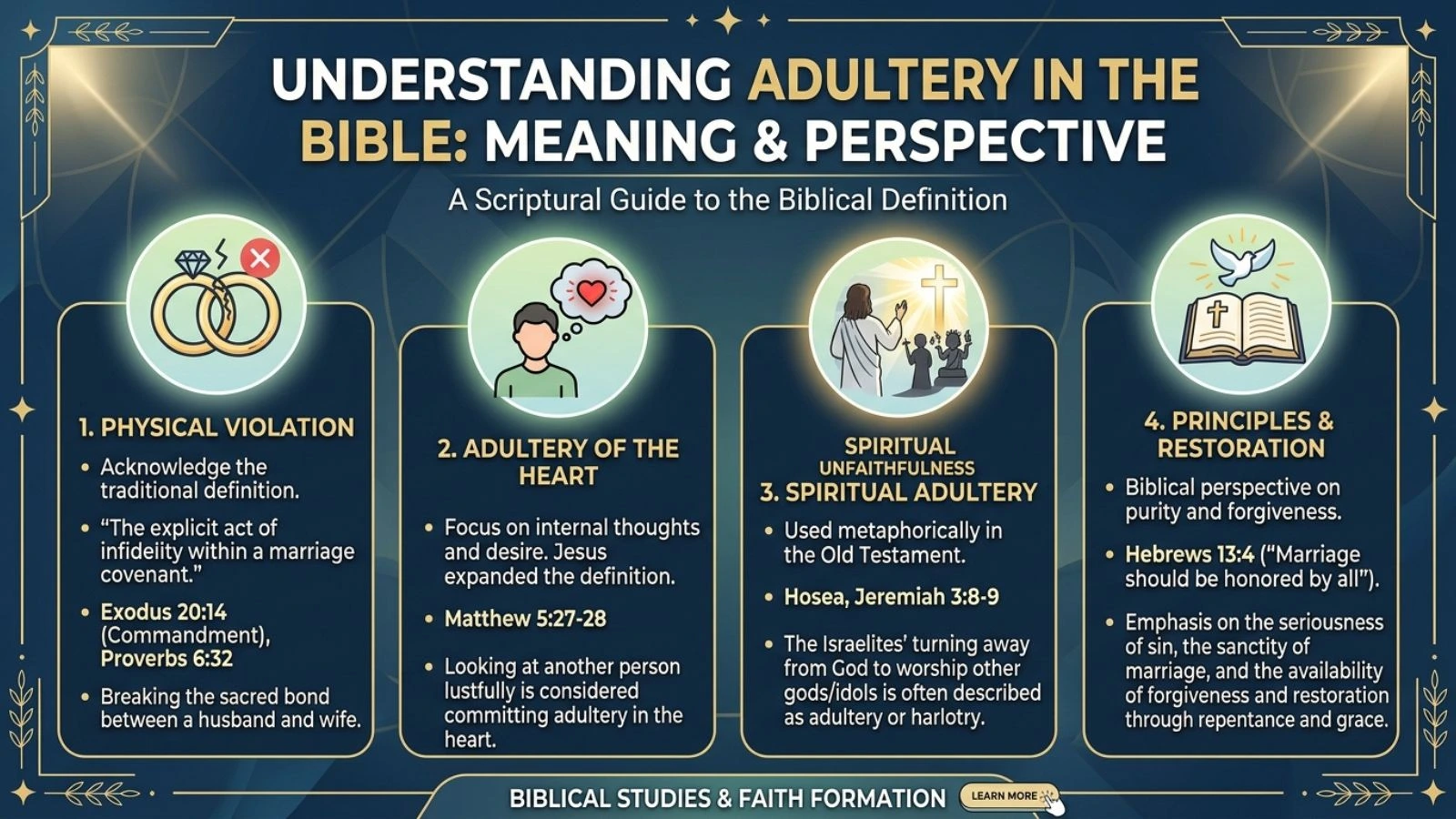
The biblical meaning of adultery is connected to breaking the faithfulness and trust of marriage. Marriage is presented in the Bible as a sacred covenant. It is not only a promise between two people. It is also a commitment made before God.
One of the Ten Commandments says:
“You shall not commit adultery.” — Exodus 20:14
This command teaches that faithfulness matters deeply. Adultery can cause pain because it breaks trust and harms the unity that marriage is meant to protect.
The Bible does not present faithfulness as only an outward action. Jesus also spoke about the heart and inner thoughts. In Matthew 5:27–28, He taught that sinful desire can begin within a person before it becomes an outward choice.
This teaching encourages believers to care for their hearts. It reminds Christians that faithfulness involves thoughts, choices, honesty, and respect.
Adultery as a Warning About Broken Trust
In many Bible stories, unfaithfulness brought sadness and conflict. Broken promises affected families and communities. These stories show that choices can have lasting effects.
However, Scripture does not teach that a person must remain trapped in past mistakes. God calls people toward truth and change. When someone admits wrongdoing and seeks His guidance, repentance can become the beginning of spiritual renewal.
Psalm 51 shows a prayer of deep repentance. It reminds believers that God desires a sincere and humble heart. A person can come to God honestly and ask for cleansing, wisdom, and strength.
The warning connected to adultery is not meant only to create fear. It also teaches people to protect what is valuable. Trust takes time to build, so faithfulness should be treated with care.
Spiritual Adultery in the Bible
The Bible also uses adultery as a symbol of turning away from God.
In the Old Testament, God described His relationship with Israel through the image of marriage. He remained faithful to His people, but they often followed idols and forgot His ways. The prophets used the language of unfaithfulness to explain this spiritual separation.
For example, the book of Hosea shows God’s faithful love toward people who had wandered away. The message is emotional and powerful: God continues to call His people back to Him.
Spiritual adultery may happen when a person places something above God. It may involve trusting wealth, power, success, approval, or personal desires more than God’s guidance.
James 4:4 gives a strong warning about friendship with worldly values when those values oppose God. The verse encourages believers to examine what controls their hearts.
This does not mean that enjoying life, working hard, or having goals is wrong. The deeper question is:
“What has become more important to me than my relationship with God?”
When faith becomes weak, prayer may feel distant. A person may stop reading Scripture or begin making choices without seeking God’s wisdom. These moments can become a gentle call to return.
God’s Mercy and Forgiveness
The Christian meaning of adultery also includes grace.
In John 8:1–11, Jesus showed mercy to a woman who was accused of adultery. He did not treat her pain as entertainment or use her mistakes to shame her. He also called her toward a changed life.
This story reveals two important truths:
- God’s mercy is greater than human condemnation.
- Grace invites people to choose a better path.
Jesus showed compassion without saying that harmful choices did not matter. His response joined truth with mercy.
For believers, this can bring hope. Past mistakes do not have to be the final chapter. Through prayer, repentance, forgiveness, and wise support, a person can begin moving toward healing.
Spiritual Significance and Symbolism
The spiritual symbolism of adultery often points to faithfulness, loyalty, and the need for a renewed heart.
Marriage can reflect the kind of faithful love God desires. In Ephesians 5:25–32, the relationship between Christ and the Church is connected to the love found in marriage. Christ’s love is described as caring, faithful, and self-giving.
This gives the subject a deeper spiritual meaning. Faithfulness is not only about keeping promises. It is also about showing love through daily choices.
A believer may ask:
- Am I being honest with God?
- Do I seek His guidance before making important choices?
- Have fear, pride, or worldly desires become stronger than my faith?
- Am I caring for the relationships God has placed in my life?
These questions are not meant to create shame. They can help bring spiritual awakening.
Sometimes, people slowly become distant from God. Life becomes busy. Prayer becomes rare. Worries become louder than faith. Yet God’s presence remains near.
Returning to God may begin with a simple prayer:
“Lord, help me trust You again. Guide my heart and teach me to walk faithfully.”
This kind of prayer can bring peace. It can also lead to transformation.
In everyday life, the spiritual message may include:
- protecting trust in relationships,
- choosing honesty,
- keeping promises,
- turning away from harmful habits,
- seeking God’s guidance,
- growing stronger through prayer,
- showing mercy to others.
The Bible’s message is not only about avoiding wrong choices. It is also about learning to love faithfully.
Faithfulness grows through small choices. A person becomes stronger by choosing truth, kindness, patience, and respect each day.
Biblical Interpretations in Dreams or Real Life
Dream interpretation should be approached carefully. The Bible does not say that every dream is a direct message from God. Dreams may come from thoughts, emotions, memories, or worries.
If someone dreams about adultery, the dream may reflect concerns about trust, fear, guilt, insecurity, or broken promises. It does not automatically mean that adultery is happening or will happen.
A peaceful dream may point toward a need for healing, forgiveness, or honest communication. A painful or fearful dream may reflect anxiety about losing trust or feeling distant from someone.
In a spiritual sense, the dream could also encourage reflection. A person may ask whether they have become distant from God or whether something has taken too much control of their heart.
Prayer can bring guidance:
“God, help me understand what I am feeling. Give me wisdom, peace, and truth.”
Avoid making serious decisions based only on a dream. Instead, compare your thoughts with Scripture, pray, and seek wise guidance when needed.
Practical Lessons and Faith Insights
The meaning of adultery in the Bible encourages believers to protect faithfulness, honesty, and trust.
Take time to examine your heart without fear. Pray for wisdom and strength. If a relationship is hurting, choose truthful and respectful communication.
If you feel distant from God, return through prayer and Scripture. God’s grace can guide people toward healing, growth, and renewed faith.
Conclusion
The adultery in the Bible meaning teaches that faithfulness matters in both human relationships and a believer’s relationship with God.
Scripture warns against broken trust, but it also offers mercy, forgiveness, and hope. God invites people to return to Him with honest hearts.
Through prayer, repentance, and faith, spiritual renewal is possible. No matter how far a person has wandered, God’s guidance can lead them toward truth, healing, and faithful love.