Have you ever felt lost in a difficult season and wondered if there is still a reason to keep believing?
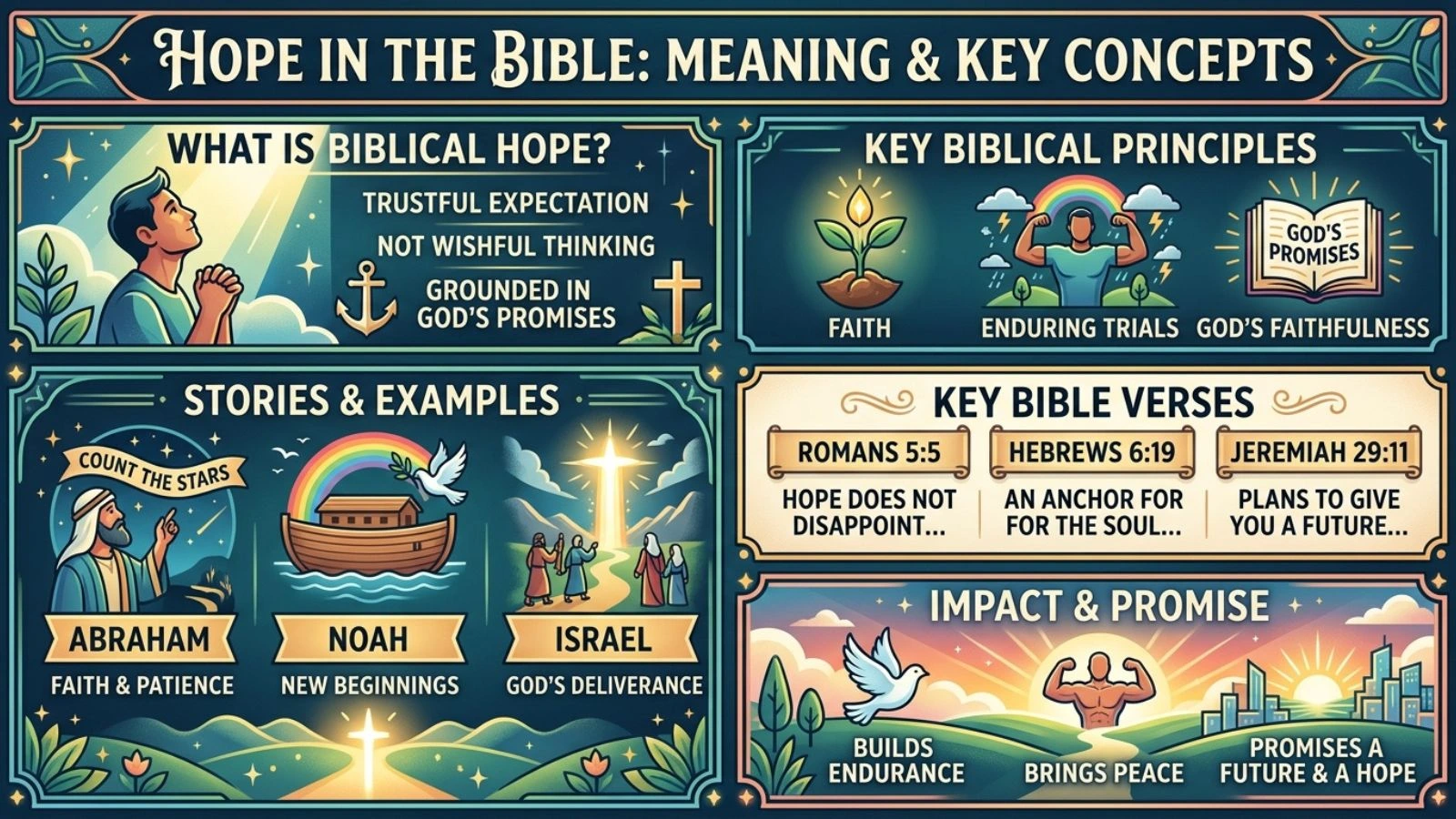
The Bible teaches that true hope is not just a feeling of optimism but a confident trust in God’s promises.
Recently, I was chatting with a friend when I suddenly came across the term “Hope in the Bible Meaning.”
Honestly, I was not sure what it truly meant at first. I kept asking myself, “Am I missing something important here?”
The meaning seemed simple, but I wanted to understand its deeper spiritual context before responding.
So, I decided to explore the biblical meaning of hope and discover what Scripture teaches about this powerful word.
As I learned more, I realized that hope is a foundation of faith that reminds us of God’s presence, guidance, and faithfulness during every season of life.
Understanding the true meaning of hope in the Bible helped me see why this word carries such deep importance for Christians.
Now, whenever I come across this term in conversations, Bible studies, or social media, I feel more confident knowing its spiritual message and significance.
Biblical Meaning of Hope in the Bible
The hope in the Bible meaning is trust placed in God. It is not a weak wish or a dream with no foundation. Biblical hope is built on who God is.
God is loving, faithful, wise, and good. Because His character does not change, believers can trust His promises even when life feels uncertain.
Hope Means Trusting God’s Promises
One of the clearest Bible verses about hope is found in Jeremiah 29:11:
“For I know the plans I have for you,” declares the Lord, “plans to prosper you and not to harm you, plans to give you hope and a future.”
This verse reminds believers that God sees more than the present moment. Sometimes we only see confusion, delay, or pain. God sees the full journey.
The promise does not mean that every day will be easy. It means that God has not forgotten His people. Hope helps us trust that God is still leading us forward.
When you do not know what to do, you can pray and remember that God understands the path ahead.
Hope Is Connected to Faith
Hope and faith work together.
Faith helps us trust God now. Hope helps us look toward the future with confidence.
Hebrews 11:1 says:
“Now faith is confidence in what we hope for and assurance about what we do not see.”
Sometimes we cannot see the answer to our prayer. We may not know when change will come. Yet faith encourages us to keep trusting.
This is an important part of Christian belief. Hope does not depend only on what we can see. It depends on the God we know.
A person may feel worried but still have hope. A person may cry and still believe. Hope does not require us to pretend that everything is perfect. It allows us to bring our true feelings to God while trusting His care.
Hope Brings Strength During Hard Times
Romans 5:3–5 teaches that suffering can produce endurance, character, and hope. This does not mean pain is always easy or that every struggle feels good.
It means God can use difficult seasons to strengthen faith.
A hard season may teach patience. Waiting may deepen prayer. A closed door may lead to a better path.
Over time, believers may look back and see how God supported them when they felt weak.
The Bible says in Romans 5:5:
“And hope does not put us to shame, because God’s love has been poured out into our hearts through the Holy Spirit.”
This verse connects hope with God’s love. Christian hope is not based only on human strength. It grows through the presence of God.
Hope Is Like an Anchor
Hebrews 6:19 says:
“We have this hope as an anchor for the soul, firm and secure.”
An anchor helps a boat remain steady during strong waves. In the same way, hope helps the heart remain connected to God during uncertain times.
The storm may still be present. The waves may still be strong. But hope reminds us that we are not without support.
This biblical symbolism teaches an important lesson: hope does not always remove the storm, but it can help us remain steady within it.
When life feels confusing, prayer can become an anchor. Reading Scripture can bring peace. Remembering God’s past faithfulness can help us trust Him again.
Hope Points Toward New Life
The Bible also connects hope with renewal.
In Lamentations 3:22–23, we read:
“Because of the Lord’s great love we are not consumed, for his compassions never fail. They are new every morning.”
Every new morning can remind us that God’s mercy continues.
You may have had a difficult day yesterday. You may feel tired today. Yet God can provide new strength for the next step.
This is part of the spiritual message of hope: your present season is not the whole story.
Can Hope Also Carry a Warning?
Biblical hope is positive, but the Bible warns against placing our deepest hope in things that cannot last.
Money, success, popularity, or human approval may change quickly. These things can be helpful, but they cannot provide the same lasting security as God.
Psalm 62:5 says:
“Yes, my soul, find rest in God; my hope comes from him.”
The warning is gentle: do not build your whole future on temporary things.
When hope is rooted in God, it can remain strong even when circumstances change.
Spiritual Significance and Symbolism of Hope
The spiritual symbolism of hope is connected to light, renewal, patience, and trust.
Hope is like a small lamp in a dark room. It may not show the entire path, but it gives enough light for the next step.
This can be meaningful during a personal faith journey. You may not understand why a prayer has not been answered. You may not know what comes next. Hope encourages you to keep walking with God.
Hope Encourages Spiritual Growth
Waiting can be difficult. Yet waiting can also help faith grow.
For example, someone may pray for guidance about school, family, work, or an important decision. The answer may not come quickly. During that time, they may learn to pray more honestly and listen more carefully.
Hope teaches us that God’s timing may be different from our timing, but His presence is still near.
This does not mean we must stay silent or ignore problems. We can seek wise help, make good choices, and take healthy steps. At the same time, we can trust God with the parts we cannot control.
Hope Creates Peace
Hope can bring peace because it reminds us that we do not have to carry the future alone.
Philippians 4:6–7 encourages believers to bring their concerns to God through prayer. God’s peace can guard the heart and mind.
You may begin with a simple prayer:
“God, I do not understand everything. Please guide me and help me trust You today.”
Hope often grows through small moments like this. It grows when we pray, read Scripture, remember God’s goodness, and continue moving forward.
Hope Can Lead to Transformation
Hope can change how we see difficult moments.
Instead of asking only, “Why is this happening?” we may also ask, “God, what are You teaching me?”
This does not mean every painful event has an easy explanation. Some questions take time. Yet God can bring strength, wisdom, compassion, and spiritual growth through many seasons.
Hope helps us believe that God can still bring good from what feels broken or uncertain.
Biblical Interpretations of Hope in Dreams or Real Life
Some people search for dream interpretation after seeing light, sunrise, an open road, calm water, or another symbol connected with hope.
A peaceful dream may reflect a desire for comfort, renewal, or guidance. A sunrise may remind someone of a new beginning. Calm water may represent peace after a difficult season.
However, dreams do not always carry a direct divine message. They may also reflect daily thoughts, feelings, memories, or concerns.
If a dream feels meaningful, you can bring it to God in prayer. Ask:
- Does this encourage faith, peace, wisdom, or love?
- Does it agree with the teachings of Scripture?
- Does it lead me closer to God or toward fear?
A stormy dream may reflect worry or uncertainty, but it does not automatically predict something bad. Rather than becoming afraid, use the experience as a reason to pray and seek guidance.
In real life, hope may appear through a kind word, a helpful person, a Bible verse, or a new opportunity. These moments can remind us that God is present.
Christian hope is grounded in Scripture and faith, not fear or guesswork.
Practical Lessons and Faith Insights
When life feels uncertain, hold on to these simple truths:
- Pray honestly and share your worries with God.
- Read Bible verses about hope when you feel discouraged.
- Remember past blessings and moments when God helped you.
- Take one faithful step at a time instead of trying to solve everything at once.
- Trust God’s timing while making wise choices in the present.
Hope grows when we stay connected to God through prayer, faith, and daily trust.
Conclusion
The hope in the Bible meaning is a strong and peaceful trust in God’s promises. It is like an anchor during a storm and a light before morning.
Hope does not say that life will always be easy. It reminds us that God remains faithful through every season.
When the future feels unclear, pray, keep faith, and take the next step. God’s love is present, His guidance is near, and His promises can give your heart strength.