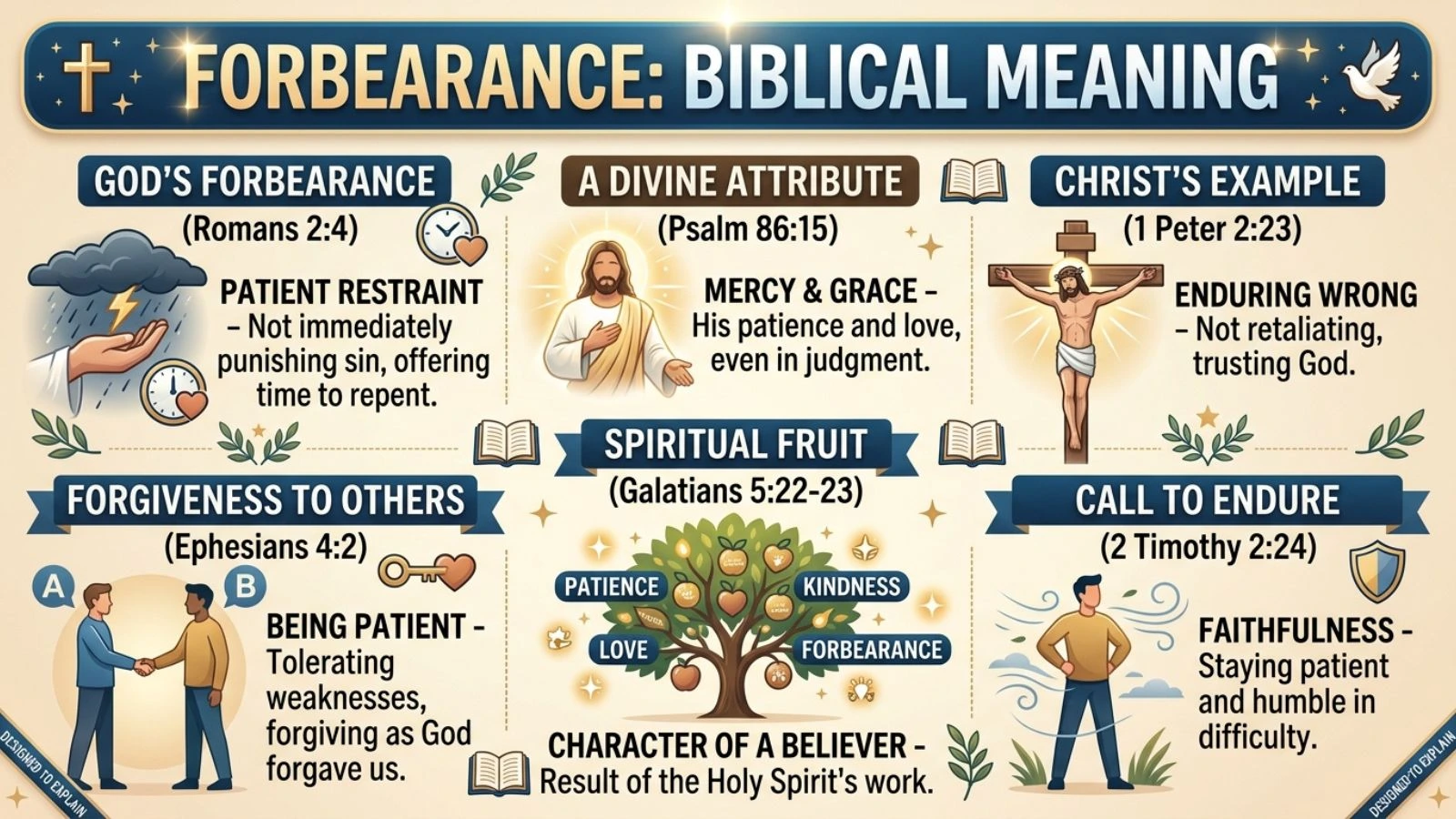
Have you ever wondered how God teaches us to stay patient and show grace even when life tests our hearts?
The biblical meaning of forbearance reveals a powerful lesson about love, forgiveness, and trusting God’s timing.
I want to share something that happened to me recently while learning about Forbearance Bible Meaning.
I was chatting with a friend when I suddenly saw this term mentioned, and honestly, I had no clue what it meant at first.
I kept wondering, “Am I missing something here?” It felt a little confusing, and I didn’t want to misunderstand the message or respond the wrong way.
So, I decided to explore forbearance Bible meaning and understand its deeper context.
As I studied it, I discovered that forbearance is not just about waiting patiently; it reflects God’s mercy, kindness, and willingness to forgive.
This biblical concept teaches us how to respond with grace instead of anger and how to trust God during difficult seasons.
After understanding its meaning, I realized how valuable it is to learn these spiritual terms so we can grow in faith and communicate with greater wisdom.
Now, whenever I come across forbearance in conversations, Bible studies, or social media, I feel more confident understanding its true message and applying its lesson to my life.
Biblical Meaning of Forbearance
The biblical meaning of forbearance is patient restraint. It is the ability to endure difficulties or deal with people calmly instead of reacting with anger.
Forbearance often includes patience, forgiveness, kindness, and self-control. It means giving others room to grow while trusting God to guide the situation.
In the Bible, God’s forbearance is especially important. God sees human weakness, yet He continues to show mercy.
His patience is not a sign that He ignores wrongdoing. Instead, His patience gives people an opportunity to turn back to Him.
God’s Forbearance Shows His Mercy
Romans 2:4 says:
“Or do you show contempt for the riches of his kindness, forbearance and patience, not realizing that God’s kindness is intended to lead you to repentance?”
This verse teaches that God’s kindness and patience have a purpose. He gives people time to recognize their mistakes and return to Him.
God does not show forbearance because sin is unimportant. He shows forbearance because He desires change. His patience opens the door to repentance and spiritual growth.
This is a beautiful part of the Christian meaning of forbearance. God’s patience is filled with hope. He sees what a person can become through His grace.
When we feel ashamed of past mistakes, this truth can bring comfort. God’s mercy is not quickly exhausted. We can pray, seek forgiveness, and continue walking with Him.
Forbearance Reflects God’s Character
Romans 3:25 also speaks about God’s forbearance. It explains that God had patiently passed over sins committed in the past.
This does not mean God approves of sin. It shows that He is patient and just. God’s plan unfolds with wisdom and perfect timing.
Sometimes people wonder why God allows certain problems to continue. They may ask why justice does not come immediately. The Bible reminds us that God sees the whole picture.
His timing may be different from ours, but His wisdom is complete.
God’s forbearance teaches us to trust His timing.
We may not understand every delay. Still, we can believe that God is present and working.
Forbearance Means Bearing With Others
The Bible also teaches Christians to show forbearance toward one another.
Ephesians 4:2 says:
“Be completely humble and gentle; be patient, bearing with one another in love.”
The words “bearing with one another” express the idea of forbearance. People have weaknesses. They make mistakes. They may have different habits, opinions, or struggles.
Forbearance helps us respond with humility instead of pride.
This does not mean allowing harmful behavior or ignoring serious problems. Healthy boundaries can still be important. Biblical forbearance means choosing love and wisdom rather than acting from anger or hatred.
For example, a friend may say something hurtful without thinking. Forbearance may help us pause before replying. We can speak honestly but gently. We can seek understanding instead of making the conflict worse.
In this way, forbearance protects peace.
Forbearance Is Connected to Love
Colossians 3:12–13 teaches believers to clothe themselves with compassion, kindness, humility, gentleness, and patience. It also says to bear with and forgive one another.
These qualities work together.
Love is patient. Love gives grace. Love does not quickly seek revenge.
Forbearance does not mean that relationships will always be easy. It means we choose to handle difficulties with faith.
Sometimes the strongest response is not a loud one. Sometimes strength is shown through a calm heart, a gentle answer, or a willingness to forgive.
A Warning About Misunderstanding Forbearance
Forbearance should not be confused with silence about everything.
The Bible encourages truth, wisdom, and justice. Being patient does not mean accepting cruelty or staying in an unsafe situation. It does not mean hiding pain or allowing repeated harm without seeking help.
True biblical forbearance includes wisdom and healthy boundaries.
We can be kind while speaking the truth. We can forgive while still making wise choices. We can show patience while asking God for guidance.
Forbearance is not weakness. It is strength guided by love.
Spiritual Significance and Symbolism of Forbearance
The spiritual symbolism of forbearance centers on growth, mercy, self-control, and trust in God.
When we practice forbearance, we learn that every problem does not need an immediate reaction. We begin to listen more carefully. We become slower to anger and quicker to pray.
This can change the way we see people.
Instead of asking, “Why are they making my life difficult?” we may begin to ask, “How can I respond with wisdom and grace?”
Forbearance also reminds us that spiritual growth takes time.
God often changes people slowly. A person may pray for patience but still struggle with anger. Someone may ask for forgiveness yet need time to heal. Growth may not happen in one day.
God’s patience gives us hope during this process.
Forbearance Builds Spiritual Maturity
James 1:19 says:
“Everyone should be quick to listen, slow to speak and slow to become angry.”
This verse gives a simple picture of forbearance.
We listen before judging. We think before speaking. We control anger instead of allowing anger to control us.
These small choices can lead to deep transformation.
For example, a family disagreement may begin with frustration. One person raises their voice. Another person may feel ready to respond in the same way.
Forbearance creates another path.
A person can pause, pray quietly, and answer with calm words. The problem may not disappear immediately, but peace has a better chance to grow.
Forbearance Teaches Trust
Waiting is often difficult.
We may want God to answer a prayer quickly. We may want a relationship to improve today. We may want a painful season to end.
Yet forbearance teaches us to remain faithful while we wait.
It says, “God is still working, even when I cannot see the full picture.”
This kind of patience is not passive. It is active faith. We continue praying. We continue doing what is right. We continue trusting God’s guidance.
Forbearance can become a quiet spiritual awakening. It helps us move from fear toward peace and from quick reactions toward deeper faith.
Biblical Interpretations of Forbearance in Dreams or Real Life
Forbearance is usually a character quality rather than a physical symbol. Still, it may appear in dreams or real-life experiences through situations involving waiting, forgiveness, restraint, or patience.
A dream about calmly facing conflict may reflect a need for peace. It may encourage you to avoid a quick reaction and seek God’s wisdom.
A dream where you forgive someone may point to emotional healing. It could remind you to bring pain to God through prayer.
If you dream about waiting for something important, the experience may connect with trust and God’s timing. However, dreams are personal and should not be treated as certain divine messages.
Christian dream interpretation should remain grounded in Scripture.
Ask:
- Does the message encourage love, truth, wisdom, or peace?
- Does it agree with biblical teaching?
- Does it lead me toward prayer and faith?
God can use many experiences to encourage reflection. Still, the Bible remains the clearest guide for understanding His character and will.
Practical Lessons and Faith Insights
Forbearance teaches us to pause before reacting, pray before judging, and trust God before giving up.
When patience feels difficult, ask God for wisdom. Speak with kindness, but do not ignore truth or healthy boundaries. Remember that people grow at different speeds.
You can pray:
“Lord, help me show patience without losing wisdom. Give me a gentle heart, clear guidance, and strength to trust Your timing.”
Conclusion
The forbearance Bible meaning is rooted in God’s patience, mercy, and loving restraint. It teaches us to bear with others, forgive with wisdom, and remain faithful during difficult seasons.
Forbearance is not weakness. It is strength shaped by love and guided by faith.
When life tests your patience, turn to God in prayer. He can give you peace, wisdom, and courage to respond with grace.
Trust that His timing is good, and allow His patience to grow within your heart.