“What if the simplest stories ever told could completely change the way you understand faith, life, and God’s message?”
Recently, something interesting happened to me while chatting with a friend.
During our conversation, the topic of Parables in the Bible and Their Meaning came up, and to be honest, I had no idea what it actually meant. I paused for a moment and wondered, “Am I missing something important here?”
Since I didn’t want to respond incorrectly or misunderstand the conversation, I decided to look into Parables in the Bible and Their Meaning to understand the context behind it.
As I explored the topic, I discovered that biblical parables are much more than simple stories—they are powerful lessons that Jesus used to teach spiritual truths, moral values, and everyday wisdom.
Understanding these parables gave me a deeper appreciation of the Bible and helped me feel much more confident discussing them with others.
If you’ve ever come across the phrase Parables in the Bible and Their Meaning and felt confused, you’re not alone.
In this guide, you’ll learn what biblical parables are, why they matter, the lessons they teach, and how they continue to inspire people around the world today.
By the end, you’ll have a clear understanding of their meaning and be ready to confidently join any conversation about them.
Biblical Meaning of Parables in the Bible and Their Meaning
The word parable comes from a Greek word meaning “to place beside” or “to compare.” Jesus used familiar stories to explain heavenly truths. Through everyday examples, He revealed God’s heart and His plan for people.
One reason Jesus spoke in parables was to help those with open hearts understand spiritual truth. In Matthew 13:10-17, Jesus explained that those who sincerely sought God would receive understanding, while those who rejected Him would miss the deeper meaning.
The Parable of the Sower
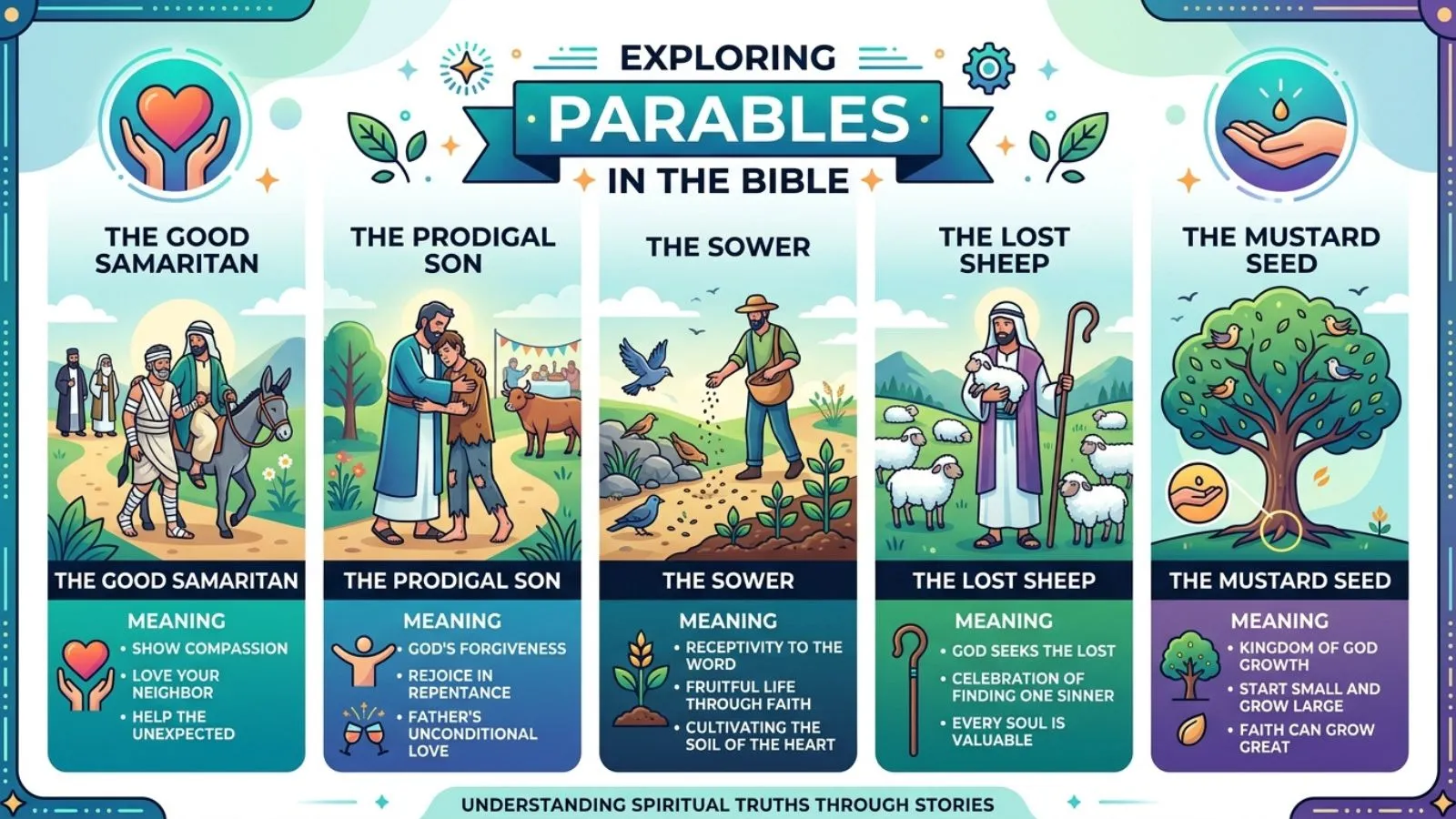
One of the best-known parables is the Parable of the Sower (Matthew 13:3-23). A farmer scatters seed on different kinds of soil. The seed represents God’s Word, while the soil represents the condition of people’s hearts.
This teaches that our hearts must be ready to receive God’s truth. Faith grows when we listen, believe, and obey.
The Parable of the Good Samaritan
In Luke 10:25-37, Jesus tells the story of a traveler who is helped by a Samaritan after others ignore him.
The Christian meaning is clear: true love goes beyond race, culture, or status. God calls His people to show mercy and kindness to everyone.
The Parable of the Prodigal Son
The Parable of the Prodigal Son (Luke 15:11-32) reveals God’s amazing forgiveness. A son wastes everything, but when he returns home with a humble heart, his father welcomes him with joy.
This story reminds us that no one is too far from God’s grace. When we repent, our Heavenly Father gladly receives us.
The Parable of the Lost Sheep
Jesus shares in Luke 15:3-7 that a shepherd leaves ninety-nine sheep to find one that is lost.
This beautiful biblical symbolism shows God’s endless love. Every person matters to Him. He seeks those who wander and celebrates when they return.
The Parable of the Mustard Seed
In Matthew 13:31-32, Jesus compares faith to a tiny mustard seed that grows into a large tree.
Even small faith can grow into something powerful when it is placed in God’s hands. This encourages believers not to lose hope.
Positive and Warning Meanings
Most parables offer hope, but they also contain loving warnings.
Stories like the Parable of the Wise and Foolish Virgins (Matthew 25:1-13) remind believers to stay spiritually ready for Christ’s return.
The Parable of the Rich Fool (Luke 12:16-21) warns against trusting wealth instead of God.
Together, the parables in the Bible and their meaning reveal God’s mercy, justice, patience, forgiveness, and invitation to live by faith.
Spiritual Significance and Symbolism
The spiritual symbolism found in Jesus’ parables continues to guide believers today.
Every story invites us to look at our own hearts.
These lessons remind us that God’s kingdom often grows quietly, just like a tiny seed becoming a great tree. Spiritual growth takes time, prayer, and faith.
The parables also teach that God’s love reaches everyone. No matter our past mistakes, His grace is always available when we turn back to Him.
Many Christians discover that reading one parable each day helps them grow closer to God. During prayer, these stories often bring comfort, wisdom, and fresh understanding.
As we apply these teachings in daily life, our faith becomes stronger. We learn patience, humility, compassion, and trust in God’s perfect timing.
The spiritual message of every parable points us toward Jesus, who came to bring hope, salvation, and eternal life.
Biblical Interpretations in Dreams or Real Life
Sometimes people dream about scenes that remind them of Jesus’ parables. Others experience real-life situations that reflect these stories.
A dream about finding a lost sheep may remind someone of God’s loving care and His desire to bring people back to Him.
Dreaming about planting seeds may symbolize growing faith or receiving God’s Word in a fresh way.
If a dream includes helping a stranger, it may reflect the lesson of the Good Samaritan, encouraging kindness and compassion.
Not every dream carries a direct message from God. Christians should always compare any dream interpretation with Scripture and seek wisdom through prayer.
God often speaks through His Word first. The parables remain one of the clearest ways He teaches believers how to live faithfully.
Practical Lessons & Faith Insights
The parables in the Bible and their meaning remind us to trust God every day.
Spend time reading Jesus’ teachings. Pray for wisdom to understand His Word. Show kindness, forgive others, and keep your heart open to God’s guidance. Even small acts of faith can produce lasting spiritual fruit when they are rooted in Christ.
Conclusion
The parables in the Bible and their meaning continue to inspire Christians around the world because they reveal God’s heart in simple yet powerful ways. These stories teach forgiveness, faith, compassion, humility, and hope.
As you read the parables, ask God to help you understand their message and apply them to your own life. His Word still speaks today, offering guidance, peace, and the promise that His love never fails.