Have you ever come across a Bible term that seemed mysterious yet deeply meaningful at the same time?
I recently experienced something like that with the term Shekinah.
I was chatting with a friend when I suddenly saw this word appear in our conversation. Honestly, I had no idea what it meant at first.
I paused and wondered, “Am I missing something important here?” The word sounded familiar, yet its meaning was completely unclear to me.
The more I thought about it, the more curious I became. I didn’t want to respond incorrectly or misunderstand something connected to faith and Scripture.
So, I decided to look into the Shekinah meaning in the Bible and learn where the term came from and why so many Christians talk about it.
As I researched, I discovered that Shekinah is closely connected to the presence and glory of God.
Understanding its meaning gave me a deeper appreciation of many biblical passages and helped me see how God’s presence is revealed throughout Scripture.
More importantly, I realized how valuable it is to understand biblical terms like Shekinah. Knowing their meaning can help us avoid confusion, engage in meaningful conversations, and grow in our faith.
After learning about it, I felt much more confident discussing the topic and recognizing its significance whenever I encounter it in articles, sermons, social media posts, or everyday conversations.
But what exactly does Shekinah mean in the Bible, and why has this powerful concept inspired believers for generations? Let’s explore its biblical meaning and spiritual significance.
Biblical Meaning of Shekinah in the Bible
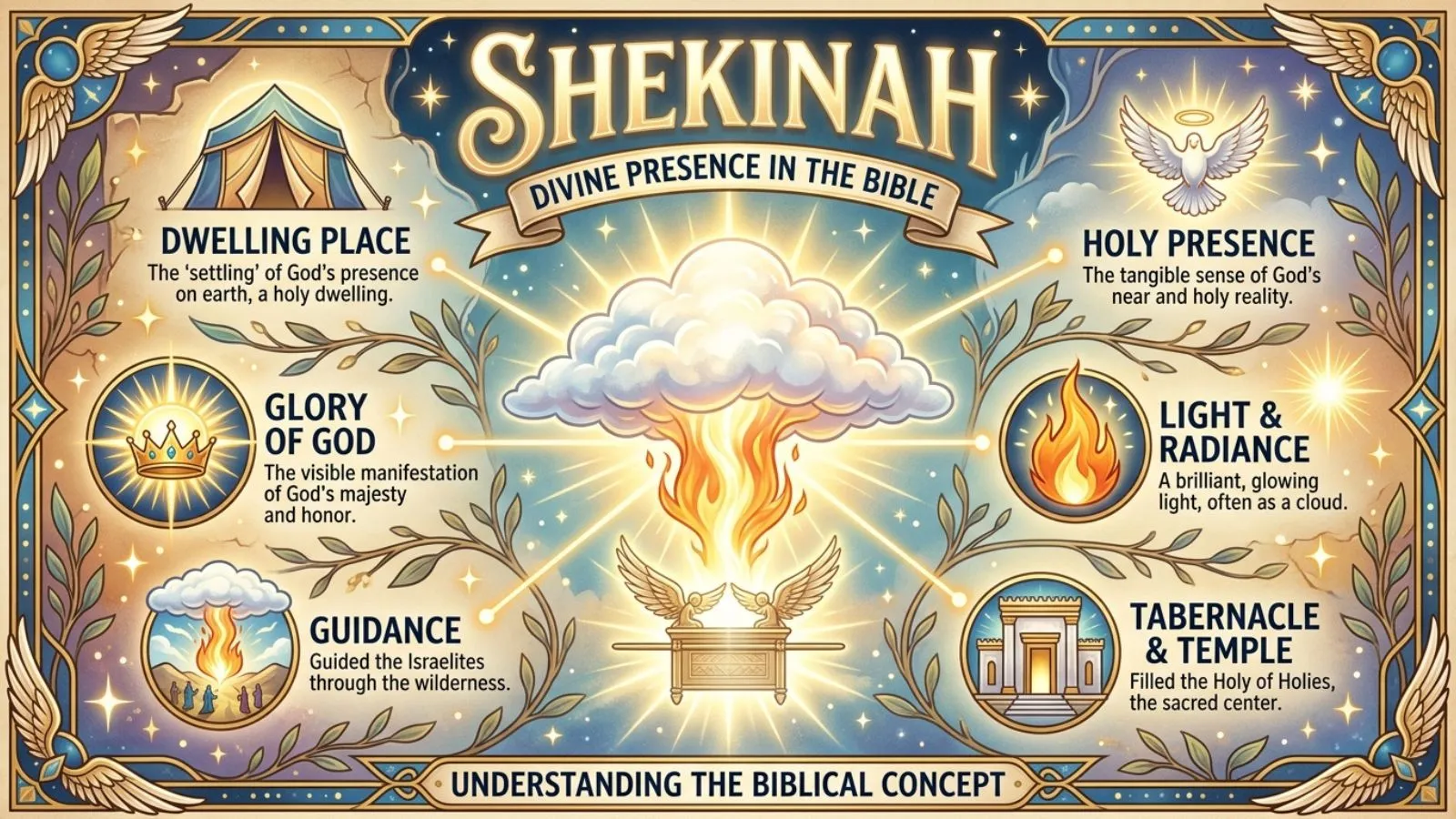
The word Shekinah comes from a Hebrew root meaning “to dwell” or “to settle.” It describes the visible presence of God living among His people.
Even though the word itself is not written in the Bible, the idea is clearly shown throughout Scripture.
One powerful example is in Exodus 40:34–35, when the glory of the Lord filled the Tabernacle:
“Then the cloud covered the tent of meeting, and the glory of the Lord filled the tabernacle.”
This cloud represents the Shekinah glory of God. It was not just a cloud—it was a sign that God was truly with His people.
Another example is in 1 Kings 8:10–11, when Solomon dedicated the temple. The Bible says the glory of the Lord filled the house so strongly that the priests could not stand.
This shows something beautiful: God does not stay far away. He chooses to dwell among His people.
Positive Meaning of Shekinah
The Shekinah presence brings:
- Peace in chaos
- Guidance in confusion
- Light in darkness
- Hope in fear
It reminds believers that God is not distant. He is near, active, and present.
In the New Testament, this idea continues through Jesus Christ. John 1:14 says:
“The Word became flesh and made his dwelling among us.”
This “dwelling” reflects the same idea as Shekinah—God living with His people in a personal way.
Spiritual Warning and Balance
The presence of God is holy. In the Old Testament, people were reminded not to treat His presence casually. It teaches respect, reverence, and humility.
Shekinah is not just comfort—it is also holiness that transforms hearts.
Spiritual Significance and Symbolism
The Shekinah meaning in Bible goes deeper than history. It speaks to your personal faith journey today.
Spiritually, Shekinah represents the moment when:
- You feel God’s presence in prayer
- You sense peace during hard times
- You feel guided when you are lost
It is the reminder that God is with you, even when life feels silent.
Many Christians describe moments of worship where they feel warmth, tears, or deep peace. These experiences are often seen as reflections of God’s spiritual presence, similar to Shekinah glory.
In daily life, this can appear when:
- You pray and feel suddenly calm
- You read the Bible and feel a verse speak directly to you
- You are struggling but still feel hope inside
Shekinah teaches that God is not only in ancient temples—He also lives in the hearts of believers today.
It is a symbol of intimacy with God, where faith becomes personal and real.
Biblical Interpretations in Dreams or Real Life
Some people search for Shekinah meaning because they experienced something in dreams or visions—light, clouds, or overwhelming peace.
In a biblical sense, dreams that include light, glory, or brightness are often connected to God’s presence or guidance.
If someone dreams of:
- A bright light → It may symbolize God’s direction or truth
- A glowing cloud → It may represent divine protection or presence
- A peaceful atmosphere → It may show comfort from God during stress
However, not every dream carries a direct message. The Bible encourages believers to test everything through prayer and Scripture.
A peaceful dream may simply reflect:
- A heart seeking God
- A mind healing from stress
- A reminder to trust God more deeply
The key is not fear, but faith and discernment.
If the dream brings peace, hope, or a desire to pray, it often aligns with God’s comforting nature. If it brings confusion or fear, it is important to seek clarity through prayer.
Practical Lessons & Faith Insights
The Shekinah meaning in Bible teaches one powerful truth: God is near.
When life feels empty or uncertain, you are not alone. His presence still surrounds those who seek Him.
Take time to:
- Pray daily, even in simple words
- Read Scripture slowly and reflect
- Ask God to make His presence real in your life
Trust that God’s glory and guidance are still active today.
Conclusion
The Shekinah meaning in Bible reminds us that God does not stay far away. He chooses to dwell with His people, bringing peace, light, and hope. From the Tabernacle in Exodus to the life of Jesus, His presence has always been near.
When you feel lost or overwhelmed, remember that God’s glory still surrounds you in ways you may not always see—but can always trust.