Here’s a more engaging and comprehensive introduction with a strong hook line based on the focus keyword “Spiritual Meaning of Trees in the Bible.”
“What if every tree mentioned in the Bible carried a deeper spiritual message meant to guide your life?”
I recently came across the term “Spiritual Meaning of Trees in the Bible” while chatting with a friend, and to be honest, I had no idea what it really meant.
At first, I thought it was just another biblical phrase, but the more I saw it mentioned, the more curious I became. I found myself wondering, “Am I missing an important biblical lesson or symbolism here?” Since I didn’t want to misunderstand the conversation or give the wrong response, I decided to explore the Spiritual Meaning of Trees in the Bible in depth.
As I researched, I discovered that trees in the Bible are much more than part of the landscape—they symbolize life, faith, wisdom, growth, righteousness, and God’s promises.
From the Tree of Life in Genesis to the olive tree, fig tree, and cedar of Lebanon, each tree carries a unique spiritual lesson that helps believers better understand God’s message. Learning these meanings not only cleared up my confusion but also gave me a deeper appreciation of biblical symbolism.
Now, whenever I come across the Spiritual Meaning of Trees in the Bible in conversations, articles, or social media, I can confidently understand its context and significance.
Biblical Meaning of Trees in the Bible
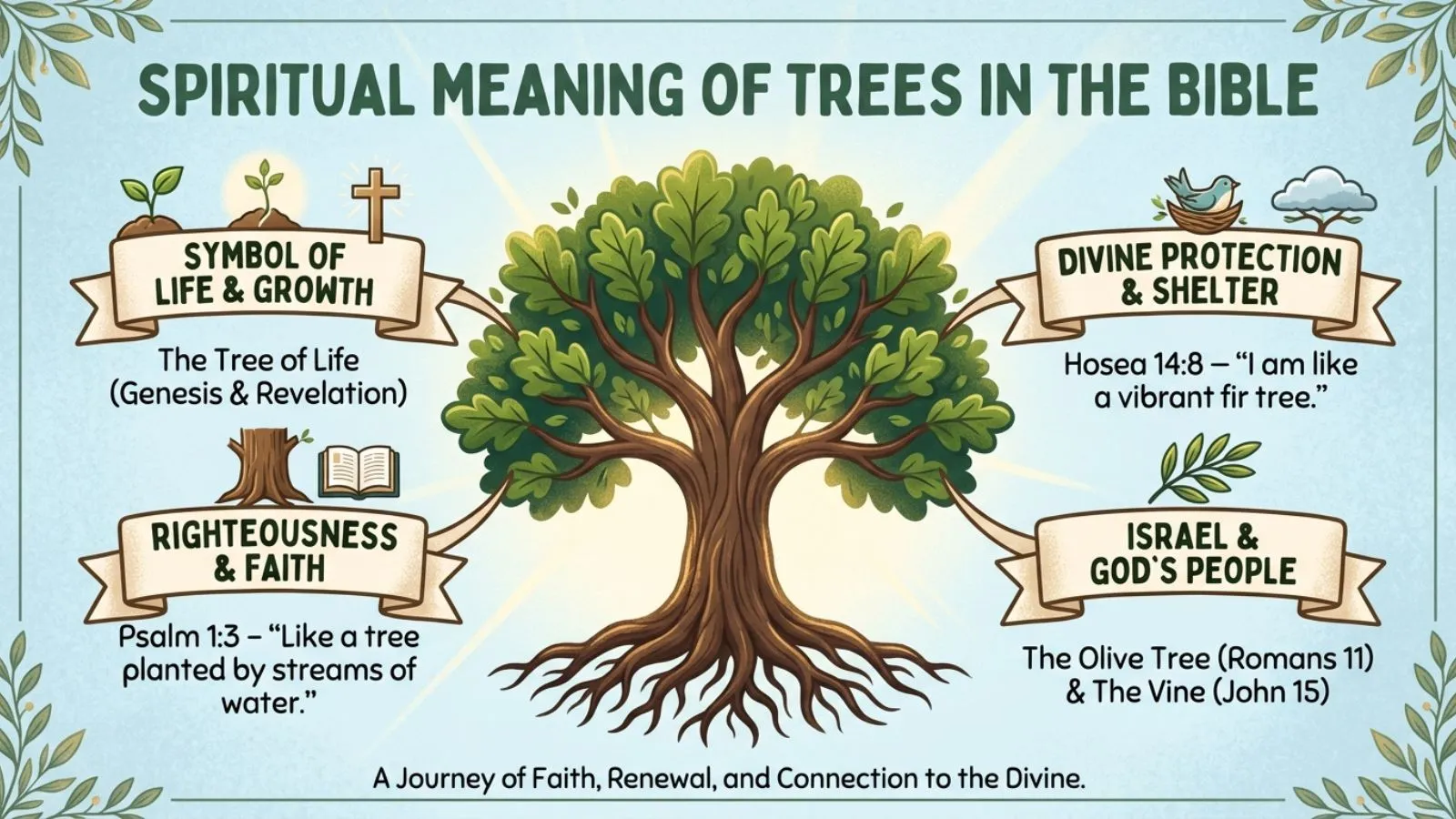
The spiritual meaning of trees in the Bible is often connected to life, growth, stability, blessing, and God’s provision. Trees appear throughout Scripture as symbols of people who trust in the Lord and remain faithful to Him.
Trees Represent Spiritual Growth
One of the clearest examples appears in Psalm 1:3:
“That person is like a tree planted by streams of water, which yields its fruit in season.”
This verse describes a faithful believer. Just as a tree receives nourishment from water, Christians receive strength from God’s Word and His presence. A healthy tree produces fruit, and a faithful believer produces love, kindness, patience, and other spiritual fruits.
This biblical symbolism reminds us that spiritual growth takes time. God often works slowly, helping us mature through prayer, faith, and obedience.
Trees Symbolize Life and God’s Blessings
In the Garden of Eden, the Tree of Life was a powerful symbol of eternal life and fellowship with God. It represented God’s desire to give life and blessing to His people.
Later, the Tree of Life appears again in the book of Revelation, showing God’s promise of eternal life for those who remain faithful.
These passages reveal that trees often point to God’s goodness, provision, and desire to restore His people.
Trees Reflect Strength and Stability
Jeremiah 17:7-8 says:
“But blessed is the one who trusts in the Lord… They will be like a tree planted by the water.”
This image shows a tree that remains strong even during drought. Spiritually, it teaches that believers who trust God can remain steady during challenges and uncertainty.
Life may bring storms, but deep spiritual roots help us stand firm.
Trees Can Represent God’s Protection
Large trees often provide shade and shelter. In the Bible, this imagery is sometimes used to describe God’s care and protection.
Just as people rest under a tree’s shade, believers find refuge in God’s presence. This symbolism offers comfort during seasons of fear, stress, or hardship.
Warning Meanings of Trees
While trees usually carry positive meanings, they can also serve as warnings.
Jesus spoke about trees that fail to produce good fruit. In Matthew 7:17, He taught that healthy trees bear good fruit, while unhealthy trees produce bad fruit.
This lesson encourages believers to examine their lives. Are we growing closer to God? Are our actions reflecting His love?
In this way, trees become symbols of both blessing and spiritual responsibility.
Trees and the Presence of God
Several important biblical events took place near trees. Abraham met with God near great trees. Zacchaeus climbed a sycamore tree to see Jesus. These moments remind us that God often meets people where they are and invites them into a deeper relationship with Him.
The recurring image of trees throughout Scripture points to God’s ongoing work in the lives of His people. They symbolize hope, faith, transformation, and the steady growth that comes from walking with Him.
Spiritual Significance and Symbolism
The spiritual symbolism of trees goes beyond physical growth. Trees teach important lessons about our relationship with God.
One of the greatest lessons is the importance of roots. A tree’s strength comes from what cannot be seen beneath the ground. In the same way, a Christian’s strength comes from a private relationship with God through prayer, worship, and Scripture.
Trees also symbolize spiritual awakening and transformation. Every spring, trees produce new leaves after a season that may appear lifeless. This cycle reflects God’s ability to bring renewal and fresh beginnings into our lives.
Many believers experience seasons of waiting, loss, or uncertainty. During those times, the image of a tree reminds us that God is still working beneath the surface, even when growth is not immediately visible.
Branches stretching toward the sky can also represent reaching toward God. As believers grow in faith, they become more connected to His purpose and more willing to serve others.
The spiritual message of trees encourages patience, trust, and perseverance. Growth may not happen overnight, but God faithfully nurtures those who remain rooted in Him.
Biblical Interpretations in Dreams or Real Life
When trees appear in dreams or stand out in daily life, many Christians view them as symbols connected to spiritual growth and God’s guidance.
A healthy, green tree often symbolizes blessing, stability, and a flourishing relationship with God. It may reflect a season of growth, answered prayer, or renewed faith.
A tree filled with fruit can represent spiritual maturity and the positive results of walking closely with the Lord.
On the other hand, a damaged or dying tree may encourage self-reflection. It could point to spiritual dryness, neglected faith, or the need to reconnect with God through prayer and Scripture.
If a tree remains standing during a storm, it may symbolize endurance and trust in God’s protection during difficult circumstances.
Dream interpretation should always be approached with wisdom and prayer. Rather than relying solely on symbolism, Christians are encouraged to seek God’s guidance through His Word and the leading of the Holy Spirit.
Practical Lessons & Faith Insights
Trees remind us to stay deeply rooted in God every day.
Spend time in prayer, trust His timing, and continue growing even when progress feels slow. Just as trees grow steadily over time, faith develops through daily dependence on the Lord. Let every tree you see become a reminder of God’s faithfulness, strength, and loving care.
Conclusion
The spiritual meaning of trees in the Bible points to life, growth, strength, blessing, and a deep connection with God. Throughout Scripture, trees serve as powerful reminders that faith flourishes when it is rooted in God’s presence.
Whether you encounter trees in Bible passages, dreams, or everyday life, they can inspire you to trust God’s plan, remain steadfast through challenges, and continue growing in faith. As you seek His guidance, remember that the Lord is faithfully nurturing your spiritual journey, helping you become strong, fruitful, and firmly rooted in His love.